Solar generated record 25% of EU power in June with Germany, Spain and Poland leading the race
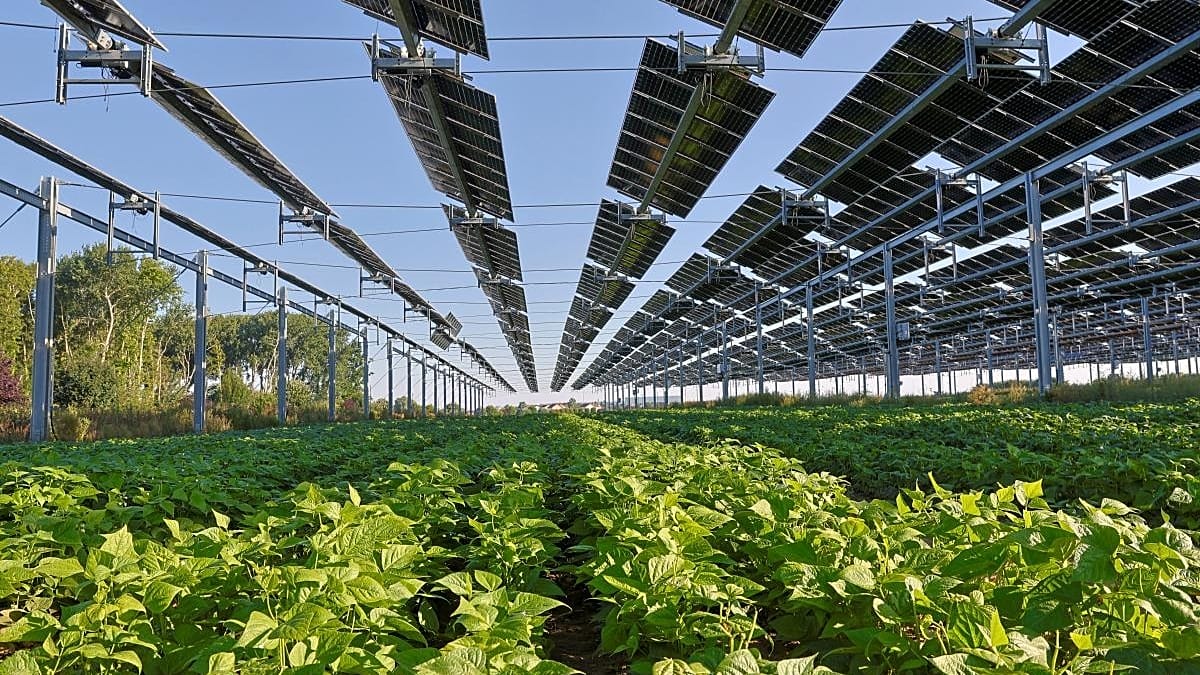
For the first month ever, solar power provided a quarter of the EU’s electricity this June. Solar generated a record 52 TWh of EU electricity in June 2026, making up 25 per cent of monthly generation for the...
For the first month ever, solar power provided a quarter of the EU’s electricity this June.
Solar generated a record 52 TWh of EU electricity in June 2026, making up 25 per cent of monthly generation for the bloc. This beat solar’s previous monthly high of 47 TWh (23 per cent) in May 2026.
Solar was the EU’s largest single source of power for the month, ahead of nuclear (21 per cent), gas (15 per cent), wind (14 per cent) and hydro (12 per cent), with coal generating just 8 per cent. This is only the third month that solar has been the EU’s largest source of power, after June 2025 and May 2026.
“Solar’s rise has been truly stratospheric, beating prediction after prediction,” says Chris Rosslowe, senior analyst at Ember think tank which did the analysis. “In just a few years solar has gone from a small player to an essential part of Europe’s power system, as governments and citizens look for low-cost, quick-to-install domestic power sources.”
In June of 2021, solar generated just 10 per cent of the EU’s power (21 TWh).
Solar is low cost and quick to install
Solar has grown by more than a fifth every year in the EU between 2021 and 2025 – the fastest growth of any power source. This is predominantly due to a high pace of installations, with 65.1 GW of new capacity installed in 2025.
Record solar output in June coincided with relatively high summer power demand, driven partially by demand for cooling due to record-breaking heatwaves. Solar helped sustain power supplies as other power sources struggled in hot and still conditions.
Spain is leading Europe’s renewables revolution
Solar’s growth is visible across the EU’s Member States. In 2026 so far, 18 EU countries have hit new monthly records for the percentage of power from solar.
In Spain, solar generated over a third of power in June 2026 for the first time (34 per cent). This is thanks to the country’s incredible investment in clean energy. Since 2019, it has doubled its wind and solar capacity, adding over 40 GW – more than any other EU country except Germany, whose power market is twice the size of Spain’s.
This is paying off for consumers. Spain’s electricity bills have fallen while many other countries have seen a rise since the energy crisis caused by the outbreak of the Iran war. Ember analysis shows that households have each saved €10 per month on their electricity bills since the Hormuz strait was effectively closed in March.
Spain did not use coal-fired power at all in August 2025. A far cry from just 10 years before, when coal accounted for a quarter of Spain’s power.
It shows how fast countries can change their energy sources – if they choose to. “You don’t need Spanish sunshine to achieve what Spain has done – every country in Europe could be making better use of its own wind and solar resources to reduce reliance on expensive gas,” argues Rosslowe.
This is all excellent news for emissions, too, of course. Spain relied on fossil fuels for just 25 per cent of its electricity in 2025 meaning its per capita emissions of 0.9 tonnes of CO2 equivalent were below the EU average of 1.3 tonnes of CO2e.
Balcony solar is very popular in Germany
In Germany, solar generated more than a third of electricity in May for the first time (33 per cent), reaching a 36 per cent share in June.
Germany is home to Europe’s largest operational solar park – which features more than 500 hectares of panels across a former coal mine. While ordinary Germans are also embracing the potential for solar power to cut their energy bills.
Commonly installed on balconies, terraces and shed roofs, plug-in solar uses small panels that can be attached to an external wall. In many European countries, these can be purchased from the supermarket or online. More than a million plug-in kits were installed in Germany between 2022 and 2025.
The power generated from plug-in solar can be used directly through a mains socket like any other device (such as a mobile phone charger) without any installation costs.
Experts say it takes an average of two to six years to recoup the cost of the system, depending on what you paid for it, its size and where it is positioned. But once up and running, plug-in solar reduces the amount of electricity taken from the grid, cutting your energy bills.
Balcony solar panels in Germany have halved in price over the last few years, with small models now costing around €200.
Consumers can make further savings by adding a battery to store the energy generated by their balcony panels. As solar relies on sunlight to generate electricity, energy is only generated during the day. However, energy consumption tends to be lower during these hours, as many people are out of their homes due to work or school. In the evening, when solar panels cannot generate electricity, demand for energy increases – as people return home.
Batteries can help level out Germany’s uneven supply and demand by storing solar energy produced in the day and allowing households to use it in the evening. This prevents day-time generation from being wasted and can help relieve strain on the grid.
Poland has traditionally been coal-powered but the landscape is shifting
Poland generated nearly a quarter of electricity from solar in June (24 per cent). Despite being one of the EU’s largest coal users, Poland has also seen some of the most rapid solar growth in Europe.
In June 2025, Poland hit a major milestone when renewables provided more energy than coal. 44.1 per cent of electricity came from renewable sources while coal and lignite plants produced 43.7 per cent, according to the think tank Energy Forum.
In 2025, Poland had 23 GW of photovoltaic power installed. Just five years ago there were only 2 GW of PV installations in Poland.
A key challenge for Poland is the removal of barriers delaying the energy transition. “The development of onshore wind energy, which was virtually completely halted by the government in 2016 and only two years ago started to liberalise these regulations, is still very limited,” Dr Maria Niewierko from the Energy Forum explains.