New map shows how oil slicks are smothering our oceans - with one hotspot in Europe
Published on 25/09/2026 - 7:02 GMT+2 Oil slicks cover an estimated 1.58 million square kilometres of the world’s oceans each year, according to a new satellite analysis...
Published on 25/09/2026 - 7:02 GMT+2
Oil slicks cover an estimated 1.58 million square kilometres of the world’s oceans each year, according to a new satellite analysis that exposes the scale of pollution at sea.
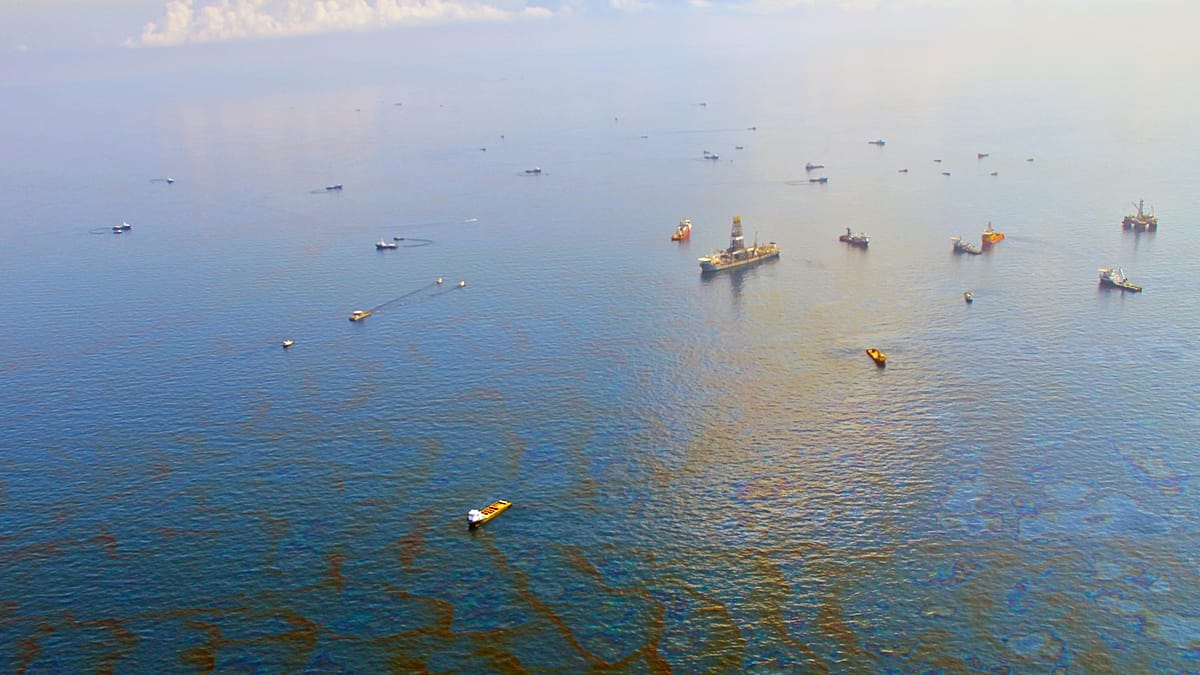
That amounts to an area about three times the size of Spain. Yet, unlike headline-grabbing spills such as the Deepwater Horizon crisis, much of the pollution appears as smaller oil slicks that draw little public attention.
The analysis by conservation technology nonprofit SkyTruth found that ships were linked to around 81 per cent of the oil slicks whose likely source could be identified. Oil tankers and cargo ships were the most common culprits, while offshore oil and gas infrastructure accounted for another 18 per cent of them.
“Oil pollution is a constant, global issue that happens far more often than the spills that make headlines,” says Karl Wuster, chief technology officer at SkyTruth.
Where is ocean oil pollution the worst?
Released on 23 September during Climate Week NYC, the analysis used satellite observations collected between 2023 and 2025 and data from SkyTruth’s Cerulean oil pollution monitoring system.
Researchers used the observations to model annual pollution from vessels and offshore facilities, accounting for differences in satellite coverage and vessel density.
More than 90 per cent of the estimated pollution occurs within national waters, often close to coastlines, they found. Some of the highest concentrations were seen in the Red Sea, Persian Gulf, Mediterranean and Black Sea, as well as waters off West Africa and around Indonesia.
The SkyTruth analysis also identified several repeat polluters.
Researchers repeatedly saw the same 16 vessels alongside oil slicks. Three of them – a Palau-flagged cargo ship, a Russian oil tanker and an Indonesian oil tanker – were spotted near slicks in more than one in five satellite images.
Some offshore facilities were also repeatedly linked to pollution.
Oil slicks appeared in nearly 29 per cent of satellite images of one facility off the coast of Indonesia and in about 24 per cent of another off the coast of Nigeria.
Protected waters are not immune from oil pollution, either. Although around 75 per cent of marine protected areas had lower concentrations of oil slicks than their surrounding waters, pollution was still detected in sensitive habitats – including the critically endangered Rice’s whale habitat in the Gulf of Mexico.
The researchers also warn that the true picture remains unclear, as satellite coverage is limited over the high seas and leaves large expanses of the ocean poorly monitored.
War, accidents and shipwrecks also threaten oceans
Oil pollution is not coming just from shipping and offshore operations.
In August, oil from a carrier struck during the war in the Gulf washed ashore on Iran’s Qeshm Island and reached its protected mangroves. A separate spill from a Russian shadow fleet tanker off Oman spread more than 2,000 square kilometres.
On top of conflicts embroiling the oceans, accidents pose another threat.
A mystery vessel that capsized off Tobago in 2024 covered beaches in oil and triggered a national emergency, while a passenger ferry that ran aground in Sweden a year earlier left a five-kilometre slick of fuel in the Baltic Sea that eventually reached the coast.
Even ships that sank decades ago remain risks to ocean health.
An estimated 8,500 potentially polluting shipwrecks, mostly dating from the two world wars, lie on the ocean floor. Some are already leaking oil as their hulls corrode.