
Hormuz standoff ‘not sustainable’, senior Iranian lawmaker tells Euronews
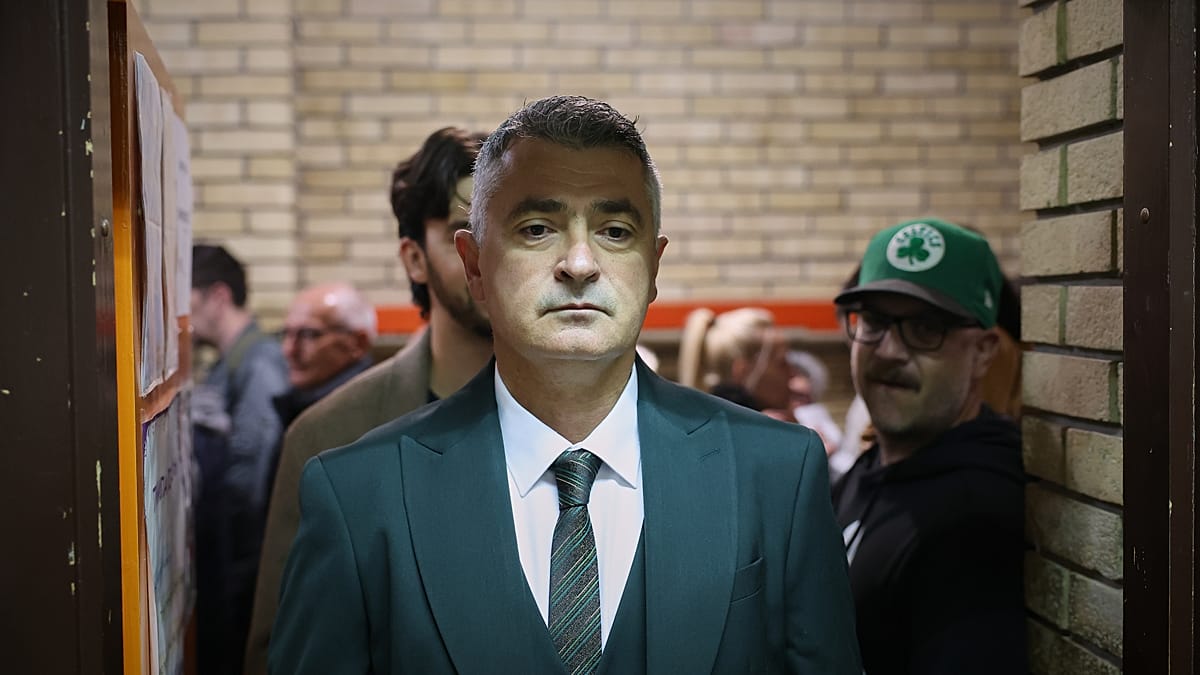
MP and foreign minister under Ahmadinejad, Manouchehr Mottaki, told Euronews that multiple ships a day were being disabled as the IRGC Navy worked to bring unauthorised transit to zero. He called on Washington to lift its naval blockade strangling the Iranian economy before talks resume.
By Euronews Persian
Published on 6 November 2026 - 12:02 GMT+1•Updated 12:05
A senior Iranian official told Euronews the standoff in the Strait of Hormuz was unsustainable, as Iran and the US continued their concurrent blockades and cargo ships were being disabled in the crucial waterway daily.
"This situation is not sustainable," Manouchehr Mottaki, a member of Iran's parliament and foreign minister under former president Mahmoud Ahmadinejad, told Euronews.
"The immediate obstacle to moving beyond this situation is the blockade, a blockade that the Americans are carrying out illegally, in violation of international law."
Tehran has imposed its own blockade, stating it would allow vessels from China, India, Iraq and Qatar to pass through the strait freely while blocking or targeting ships from countries it deems aligned with the US.
Mottaki said the IRGC Navy had, over the past 10 days, been working to bring unauthorised transit through the strait to zero.
"Every day, three, four, five, or even seven ships are being immobilised or stranded at sea as a result of encounters with mines or drone and missile projectiles," he said.
He described the closure of Hormuz as the root of the regional crisis. "Before the war, the strait was open, and all maritime traffic was taking place. Europe, Asia, Latin America and Africa were all conducting their maritime traffic through the Persian Gulf and the Strait of Hormuz," Mottaki said.
He called on Washington to lift the naval blockade as a precondition for resuming talks.
"Following this defeat suffered by (US President Donald) Trump and his party in the US elections, I think we need to make it very clear to them that they are committed to implementing the memorandum of understanding, and that, as a first step, they must lift this blockade," Mottaki said.
"Personally, I believe that in order to move beyond a state of neither war nor peace, we must put an end to this blockade."
The interview came as Mohsen Rezaei, secretary of Iran's Supreme National Security Council, travelled to Russia for a meeting with President Vladimir Putin. He is reportedly carrying a message from Ayatollah Mojtaba Khamenei, with the main subject of the talks understood to be how to end the war, according to media outlets close to the IRGC.
Rezaei had previously told US Vice President JD Vance, in a response to a letter, that Washington's proposals were not convincing and that Tehran's conditions for reopening the strait must be met in full.
The midterm results have opened divisions within the Trump administration over the war. Vance published a lengthy statement on Wednesday directly attributing the Republicans' heavy defeat to the Iran war, saying voters who had backed Trump in 2024 turned against the party because of the decision to launch strikes on Iran.
Trump acknowledged on Wednesday that the war had contributed to the defeat, but insisted he would make the same decision again, adding he had no immediate plans to attack Iran but had not ruled out further use of force. US media reported that a large joint military operation with Israel remained under consideration.
Iran's parliament speaker Mohammad Ghalibaf addressed a social media post directly to Vance.
"Your boss is preparing the next stage of the war, while America is on the verge of falling into Israel's fire pit," Ghalibaf said. "Put the speech aside. Why don't you say these things to your boss?"
Tehran has said the Strait of Hormuz will reopen only once Washington accepts seven conditions, including ending the US naval blockade, lifting oil sanctions, unfreezing Iranian assets abroad, and halting the broader Middle East war.
The narrow waterway between Iran and Oman is the only sea route out of the Persian Gulf and carries roughly a fifth of the world’s oil supply.