The investments that soared and slumped in the first half of 2026
The first half of 2026 has rewarded investors who backed the machinery behind AI and punished those who reached for crypto and gold, as the technology boom reshaped which assets thrived and which were left behind.
Halfway through a turbulent year, a clear pattern has emerged across global markets: anything tied to the physical build-out of AI has soared, while several other assets that investors traditionally turn to in uncertain times have stumbled.
War in the Middle East, political upheaval and an oil-price spike formed the backdrop, yet stock markets in several regions still pushed to fresh record highs.
According to Dan Coatsworth, head of markets at AJ Bell, companies on the receiving end of the AI spending boom were the standout investments of the first half, while Bitcoin proved "a shocker" and gold lost its shine.
It is, Coatsworth noted, a remarkable run of events for only half a year's worth of trading.
The most spectacular gains came from an unglamorous corner of the technology world: the firms that make memory chips.
As demand for AI computing collided with tight supply, prices surged and took shares with them. SanDisk led the US market with a gain of over 850% in six months, while Western Digital, Micron Technology and Seagate Technology all more than tripled in value, a pace of return that would ordinarily take many years to achieve.
The driver is the vast quantity of high-speed memory and storage needed to train and run AI systems as the largest technology companies race to expand their data centres.
Other US equities that soared on the back of the AI trade include Intel, Dell, Advanced Micro Devices (AMD) and Applied Materials, which all rose between 150% and 280% year to date.
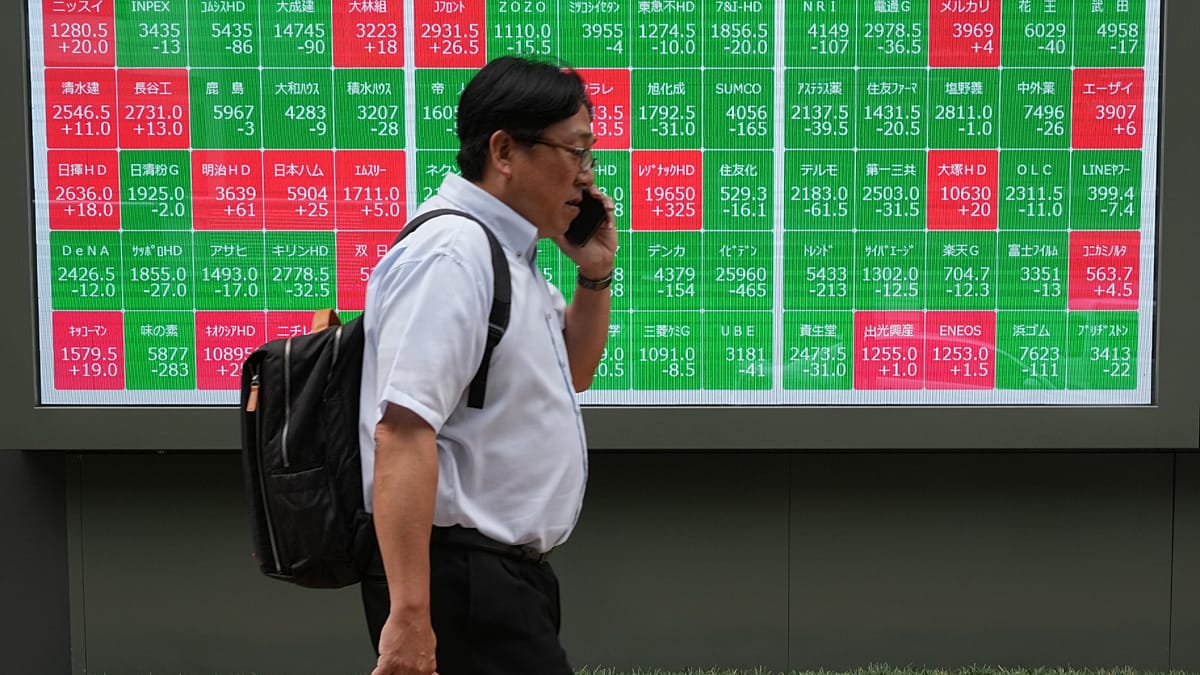
The rush also lifted emerging markets, where Asian chipmakers such as TSMC and SK Hynix carry heavy weight, helping South Korea's KOSPI double in value, Japan's Nikkei 225 climb roughly 40% and the MSCI Emerging Markets index rise by around 27%.
In Europe, the FTSE 100 gained 7% in the first half of the year, France's CAC 40 rose 5%, while Germany's DAX gained 2%. Meanwhile, the MSCI India index fell 5% and Hong Kong's Hang Seng lost 6%.
Notably, the memory rally has begun to unwind in recent days, with several of the same names caught in a sharp technology sell-off.
The fallen favourites, takeovers and the trades that cooled
The flipside was brutal for yesterday's winners.
Previous AI darlings Meta and Microsoft were left behind, down 14% and 24% respectively on a total-return basis, as heavy AI spending turned the technology giants into more capital-hungry businesses and investors stopped paying a premium for them.
Microsoft now trades at its cheapest level in a decade, leaving both it and Meta valued more modestly than McDonald's, an outcome few would have predicted at the height of the "Magnificent 7" craze.
Elsewhere, the assets many expected to lead disappointed.
Gold took investors on a volatile ride. After surging to a record high of $5,594.82 an ounce on 29 January, the precious metal lost around 28% from its peak despite the geopolitical turmoil that would normally send investors flocking to safe-haven assets. Instead, its appeal was undermined by higher bond yields and cash rates, which offer an income that a gold bar cannot.
Bitcoin fared worse still, falling 28% since the start of the year as enthusiasm for crypto drained away and money rotated towards technology shares instead.
In the UK, takeovers did much of the heavy lifting.
Six FTSE 100 companies, among them Glencore, Schroders and Segro, attracted bid interest in the first half, a sign that buyers still see value in British blue chips even after a three-year re-rating.
Housebuilders such as Persimmon struggled against a sluggish property market, while tech-adjacent names like Experian and RELX were swept up in fears about AI disruption.
One trade that conspicuously cooled was defence.
After a storming 2025, the likes of BAE Systems, Germany's Rheinmetall and America's Palantir all gave ground, as the good news on rising military budgets looked fully priced in and investors drifted elsewhere.
This article does not constitute financial advice. Always do your own research and invest according to your specific circumstances.