
Von der Leyen, Costa and Macron head to Budapest in sign of EU-Hungary thaw
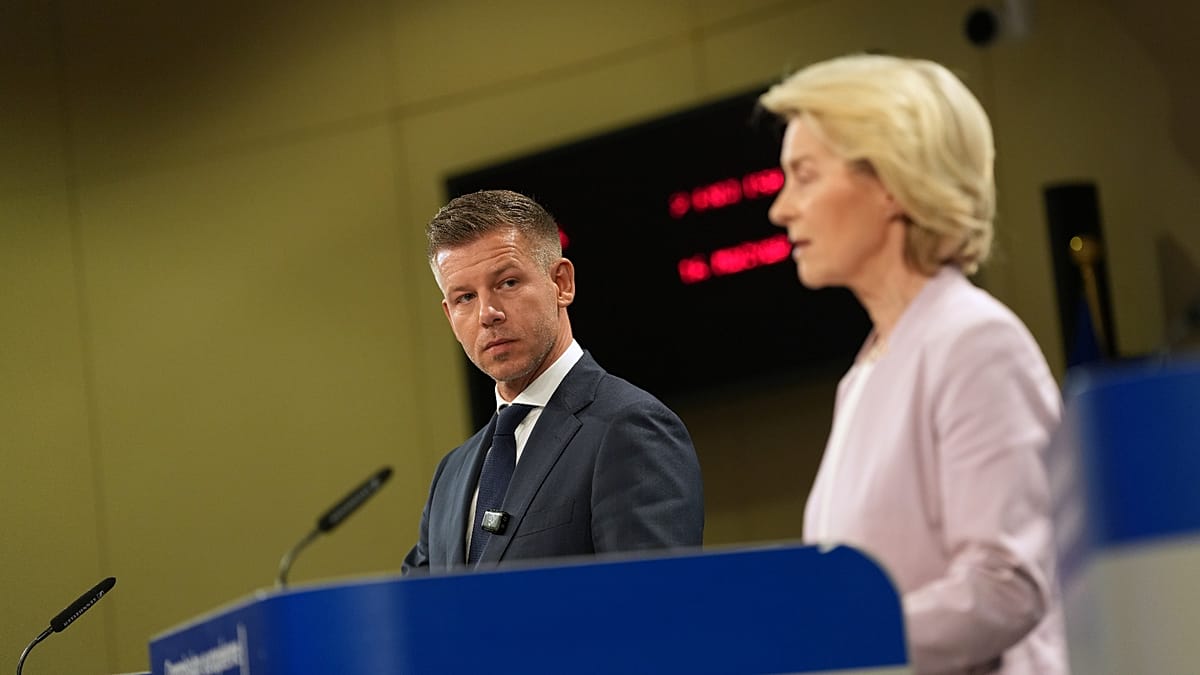
Ursula von der Leyen, António Costa and Emmanuel Macron will join Hungarian PM Péter Magyar in Budapest on Friday to mark 70 years since the 1956 uprising, signalling a reset in EU-Hungary ties after Viktor Orbán’s years in power.
Published on 19/10/2026 - 12:16 GMT+2•Updated 12:24
European Commission President Ursula von der Leyen, European Council President António Costa and French President Emmanuel Macron will travel to Budapest on Friday to mark the 70th anniversary of Hungary’s 1956 anti-Soviet uprising.
The ceremony, hosted by Hungarian Prime Minister Péter Magyar, marks a significant thaw in relations between Brussels and Budapest after years of acrimony under his predecessor, Viktor Orbán.
It will be von der Leyen’s first visit to Hungary since 2024, when she attended a European Political Community summit in Budapest.
Under Orbán, Hungary repeatedly blocked EU initiatives to support Ukraine, opposed financial and military assistance to Kyiv and maintained close ties with Russian President Vladimir Putin.
But since Magyar’s Tisza Party swept to power in April, the new government has pledged to bring Hungary back into the European mainstream and settle its longstanding disputes with Brussels.
In a sharp break with Orbán’s policies, Magyar’s government has identified Russia as a security threat and approved the opening of four negotiating clusters in Ukraine’s EU accession talks.
Ukrainian President Volodymyr Zelenskyy has also been invited to the commemoration, but Magyar said he is unlikely to attend. The Hungarian prime minister has said he invited all European leaders except Putin. The full list of participants has not yet been released.
On 23 October 1956, Hungarian students took to the streets to protest against Soviet occupation. The demonstrations quickly grew into a popular uprising, which the Red Army later crushed. Zelenskyy’s presence would have drawn parallels with Ukraine’s defence against Russia’s full-scale invasion.
The commemoration could also allow European leaders to signal their support for Magyar after the Orbán era and to speak up against Russia's war in Ukraine.