US pauses naval escorts through Hormuz as progress made on peace deal, Trump says
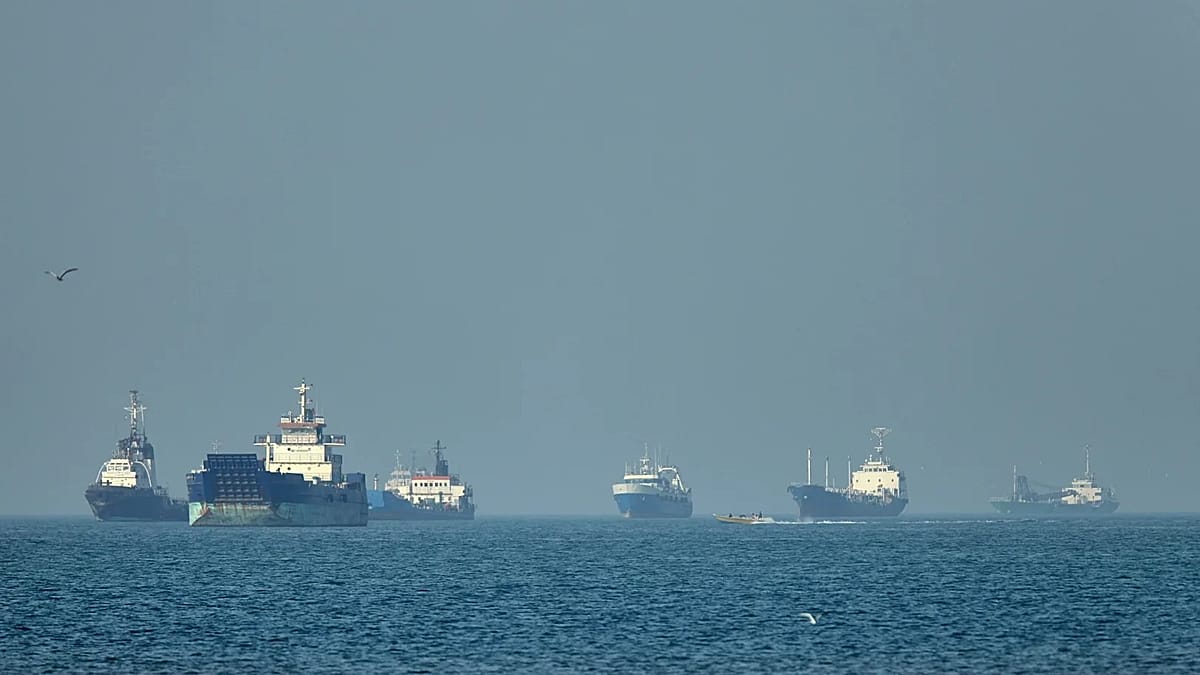
The United States will pause its mission to escort commercial ships through the Strait of Hormuz barely a day after it began doing so, President Donald Trump said, citing a desire to reach a peace deal with...
The United States will pause its mission to escort commercial ships through the Strait of Hormuz barely a day after it began doing so, President Donald Trump said, citing a desire to reach a peace deal with Iran.
Despite military clashes in the strait in recent days, Trump said "great progress has been made" towards a deal and that the ship-guiding operation "will be paused for a short period of time to see whether or not the agreement can be finalized and signed."
Trump said the decision had been taken following a request by Pakistan and other countries, but added that the blockade of Iranian ports will “remain in full force.”
The announcement came after Secretary of State Marco Rubio said the United States had completed its offensive operations against Iran, although he vowed to unleash a "devastating" response to any new attacks by the Iranians on shipping in the crucial waterway.
The dispute over shipping through Hormuz as well as Iran's nuclear programme are at the heart of deadlocked talks between Washington and Tehran following two months of war, which began with US-Israeli attacks in late February.
On Monday, Iran fired missiles and drones at US forces, while Washington said it struck six Iranian boats it accused of threatening commercial shipping, in the sharpest escalation since a month-long truce took effect on 8 April.
And on Wednesday, French shipping company CMA CGM said one of its vessels had been targeted by an attack in the Strait of Hormuz.
"The CMA CGM San Antonio was the target of an attack yesterday while transiting the Strait of Hormuz, resulting in injuries among crew members and damage to the vessel," the shipping firm said in a statement, adding those injured had been evacuated for treatment.
The Maltese-flagged vessel was attacked a day after US President Donald Trump launched the so-called "Project Freedom" operation.
Araghchi in China
Meanwhile, Iran's Foreign Minister Abbas Araghchi is in China where he held talks with his Chinese counterpart Wang Yi in Beijing.
China is a key customer for Iranian oil, defying sanctions imposed on Iran by the United States as Washington seeks to choke off its revenue.
Wang called for an end to hostilities in the Middle East and for the United States and Iran to reopen the Strait of Hormuz "as soon as possible."
"China considers that a complete cessation of fighting must be achieved without delay, that it is even more unacceptable to restart hostilities, and that continuing to negotiate remains essential," he said.
Araghchi's trip comes days before Trump is also scheduled to visit China on 14-15 May to meet President Xi Jinping, a trip he has already delayed due to the war.
'Maximum pressure'
On Tuesday, Trump urged Iran to "do the smart thing" and make a deal, saying he did not want to kill more Iranians.
Iran's President Masoud Pezeshkian said Tehran remained open to dialogue, but rejected US "maximum pressure" demands as "impossible."
Pentagon chief Pete Hegseth said the United States was "not looking for a fight" but warned that any more Iranian attacks would face "overwhelming and devastating" force.
Israel's air force chief Omer Tischler also said the military was ready to "deploy the entire air force eastward if required."
For a second day in a row, the United Arab Emirates, a key US ally in the Gulf, said it was intercepting missiles and drones from Iran on Tuesday, but the claim was "categorically" denied by Iran.
"The armed forces...did not launch any missile or drone operation," Iran's military command said.
The war has battered the global economy despite the ceasefire reached last month.