Von der Leyen's heatwave plan comes as Europe runs out of time to adapt
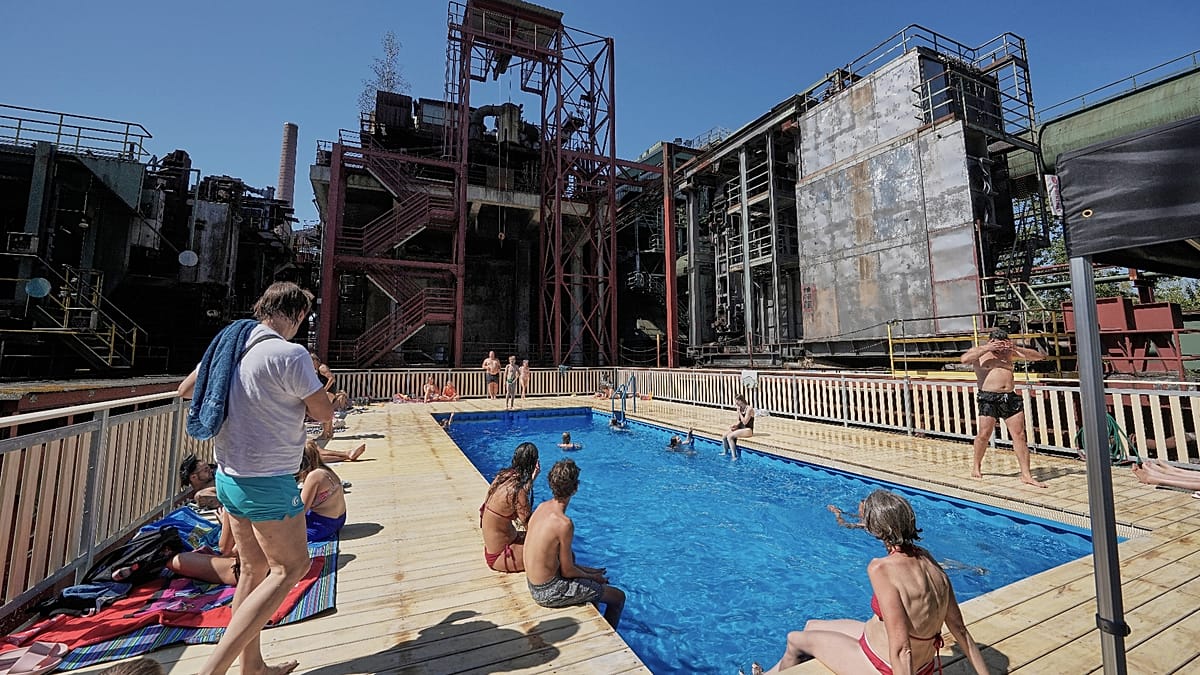
Commission President Ursula von der Leyen announced a European Heatwave Plan to anticipate intense heatwaves expected to return next summer. A new Climate Insurance Alliance was also unveiled as the EU struggles to close the financing gap needed to address climate adaptation and mitigation.
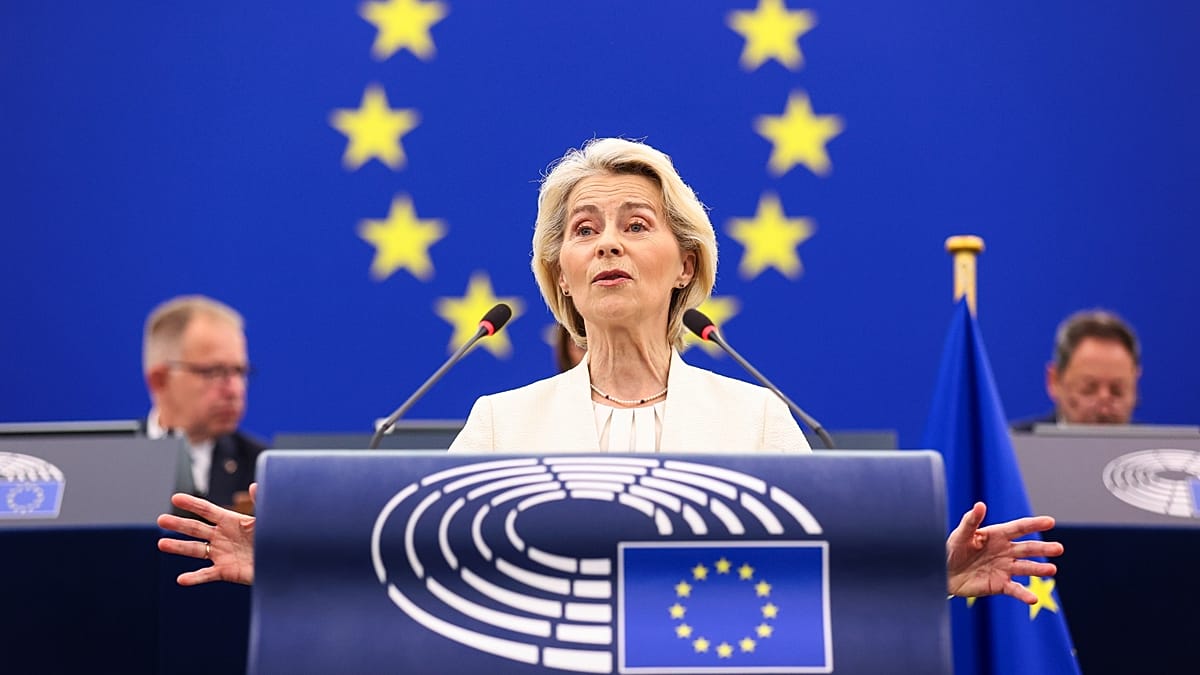
European Commission President Ursula von der Leyen announced a "new European heatwave plan" during her inaugural State of the Union speech on Wednesday, after a dramatic summer that saw thousands of hectares burnt and tonnes of crops lost to raging wildfires.
"We need better early warning systems and better health preparedness. We need urban adaptation and cooling. And we need to support the most vulnerable," von der Leyen told EU lawmakers in Strasbourg.
She described the summer as a “summer of truth”, pointing to hundreds of thousands of hectares burned, crop losses and more than 35,000 excess deaths.
However, the timing is hard to ignore. The EU needs no further warning that extreme heat is becoming a major climate risk—it has just experienced it, with repeated heatwaves sweeping across Europe this summer.
The continent experienced an exceptionally early heatwave in May, with daily average temperatures in parts of western France, England and Wales more than 10°C above normal. June then brought another intense heatwave across much of Europe, while western Europe recorded its second-highest June temperature on record.
By the time the Commission unveils its package, much of the emergency work that a heatwave plan is supposed to prepare Europe for will already have happened — or failed to happen.
Failed strategies?
However, the EU won't start from zero.
Its 2021 Adaptation Strategy already set out the goal of making Europe climate-resilient, while the bloc's Mission on Adaptation is supporting regions and communities in building resilience. But heat has largely remained a national and local responsibility, leaving a patchwork of warning systems, cooling measures, building standards, worker protections and emergency responses.
The new European Heatwave Plan, unveiled by von der Leyen on 16 September, matters less because Brussels is finally recognising heatwaves as a European-wide problem than because of what it actually requires governments to do.
The Commission’s biggest challenge will be deciding whether to establish a coordination framework or step in where national action is proving insufficient.
Cooling is an obvious example. A European survey cited by the Commission's Sustainable Energy Week found that 26% of EU households could not keep their homes comfortably cool in 2023, rising to almost 35% among the lowest-income households.
That turns extreme heat from a climate issue into a broader challenge spanning energy, housing and social policy. Simply telling Europeans to install air conditioning is not much of a solution if millions simply can't afford it.
Urban residents face another challenge. Concrete-dominated cities can remain dangerously hot overnight, while hospitals, schools, care homes and workplaces must be equipped to cope with temperatures that were once considered exceptional.
A serious European heatwave strategy would need to link cooling with building renovation, urban greening, water management, electricity demand and social protection, rather than treating extreme heat as a short-term weather emergency. This would require the Commission to adopt a truly holistic approach.
Ticking bomb
Meanwhile, climate projections point towards more frequent and intense heat, while the EU's climate center, Copernicus, estimates that Europe already recorded about 62,800 heat-related deaths in 2024, following roughly 47,700 in 2023 and 61,700 in 2022.
"More than 35,000 additional deaths during the heatwaves. Care homes and hospitals dangerously overheated. And all of this is a mere preview. These were the hottest summer months ever — but probably the coolest of the years to come," von der Leyen said.
For years, the EU’s climate debate focused largely on how quickly emissions could be cut. Now, the Commission must urgently determine how to adapt to the warming already locked in — a daunting task, as the newly announced plan highlights the gap between Brussels’ climate ambitions and the pace of implementation on the ground.
Facing a financial gap amounting to billions of euros, Von der Leyen also announced the setup of a Climate Insurance Alliance, noting that only around 25% of catastrophe losses in Europe are covered by private insurance.
"This means that, far too often, national budgets become the insurer of last resort. We need to take action to close this gap," the Commission chief said.