‘A revolutionary act to watch it’: the film India’s censors do not want you to see
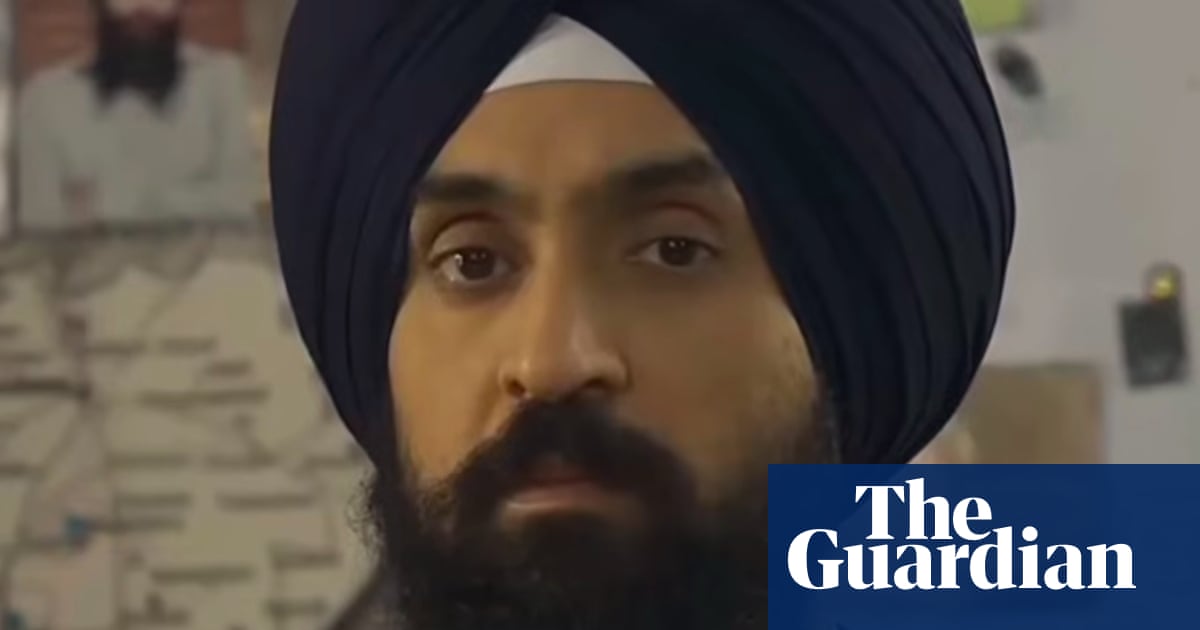
For as long as he has been a film-maker, there is one story Honey Trehan has wanted to tell above all.Growing up in the Indian state of Punjab, Trehan saw firsthand the devastation wrought by police who...
For as long as he has been a film-maker, there is one story Honey Trehan has wanted to tell above all.
Growing up in the Indian state of Punjab, Trehan saw firsthand the devastation wrought by police who carried out tens of thousands of killings and illegal cremations in the 1990s, as they cracked down on a separatist insurgency. To those in Punjab, the period remains one of the darkest in India’s modern history. Jaswant Singh Khalra, the activist who exposed the crimes and was murdered in the process, is a national hero.
By 2022, Trehan’s movie about Khalra and the crimes of Punjab police was completed under the title Ghallughara – a reference to a historical massacre of Sikhs – but the film would never reach Indian cinemas.
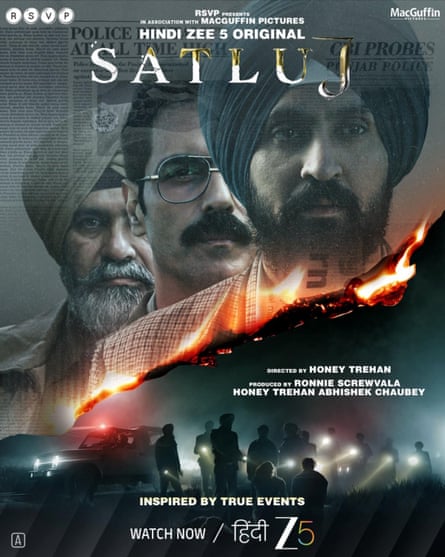
For more than three years, India’s film censorship board, which must approve all cinematic releases, blocked the film from release. When it was finally launched straight to a streaming platform last week, under a new title, Satluj, it was taken down within 48 hours and banned on government orders as a threat to national security.
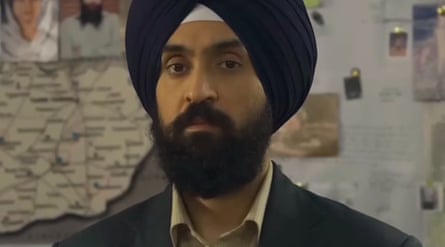
Trehan describes the ordeal of trying to get Satluj released as “dystopian” and decries “undemocratic censorship” and alleged political interference under the Narendra Modi government re-shaping India’s film industries. He claims Indian cinema has been widely co-opted as a propaganda arm for the government’s rightwing, religious nationalist agenda, where there is “only room for one kind of story to be told”, particularly in mainstream Hindi films.
“It is clear to me that there is no creative freedom in India today,” says Trehan. “When you see the level of censorship happening, films getting blocked by the film board and banned from release, it makes you question: does democracy exist in this country any more?”
Even today, discussions of Punjab’s separatist movement – which raged in the 1980s and 1990s, fighting for an independent Sikh homeland called Khalistan, before it was crushed by the state – remain highly sensitive for the Modi government.
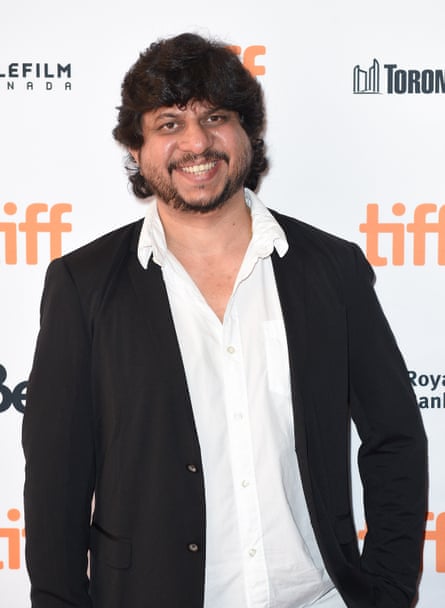
A ministry of information committee backed the ban on Satluj on the grounds that it lacked “balance” and had “whitewashed” the acts of Punjabi separatist militants, with the potential to incite national security issues.
“Show Muslims in a bad light and your film will get a standing ovation in the parliament,” says Trehan. “But if you dare to try and tell an uncomfortable part of our history, suddenly you are a criminal and a threat to national security.”
Trehan is not the first Indian film-maker to fall foul of India’s Central Board of Film Certification (CBFC) in recent years. The body is legally mandated to be independent, but it has faced growing accusations by those in the industry of pushing an agenda aligned with the Hindu nationalist politics of the Modi government. The CBFC has not responded to the allegation and was not available for comment.
“From what I’ve experienced, the film board is hand in glove with the government,” says Trehan. “They are being used as a backdoor entry to control the narrative of the film industry.”
Film-makers have complained of an opaque process in which films that make any reference to government oppression, certain religions, police brutality or caste violence are blocked by censors or face demands to make impossible cuts. Film-makers have even been told to cut images of meat in films, to avoid offending Hindus.
There is no official figure for the number of films that have languished due to censor demands. One recent example was Santosh, which debuted at Cannes to acclaim but was blocked by the CBFC for its negative portrayal of police. Writers and directors privately acknowledge that self-censorship has become a norm in the industry in order to ensure their movies get a cinema release, and not lose huge sums in profits.
Meanwhile, Bollywood films with an alleged pro-government slant such as The Kashmir Files and The Kerala Story, which some have accused of telling a highly distorted version of historical events – and of fuelling Islamophobia and Hindu-Muslim division – have sailed past the board and been backed with government tax breaks and promotion.
Anna MM Vetticad, an Indian film journalist who has written about censorship, said that the treatment of Satluj encapsulated what many film-makers now have to endure.
She described a culture where film-makers were reprimanded by the censor board for realistic portrayals of social oppression or for simply “showing India in a bad light”.
“The goal is to create an atmosphere of fear and encourage self-censorship among those who have not boarded the rightwing bandwagon,” says Vetticad. “The effect on Indian cinema is potentially devastating.”
Trehan says few in the industry are willing to be as vocal as him, fearing retribution. “I know many other film-makers who have faced similar issues but we lack unity as an industry. Most people are too worried about speaking out, especially because there is often a lot of money and careers at stake. If you criticise, suddenly a police case could be filed against you.”
In total, CBFC demanded 127 cuts to Trehan’s film, some of which appeared impossible for him to execute. As well as changing the name, the censors wanted the removal of all mention of Punjab police, the killings, government, the crematoriums where the bodies were illegally burned, the name of a former prime minister, the dates the events took place, images of the Indian flag and any scenes that showed the police in a “bad light”. They even requested the removal of Khalra’s name and a scene showing his murder inside a police station – an incident of historical record.
Trehan was particularly concerned by an insistence that he change the name of Trilokpuri – a real area in Delhi where Sikhs were massacred in the 1980s – to the invented name of “Khanpuri”, which is a name associated with Muslims. “This incident had nothing to do with Muslims, so why change to this name?” says Trehan. “You could clearly see them trying to insert their Hindu-Muslim political agenda into each and every film.”
The censors also questioned whether the film was really based on true events, prompting Trehan to hand them a file of more than 1,800 pages of research, including witness statements and court testimony.
Trehan says that “afterwards one of the people on the board said to me: ‘To my surprise, it’s a true story. But Mr Trehan, I want to ask you one thing. Who speaks the truth so loudly in today’s time?’”
As Trehan continued to be stonewalled by the CBFC, he eventually opted for a digital-only release earlier this month which does not require censor approval. He never thought the government would go as far as immediately banning the film, describing the effect as “chilling”.
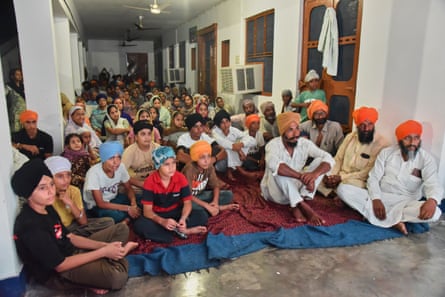
He says that far from provoking a “law and order situation” in Punjab, Satluj has in fact brought communities in the state together. Since it was banned, guerilla screenings have been held across Punjab and surrounding states in village squares, gurdwaras, schools, community halls and fields, sometimes with thousands turning out. “It’s become a revolutionary act to watch it,” says Trehan.
At an event this month in remembrance of Khalra’s 1995 disappearance, people gathered on the banks of the Sutlej River in Punjab – where police are believed to have dumped his body and many others – and families of victims protested against the banning of the film.
Ranjit Singh, 38, was three years old when his father was tortured to death by police. “This film is, for me, an archive of him – of the injustices he bore on his body,” says Singh. “It may be the only archive that all this happened. I cried for days after watching it.”
Anuj Behal contributed reporting from Punjab