Four hidden trails with medieval roots in the Eastern Alps
Celtic tribes, Roman soldiers and medieval knights paved the way in the forests of the Eastern Alps. These trails are still there and can be discovered by history lovers during a sunny autumn weekend.
If you like active weekends with hiking and learning, one of the best places to go in Central Europe are the eastern slopes of the Alps.
The lower peaks of the mountains are in Austria, but the foot of the slopes reach Hungary.
It's not only the forests and the mountains which connect the two countries, but also the past, with the mountain bike trails and hiking routes passing through hundreds of years of history.
Velem, Hungary: A small village with rich past
Driving to the village of Velem you can see the white chapel of Saint Vid (or Vitus) from tens of kilometres away.
At an altitude of 589 metres, the chapel is located deep in the forest of the Kőszeg Mountains range, at the end of a moderate hiking trail. It was built in the early 18th century on the ruins of an ancient town.
Celts inhabited the area approximately 2,000 years ago, then the Romans built a watchtower to defend the aqueduct system supplying water to the ancient city of Savaria. If you walk in the forest, the man-made Celtic terraces can still be seen.
The other popular hiking trail from Velem leads to Geschriebenstein, the region's highest peak which is right on the border of Hungary and Austria.
Hiking from Velem is a bit adventurous, but from Austria it is an easy walk.
The third hiking route is the "Springs Trail" (Források útja) that showcases both popular and lesser-known springs in the Kőszeg Mountains. It is 14 kilometres long and features 11 stations.
Kőszeg: The small Hungarian town that prevented the advance of the Ottoman army in 1532
Only a few kilometres from the Austrian border lies Kőszeg, one of the most charming small towns of Hungary. Kőszeg is most famous for Jurisics Castle, a medieval Gothic castle that was in the centre of the siege of Kőszeg in 1532.
The captain of the castle had approximately 50 soldiers joined by 700 Hungarian locals who faced the Ottoman army which wanted to reach Vienna. How did the defenders of the town prevented the advance of the mighty army? The real story remains a mystery but some say the heavy August rains had their say.
Hiking across the mountain from Velem to Kőszeg is a day-long programme, but really worth it. You can pass cold water springs, see the chapel of Saint Vid and visit the Styrian houses used by foresters in the 1800s.
Lockenhaus: Do modern knights ride bicycles?
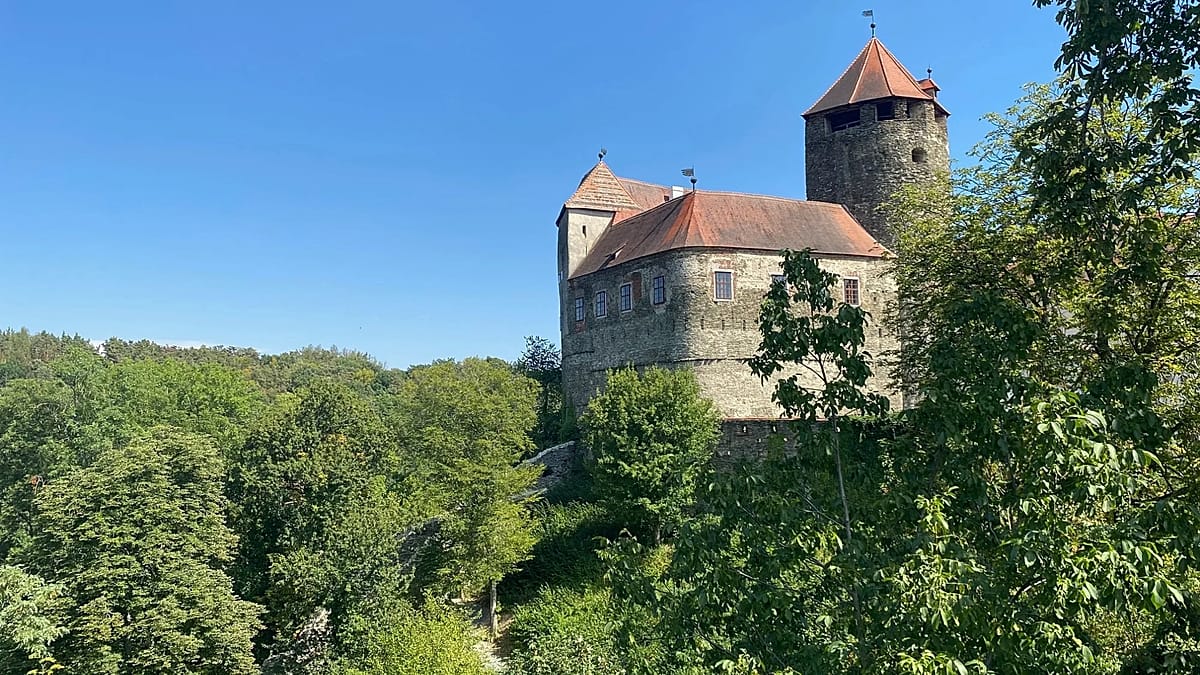
Lockenhaus knight's castle, once home of the mysterious Templars, is embedded in the beautiful landscape of Austria's Geschriebenstein Nature Park.
The surrounding forest is criss-crossed by mountain bike trails rated from light to extremely hard.
From the nearby town of Rechnitz, the Burgenland Trails shuttle bus helps cyclists take their bikes up to the designated stops. Minibuses equipped for bike transport operate on a regular schedule on weekends and public holidays.
From Geschriebenstein, the highest peak of the region, bikers can reach Lockenhaus, Rechnitz Badesee or Hungary as well.
The bicycle trails are separated from the walking routes, so hikers and bikers do not get in each other's way.
The 13th century castle of Lockenhaus has a remarkable Geoffroy's bat colony that visitors can observe from April to July.
Other feathered castle inhabitants include the majestic kestrels and lightning-fast swifts. And if you are lucky, you can also observe a beaver family by the lake near the castle.
Stadtschlaining: An Austrian town that kept its medieval look
Another 13th century medieval castle in Austria, near the Hungarian border, is Burg Schlaining. Located on the outskirts of Stadtschlaining, it is only 22 kilometres from Lockenhaus on the R1 Jubiläumsradweg bicycle road.
With its medieval centre, Stadtschlaining is situated in a beautiful hilly countryside, and therefore offers possibilities for recreation like walking and bike rides. At the end of the tour, visitors can enjoy the atmosphere of the castle gardens for free.
Stadtschlaining is also the starting point for excursions into the idyllic “weinstrasse” (wine route) of the Südburgenland. Here you can discover charming vineyards with “heuriger” wine taverns and farms which produce cider.