‘An underused tool’: How regenerative farmers are shielding Spanish land from wildfires
Smouldering scars threaten to flare up across western and central Europe as heatwaves and drought continue to fuel the risk of wildfires. Near Athens, spreading flames forced further evacuations after a...
Smouldering scars threaten to flare up across western and central Europe as heatwaves and drought continue to fuel the risk of wildfires.
Near Athens, spreading flames forced further evacuations after a mid-air collision between two firefighting helicopters killed a Greek and a Danish national on Sunday.
It is the latest tragedy in a summer that has already forced around a third of a million people from their homes across France and Spain.
It is yet to be seen whether this fire season will beat 2025’s already-alarming record: 10,000 square kilometres burned across Europe – spurred on by temperatures rising more than twice as fast as the global average.
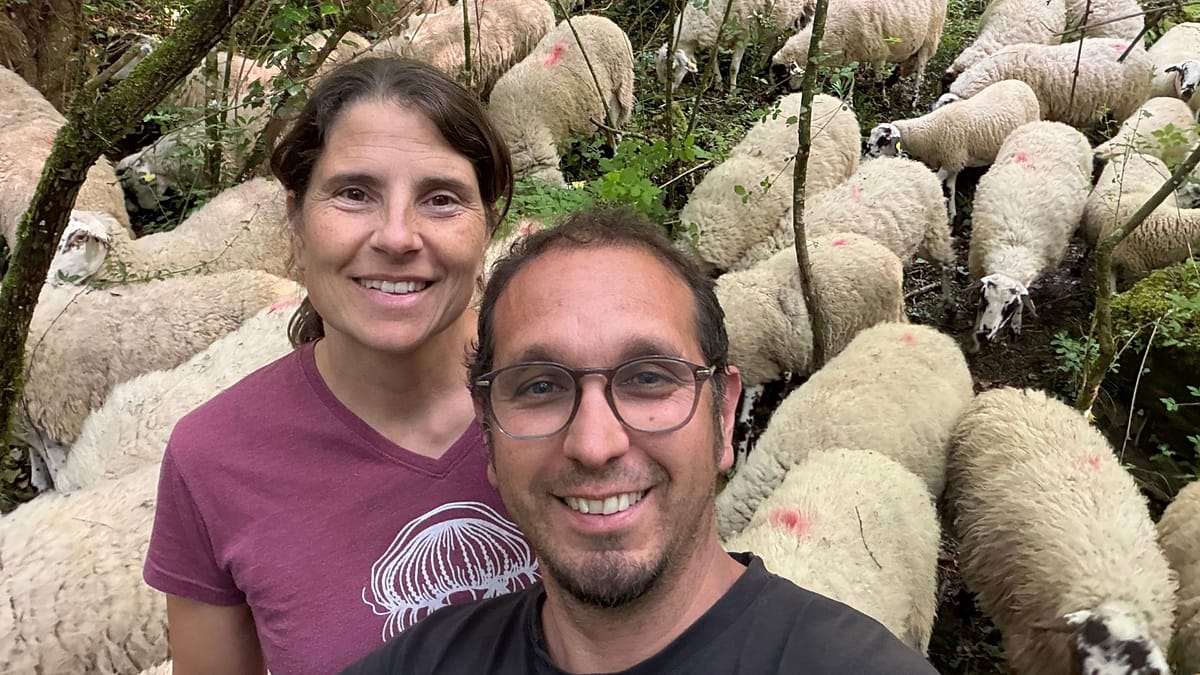
“This is the most dangerous summer I’ve ever experienced,” says Sergi Caballero, co-founder of permaculture farm and cooperative Mas Les Vinyes in Catalonia, Spain. “We’re inland, we get minus 12 in winter – but this year I’ve measured 45°C in the field. I’ve never had to use a fan at night before.”
Trained as an ADF – Catalonia’s volunteer forest defence firefighters, often the first on scene before professional crews can reach rural areas – Sergi and his wife have positioned water tanks at key points around their farm, on standby for any blaze that flares up nearby.
How can Europe’s farmers prepare for fires?
Far from being simply reactive, Sergi has spent more than a decade preparing to defend his farm from Spain’s worsening wildfires.
At Mas Les Vinyes, that has meant mapping out the most vulnerable areas, removing fire-prone pine trees while keeping fire-resistant oaks and holm oaks, using wood chippers to turn dead branches into soil fertiliser, and grazing livestock on dry grass before it can turn into fuel.
Two water-cleaning ponds holding around a million litres between them have been placed in the farm’s most exposed western sector, acting as firebreaks that firefighters can also connect hoses to.
“The single most important thing we can do is stop grass from drying out and building up – keeping it grazed – and managing the forest understorey with livestock,” Sergi says. “That is the key.”
These practices have helped triple the farm’s soil organic matter, increasing the land’s ability to retain water.
Still, it’s no match for this year’s drought: a similar dry spell three years ago wiped out a whole crop of apricots in full production, and this year Sergi has already counted 20 more dead pear trees.
“I’ve had to replace dead apricot trees with figs because they’re more drought-resilient, but figs sell for much less,” he says. “The crops that survive the climate crisis are worth the least. That’s a problem policymakers need to solve.”
Landscape restoration an ‘underused tool’ against fires
Sergi isn’t the only farmer securing his land through regenerative practices – but he doesn’t represent the majority, either.
Commonland, an international non-profit that works with local communities across more than 50 countries to restore degraded landscapes, argues that this kind of land restoration is Europe’s most overlooked defence against fire.
“Our ecosystems have been stripped bare by industrial land use practices and we’re witnessing the results in real time,” says Lily Maxwell-Lwin, Commonland’s head of advocacy.
“Our most underused tool to fight wildfires is restoring our landscapes. As well as moving away from a fossil fuel economy, we must invest in green infrastructure as a vital risk management tool, focusing on strengthening our natural reserves to protect communities from the devastating impacts of extreme weather.”
Commonland’s approach, known as the 4 Returns Framework, ties land restoration to social impact, biodiversity, financial return and a sense of pride in place.
‘Striking’: How does fire damage on conventional farms compare?
Down south in Andalucía, Carmen Bueno, farmer and founder of regenerative agriculture association Serranías Vivas, put a preventive fire plan in place in May. She says her land grazed with sheep and horses escaped unscathed by this year’s wildfires.
Even her cork oaks, though scorched, look set to recover. “The key to this is that we did not remove the cork during the last 11 years: the cork is the trees’ greatest protection,” she says. “While it may look burnt on the outside, it is protecting the tree itself.”
For farmers who don’t follow regenerative grazing practices, this summer’s fires have been far more damaging.
The Spanish Association for Regenerative Agriculture analysed the impact of a recent fire on farmland managed both conventionally and regeneratively.
“The conclusions are striking,” says the association’s president, Ana Digón.
Where sheep had been moved daily and used to clear areas around buildings and regenerate the prairies, the fire ran through quickly, she says. Trees were affected but will recover.
But on neighbouring farms with unplanned grazing, there was far more bush, the fire stayed longer, and trees were much more damaged – “some won’t recover,” Ana says.
Land with no free-roaming grazing at all suffered the worst effects. “That’s where the fire really took hold,” says Ana. “Dense bush, massive damage, replanting required, and the fire brigade couldn’t even get in.”
Abandoned land met a similar fate – and abandonment is a growing problem in rural Spain, where the average farmer is now well over 60 and fewer young people are stepping in to take over.
Ana ties this directly to the decline of transhumance, the centuries-old practice of moving large herds – first wild, then shepherded – across the landscape. “That’s largely gone now,” she says, “and there are roads and fences as obstacles blocking open grazing.”
Left ungrazed, vast areas of forest grow impenetrably dense, meaning when fire takes hold it can only be fought from the air.
‘Deep sadness’ and paperwork: What comes after the fire
When a wildfire strikes, there’s an immediate “adrenaline rush: fighting the fire, community spirit, media coverage,” says Ana. But what happens once the smoke subsides?
“People are left with the reality of what they’ve lost,” she says. “When a herd dies, the farmer loses genetic material they’ve been developing for generations – animals adapted to their land, their management, their reality. It’s not just about buying a new herd – this kind of loss sets them back decades.”
Then comes the paperwork. “Farmers who’ve just been through a crisis are buried in bureaucracy to claim compensation,” Ana explains. In Galicia, where land is fragmented into hundreds of tiny parcels and ownership is often unrecorded after generations of informal inheritance, farmers are still expected to document every parcel and rental agreement to claim what they’re owed.
“A year after last year’s fires, many still haven’t received compensation,” she says. “They’re broke, exhausted, and we’re seeing people fall into deep sadness and frustration. Some are abandoning farming altogether.”
Carmen sees the same gap between the public outcry over fires and what they cost those who live through them. “They see the landscapes burnt and feel pitiful, but they don’t see how the farmers get burnt from incoherent and unfavourable policies – and the reality of the risks and losses they face from wildfires,” she says.
“We, as regenerative, organic, biodynamic farmers, take on the emotional and financial burden. We are, in many cases, the only people left in landscapes truly stewarding the land. And most people don’t realise the reality of that responsibility.”
Bureaucracy plagues Europe’s farmers even outside of times of crisis. “With all the legislation, bureaucracy and inspections, people working in farming can barely rest,” says Sergi. “I have four and a half days of holiday this year. Is that an attractive future for young people?”
His frustration echoes a wider revolt that has seen tractor-riding farmers blockade streets from Spain to Germany to the Netherlands in recent years, complaining of unfair competition and a lack of support to navigate crippling environmental red tape.
‘Regenerative farming is a ray of hope’
Worsening wildfires are only adding to the pressure on a sector already in decline. “The average age of farmers in Spain is well over 60 and rising. Young people don’t want to be shepherds or farmers,” says Ana.
But she sees regenerative farming as “a ray of hope.” A 2023 study of regenerative farmers in Spain found that 93 per cent reported being satisfied with their work. “That’s an extraordinary figure in a sector riddled with depression and abandonment,” Ana says.
“Regenerative agriculture is bringing hope, tools and connection back to farming – discovering new birds, insects and plants on your land, connecting with other passionate farmers, finding real ways to lower the risk of disaster like wildfire. It’s about nurturing that excitement and understanding the tools to farm better.”
What’s holding regenerative farming back?
Passion alone isn’t enough to carry regenerative farmers, however. Institutional support remains an essential, largely missing, part of the puzzle.
“We need recognition that this is a public service, not just farming,” Sergi says.
Right now, farmers bear the heightened cost of more careful land management themselves, which feeds into pricing that makes their produce less competitive against commercially farmed goods that damage, rather than replenish, the land.
Both Sergi and Carmen graze cattle in woodland – far more expensive and labour-intensive than keeping animals in stables – yet Carmen notes that farmers in Spain are typically charged to access public woodlands for this purpose, rather than paid for the fire prevention service it provides.
“They are providing a vital societal service in managing woodlands and preventing wildfires that should be rewarded,” she says.
Tax policy is one way governments could ease the burden on regenerative farmers, Sergi argues. Meat in Spain – whether from an intensive factory farm or a regeneratively grazed flock – is currently taxed at the same reduced 10 per cent VAT rate as most food, with no distinction made for how it was produced.
Sergi wants that changed: a 0 per cent rate specifically for grass-fed meat, he argues, would reward farming that helps prevent fires, while Spain’s top 21 per cent rate – reserved for luxury goods – would more honestly reflect the true cost of the alternative.
“To me, the real luxury is eating factory-farmed pork and chicken that generates massive emissions,” he says. “Those intensive systems increase desertification in my region.”
“We hope these wildfires will show that regenerative farming is a vital tool for landscape management and wildfire prevention,” Ana says, “but we can only leverage it if farmers get the right funding and training.”