Astrotourism: Two resorts in Saudi Arabia are the first to receive DarkSky certification
Published on 02/09/2026 - 11:56 GMT+2 Can’t wait until 2027’s “eclipse of the century” for your next celestial adventure? DarkSky International has given its seal of...
Published on 02/09/2026 - 11:56 GMT+2
Can’t wait until 2027’s “eclipse of the century” for your next celestial adventure? DarkSky International has given its seal of approval to two resorts in Saudi Arabia which offer guests the perfect vantage point to gaze into the night skies.
DarkSky, which champions efforts to tackle light pollution while promoting responsible outdoor lighting that is “beautiful, healthy and functional”, kickstarted its Approved Lodgings & Resorts certification programme in August.
Based on a set criteria, the certification process assessed factors, including whether a facility is located in a region with an exceptional dark sky resource, as well as understood sensitive nighttime resources and means to reduce the impact of light.
Two resorts in Saudi Arabia are among the first to receive the accolade, including Nujuma, a Ritz-Carlton Reserve and the expansive 30,000 square-metre Desert Rock Resort.
Nujuma, encircled by the isles of Saudi’s turquoise Red Sea, takes its name from the Arabic word for “stars” and offers guests a beachfront escape, private villas with wall-to-wall windows with panoramic views of the starlit-filled sky come sundown.
The hotel has its very own resident astronomy expert who leads guests on guided stargazing tours, inviting them to look up and learn about the local significance of the stars.
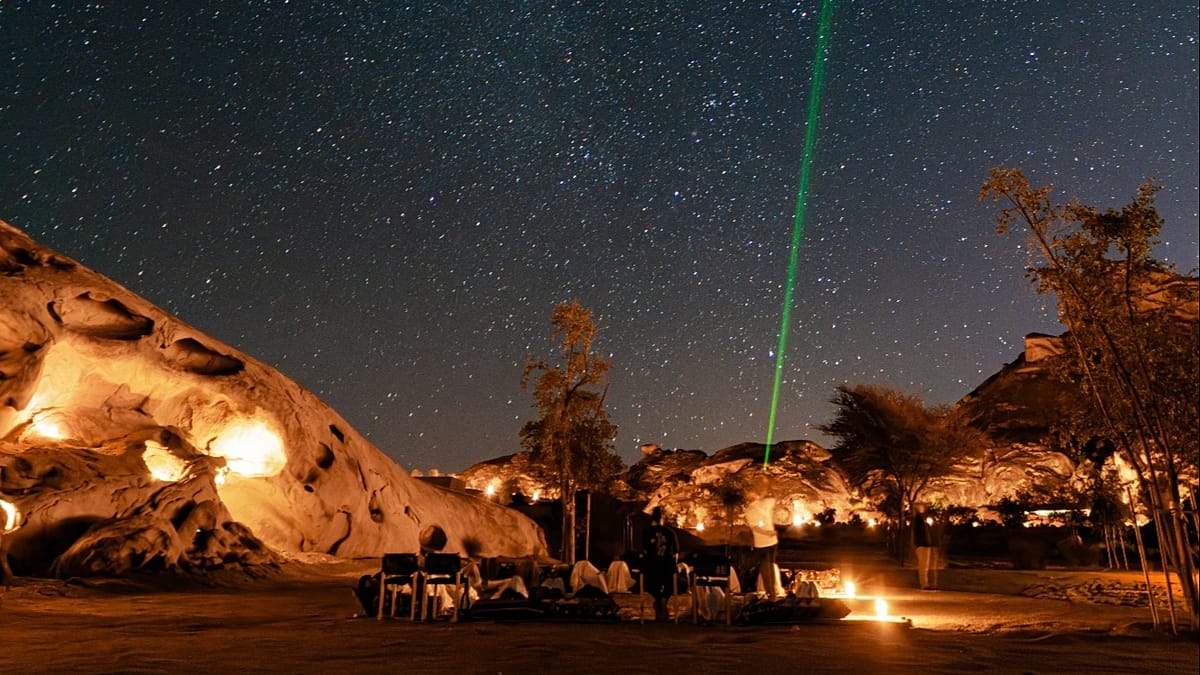
Meanwhile, recognised for the quality of its night sky, outdoor lighting practices and providing educational outreach, Desert Rock’s 54 villas and 10 suites are embedded within the mountains or suspended from rocky pinnacles in the heart of the Kingdom’s Hijaz Mountains, where, according to the resort, “the landscape continues long after sunset”.
A 20-minute drive away from Red Sea International Airport, the resort’s residences each feature their own private pool alongside sweeping views of the valley.
At sundown, the Astronomy Centre allows guests to observe planets, constellations, meteor showers and other celestial wonders visible from the resort’s vantage point, using powerful telescopes.
The hour-long Arabian Astronomy Observation experience blends science and Saudi culture to explore the dark skies.
Desert Rock also encourages guests to venture out on night hikes, including via its Luna Trail, which offers an ideal route for stargazing in the desert landscape.
The Al’Ayali Albeidh Lunar Nights experience is led by an astronomy expert, where the moon and stars are the focal point of discussions about their cultural significance as well as historic role in navigation and calendaring.
All these efforts are made as part of prioritising protecting the night sky. Desert Rock limits its use of unnecessary artificial light, helping to create optimal stargazing conditions, while maintaining the natural light-dark cycle for local wildlife.