A €100 billion queue: Why Europeans are waiting years for clean energy
More than €100 billion of renewables are stuck in Europe’s outdated energy grid, as communities across the continent wait years for solar panels and heat pumps. A new report by consulting group AFRY,...
More than €100 billion of renewables are stuck in Europe’s outdated energy grid, as communities across the continent wait years for solar panels and heat pumps.
A new report by consulting group AFRY, commissioned by non-profit Beyond Fossil Fuels, found that a staggering 375 gigawatts (GW) of clean energy projects and 455 GW of battery storage projects are trapped in distribution grid queues across the continent.
To put that into perspective, a power plant that operates continuously throughout the year with a capacity of 1GW could power approximately 876,000 households annually, based on average consumption figures from Carbon Collective.
Without intervention, the report – which analyses Bulgaria, Czechia, Germany, Greece, Italy, Poland, Spain, and Great Britain – warns that Europe risks “deepening” its reliance on volatile fossil fuels.
Despite Europe’s renewable boom, which saved the EU €51 billion last year by lowering oil and gas imports, almost a third (29 per cent) of the bloc’s electricity mix still comes from fossil fuels.
Europe’s energy grid is ‘stalling’ the green transition
Experts argue that connection queues for renewable and storage projects are becoming more congested, “stalling” the energy transition and "weakening" Europe’s competitiveness.
“As fossil fuels continue to fail us, distribution system operators (DSOs) need to keep up with the pace of the transition to cleaner energy to protect Europe’s energy security and improve affordability for consumers,” says Duygu Kutluay, a campaigner at Beyond Fossil Fuels.
“Without governance and operational reforms, Europe’s renewable potential will be stifled, not for lack of ambition or investment, but due to constraints in the very networks meant to deliver it.”
Europe’s energy grid was originally built around coal, and later gas, which tends to operate from centrally located plants. However, green energy such as wind and solar farms tends to be located in remote areas – including offshore – making it harder for DSOs, who transport the electricity being produced to residential homes and businesses.
The bloc’s proposed European Grids Package, which was presented by the European Commission in 2025, aims to tackle this – pledging €1.2 trillion in grid investments by 2040, along with more than 500 GW of new renewables capacity.
The package also includes strategic “energy highways” that will address eight key bottlenecks across Europe, which the Commission says represent the “most urgent energy infrastructure needs”.
This includes connecting electricity across the Pyrenees to better integrate the Iberian Peninsula, ending electricity isolation between Cyprus and continental Europe, and strengthening the electricity interconnection of the Baltic States to boost energy independence from Russia.
However, Beyond Fossil Fuels argues that the proposed package doesn’t fully address key distribution-level bottlenecks and “could go further” in strengthening target measures that support DSOs.
“In today’s European energy transition context, the value of new gigawatts increasingly depends on the ability to connect them, move them, and balance them,” says Chiara Natalicchio, a senior consultant at AFRY.
“Networks—across both transmission and distribution—are the critical enabler: they ultimately decide whether new resources translate into usable value in a power system that is becoming more electrified, more distributed, and more volatile.”
Europeans waiting years for clean energy
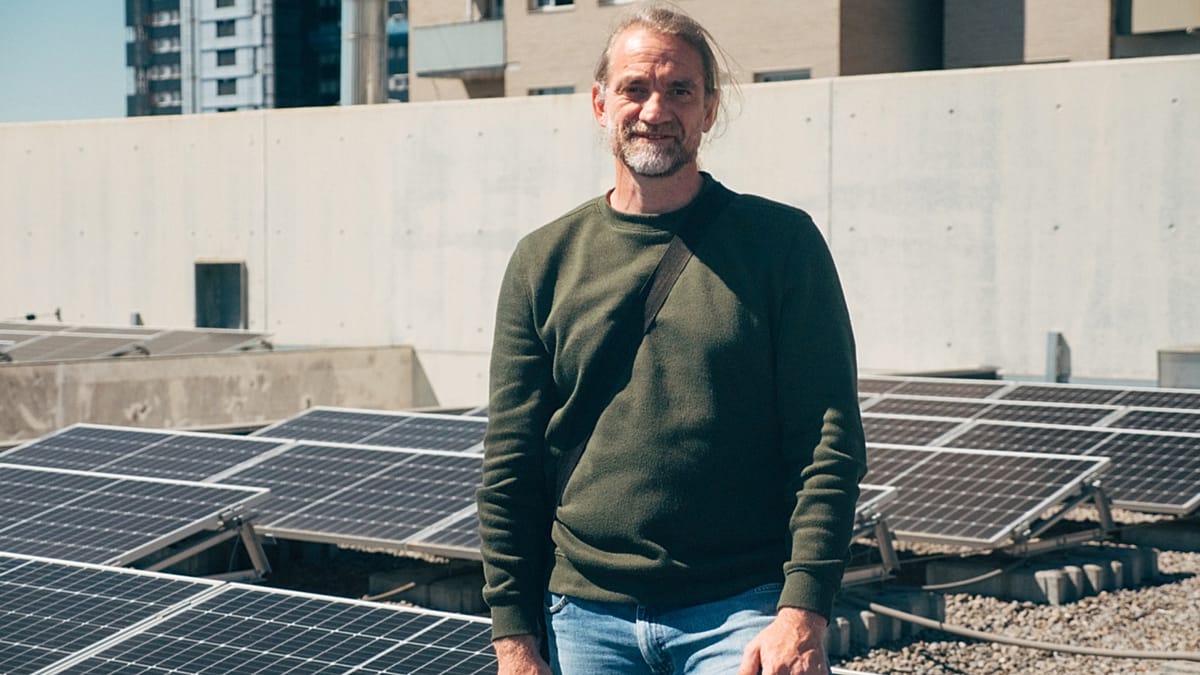
In Germany, an energy community has been waiting for more than two years to connect rooftop solar across a multi-building housing complex, despite already securing investment.
The report says that slow digitalisation and distribution-level grid constraints are causing the delay, causing tenants’ energy bills to skyrocket following the war on Iran.
Anna Leidreiter, Board Member of BürgerEnergie Nord, says solar panels directly benefit people’s wallets by allowing them to create their own electricity price breaks on their rooftops.
“But for that to happen, distribution grid operators must upgrade their IT systems and implement better administrative measures,” she adds.
“Fossil fuel conflicts around the world pose a threat to us. That is why we need DSOs to act quickly to connect more solar energy, not only as the energy of the future, but also as the energy of freedom and security.”
Over in the Spanish municipality of Terrassa, grid capacity limits are preventing the roll-out of rooftop solar on public buildings and shared clean energy projects for citizens.
“Trying to connect renewable energy projects has become an absolute obstacle course,” says Pau Sales, Environmental Technician at Terrassa Municipality.
“The biggest challenge we face with distribution companies and grid access, is with their administrative systems, which are slow and difficult to navigate. Ongoing delays and barriers at the distribution-level waste both time and public money, while contributing to frustration among those committed to the energy transition.”
British social housing provider Together Housing was set to install 1,500 heat pumps a year to bring heating costs down for its tenants as the cost of living rises. Tenants already using heat pumps have been able to save £250 (€288) a year, but distribution level constraints have slowed the roll-out process.
“Our progress is being constrained by under-resourced distribution network operators and limited grid capacity,” says Gemma Voaden of Together Housing.
“We cannot achieve the scale and pace of our goal without improvements to the grid and system operators. DSOs need more resources to handle the pace of the transition and help us end our fossil fuel reliance. If we can get rid of fossil fuels, everyone stands to benefit.”
Europe’s battery backlog
Battery storage systems (BESS) – which can help store surplus energy rather than forcing solar and wind farms to switch off – have been identified as a key factor for addressing Europe’s strained energy grid.
The EU battery fleet has increased tenfold since 2021, reaching more than 77 GWh, but experts warn that more progress is needed.
According to Beyond Fossil Fuels, the capacity of battery storage projects stuck in grid connection queues in Germany, Britain, and Poland already exceeds more than double those countries’ 2030 battery storage targets.
“As European countries move to displace fossil gas with clean flexibility technologies like storage, delays are costing consumers and the energy transition through curtailed renewable energy, reliance on expensive backup power, and inefficient grid operations,” the organisation says.