Two cousins hired a 4WD to find their missing Australian family in Nepal. Then ‘there was no more road’
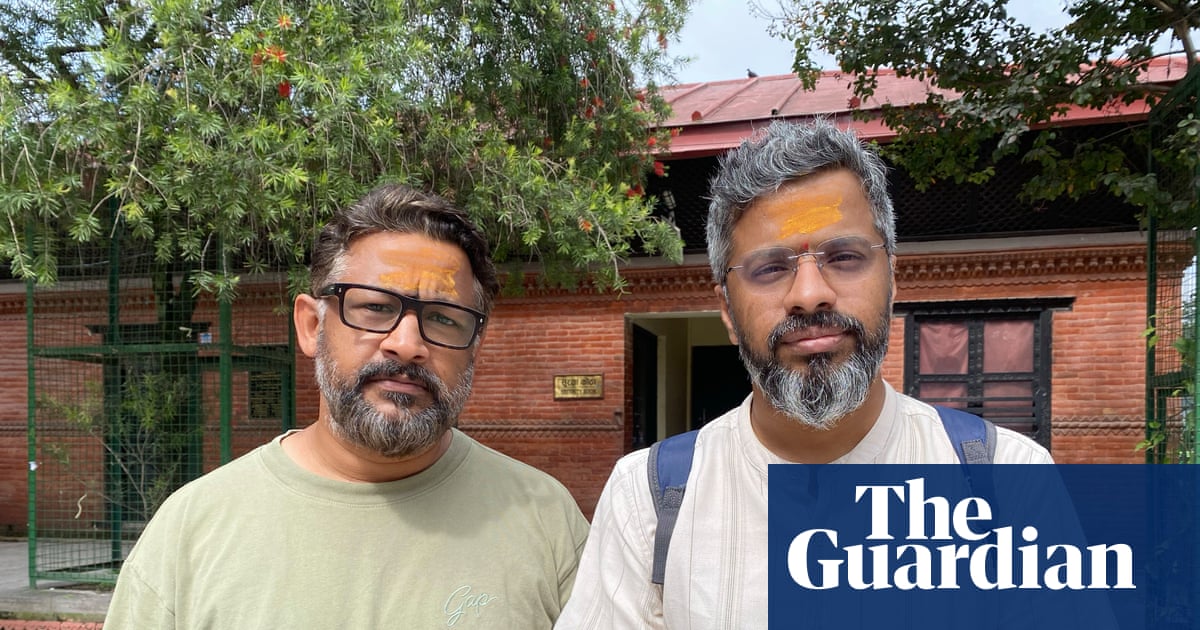
As the hot sun beats down in Kathmandu, Santosh Swaminathan and his cousin Nathan Subramanian take a break from searching for their missing loved ones to stop at a temple and pray.After they lost contact with...
As the hot sun beats down in Kathmandu, Santosh Swaminathan and his cousin Nathan Subramanian take a break from searching for their missing loved ones to stop at a temple and pray.
After they lost contact with Swaminathan’s sister and her husband following the devastating flood last week, they flew from India to Nepal. But as they wait for the army to rebuild roads and bridges into the areas where their loved ones were, they’re getting desperate.
Like other families of missing Australians, they’re now taking matters into their own hands. They’re hiring four-wheel drives and heading into the flood zones to search.
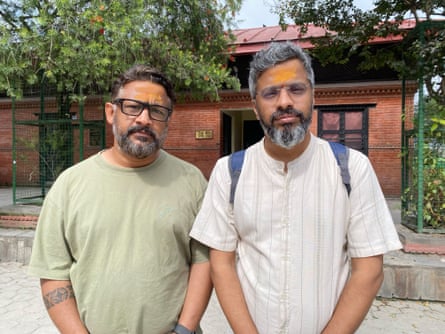
Swaminathan’s sister Chitra Venkatraman, 46, and her husband, Venkatraman Balakrishnan, 52, were among 15 Australians travelling to Mount Kailash, on a spiritual trip with the Himalayan Glacier Adventures tour group. In total, more than 5,000 people have been reported missing in Nepal and a further 546 in the Tibet region of China after the flooding, which has killed more than 1,200 people. Thirty-eight Australians remain unaccounted for.
“They are just fun-loving people,” Swaminathan, 42, says of the missing New South Wales couple. “My sister, she is so funny … They are a very loving family. We miss them very badly right now.”
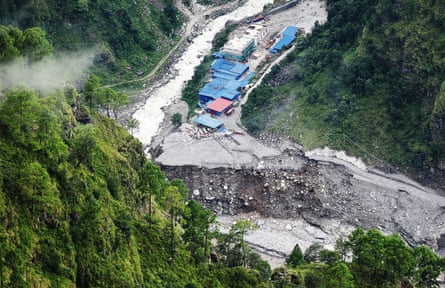
On the weekend, the pair hired a 4WD in the capital, Kathmandu, and headed up the valley. The conditions are dangerous: roads collapse under cars, landslides are common and near-constant rain makes it hard to see. There are long delays, and when parts of the road slide away, travellers jump out of their cars to fill holes back in with rocks. Parts of the valley don’t have power, and there is no clean water or food.
But Subramanian, 45, says they had to try. They managed to get to Trishuli, a town roughly 40km from Kathmandu but still another 20km from where the Australians would have been in Syabru Besi.
“We took a car, food, everything,” Subramanian says. “The conditions are very bad. It’s been really bad – after Trishuli, there was no more road.
“It was a risk, a very high risk. But that is all we can do. As family members, we need to do whatever we can do.”
The day after their attempt, there was a huge mudslide on the road just down from Trishuli, leaving army personnel, aid workers and journalists stranded overnight.
Other families sent another search car up on Wednesday to look for the missing group, which is made up of Canadians, Americans, Singaporeans, British citizens and Australians. They are hoping they can get all the way to the area where the group was staying.
“We are just trying whatever we can,” Swaminathan says.

There’s two pieces of information buoying the families from the group. First, the group was around a 45-minute drive from the area of the border with Tibet which was decimated by the wall of water and rock that ran down the valley. Second, the phones of other members of the group pinged last Wednesday – one as late as 2.30pm, hours after the flood hit.
In Kathmandu, the family have visited the Australian and Indian embassies. They’ve spoken to Nepali politicians. They’ve been handing over any leads to police, and visiting the hospitals as the injured and dead start to arrive from Rasuwa, where the worst of the flooding hit.
Swaminathan is in contact with the couple’s son, Akash Venkatraman, 22, who lives in Sydney with his younger brother. He says they’re being supported by family there.
On Tuesday, the Australian ambassador to Nepal, Simon Ernst, warned families against heading into the flood zone.
“We do understand for those with missing loved ones what an incredibly difficult time this must be,” he said. “Please do be assured we are working around the clock … to locate loved ones.
“And a reminder, please, avoid travel to the impacted area. We remain in the monsoon season; the risk of further flooding is very real and furthermore, access to flood-damaged areas is very difficult, if not impossible.”
A lack of technology available to the Nepali army has hampered the search efforts.
On Thursday, the Australian government announced it was deploying a team of specialist drone operators to contribute to the search efforts. But families are questioning why Nepal didn’t ask for technical help sooner.
Subramanian says he knows the army is doing its best and trusts their capabilities, but acknowledges the technology they have access to is limited.
“Ideally on the first day, they should have actually taken support from other governments,” he says. “Things could have been different.”
In the heat and chaos of Kathmandu, the pair are trying everything they can. Running on anxiety and adrenaline, they are determined to bring their family members home.
“Today we are in a situation where we don’t know what to do tomorrow,” Subramanian says.
“We don’t know what’s next. We are just trying to turn over every stone that we can as civilians. We believe they are still alive, and now we are begging for a miracle.”