Arrests fuel fears among Madagascar’s gen Z protesters that new regime no better than one they overthrew
The arrest of several protesters in Madagascar has increased fears among young people that the military regime that took power last year after huge Gen Z demonstrations will be no better than the government...
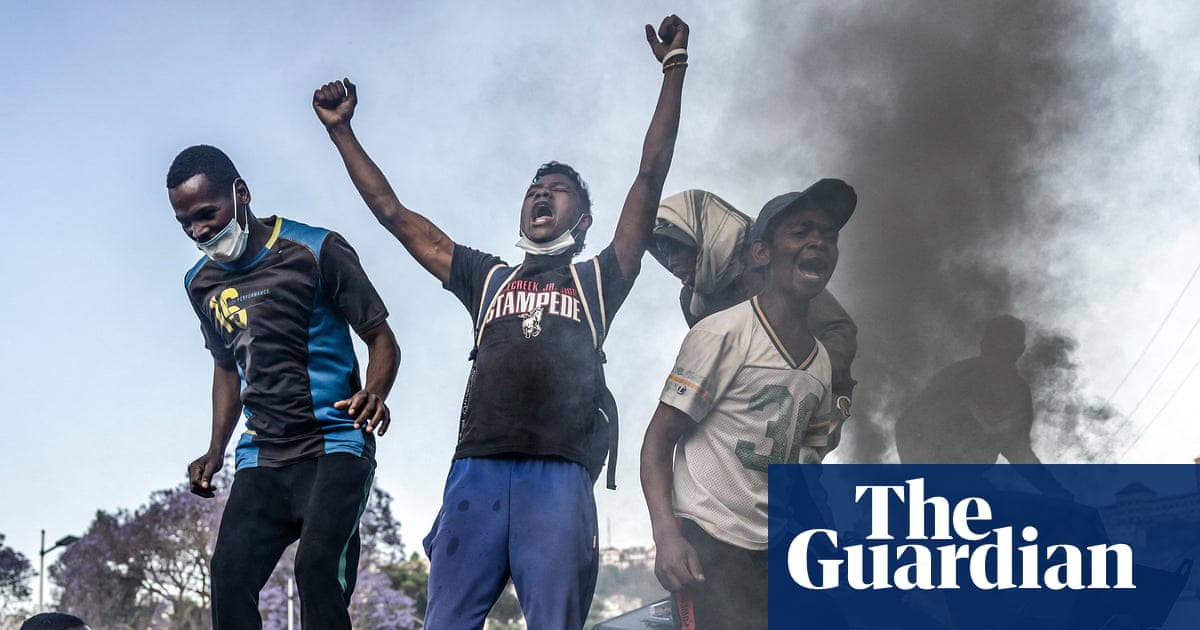
The arrest of several protesters in Madagascar has increased fears among young people that the military regime that took power last year after huge Gen Z demonstrations will be no better than the government it overthrew.
Four Gen Z activists, Herizo Andriamanantena, Miora Rakotomalala, Dina Randrianarisoa and Nomena Ratsihorimanana, were arrested on 12 April, one of their lawyers said, two days after taking part in a protest calling for an election date to be set.
They are accused of offences related to undermining state security and criminal conspiracy, said Aliarivelo Maromanana. “They’ve all denied it and there’s no evidence whatsoever,” he said.
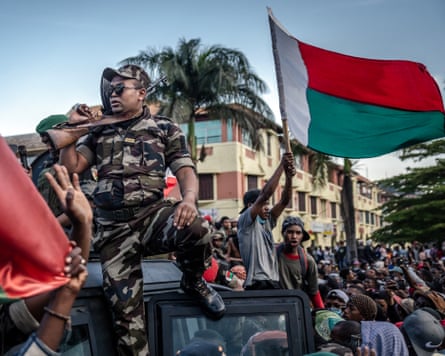
Col Michael Randrianirina came to power in a coup in October 2025 after weeks of youth-led protests under the banner Gen Z Madagascar.
His spokesperson, Harry Laurent Rahajason, asked about the arrests, said: “Here in Madagascar there is what we call the separation of powers. So the presidency has nothing to do with cases dealt with by the national police.”
Two of the activists were released and admitted to hospital on Tuesday, Maromanana said. On Friday, only Herizo, the group’s leader, was still in detention. Local media quoted the national police as saying that the activists were not harmed or intimidated during detention and the two in hospital had taken ill.
Two more activists were arrested on Wednesday night, Gen Z 261, one of the groups that emerged from the previously leaderless Gen Z Madagascar movement, said on Thursday. No further information was available about their detention.
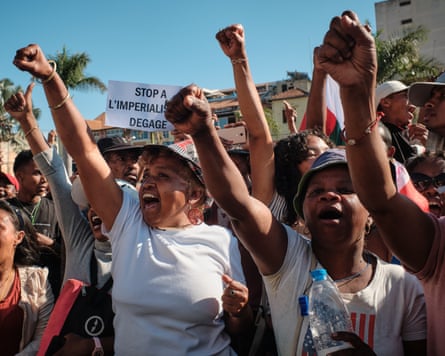
Young people had been jubilant when the previous president, Andry Rajoelina, fled in October. However, many have since become disenchanted by Randrianirina’s choice of government officials, whom they see as being part of the old, corrupt elite; a lack of economic reforms; and the new regime’s closeness to Russia.
The arrests raise “serious concerns around the respect for fundamental freedoms,” said Ketakandriana Rafitoson, a Transparency International Madagascar board member. “It is a pattern we saw under the previous administration and one that many hoped would be broken with the transition. So [last] Friday’s protests were a test for this regime and they failed it.”
Madagascar, an Indian Ocean island of 32 million people, is rich in biodiversity and natural resources, including vanilla, rubies and sapphires.
However, the former French colony has been bedevilled by coups and corruption, as well as cyclones and droughts that have been made worse by the climate crisis. In 2024, it was the fifth poorest country in the world, with a GDP per capita of $545 (£403), according to the World Bank.
September’s protests erupted after two councillors in the capital, Antananarivo, were arrested for protesting against water and electricity outages. Since the regime change, these services have not substantively improved, said Elliot Randriamandrato, a leader of Gen Z Madagasikara, another Gen Z Madagascar group.
He said: “For the moment, there’s no real reforms that have been implemented by the government. That’s maybe why everyone is so frustrated, because we don’t see anything clear and visible.”
Randriamandrato said he was less concerned with the government announcing an election date – the president has said it would be within two years of his October takeover – than with a new constitution.
“We ask for more clarity on the date of the constitutional consultation, because the date and the methodology and the way they’re going to lead this important moment … it’s during those consultations that the real issues are going to be addressed,” he said.
He cited electoral reform as one example of the change his group wanted, adding: “It’s [currently] a system that only permits people with more money to win.”
The president’s spokesperson, asked about the constitutional reform process, referred to a press conference he had held on Wednesday where he told reporters authorities were investigating corruption estimated at 3,811bn ariary (£679m) and linked the investigations to threats to the president.
Rahajason showed a video of what he said were drones flying above the president’s home on the night of 11 April, Radio France Internationale reported. He also said there was a plan to set the national parliament on fire.
Meanwhile, the military regime has received donations of military trucks, helicopters and tanks from Russia, after Randrianirina visited Putin in Moscow in February.
Shely Andriamihaja, a member of Gen Z Madagasikara, said her group was “very worried about the risk of new state capture from foreign countries”, adding that she was not defending Madagascar’s former colonial ruler, France.
Rahajason confirmed there were Russians in Randrianirina’s presidential guard. Asked for the number and the reason for their presence, he replied: “Why are you asking this question? … Why did the Ukrainian president call on guards of other nationalities? Why is it normal? And why, when a Malagasy calls on the services of international guards, why is it not normal?”