Europe battles the flames: Wildfire contained near Athens and evacuations in Spain
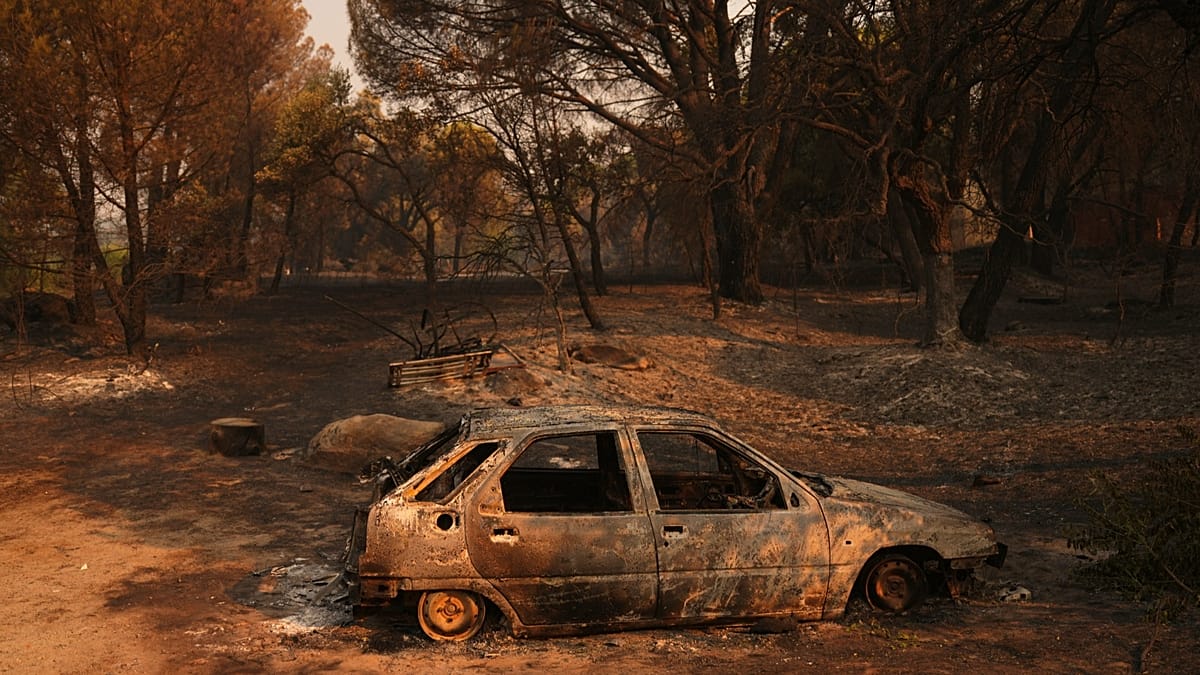
Much of Europe is bracing for yet another scorching heatwave following periods of record drought that have driven rivers to historic lows, ignited historic forest fires and contributed to thousands of deaths.
Europe continues to grapple with major wildfires as the threat of further heatwaves continues to hang over the continent.
In Greece, a new fire broke out on Monday in the village of Kouvaras, 60 kilometers southeast of Athens, prompting the mobilisaiton of almost 200 firefighters.
Greek fire services announced that the blaze has since been brought under control.
Large parts of central and southern Greece, including the greater Athens area and most of the Aegean Islands, face a high risk of wildfires on Tuesday, according to civil protection forecasts.
Five people, four firefighters and the pilot of a water-dropping helicopter, have lost their lives in fires that have ravaged the country in recent weeks.
Additionally, a massive wildfire west of Athens destroyed dozens of homes in the seaside resort of Porto Germeno, reducing to ashes one of the last remaining green spaces near the Greek capital.
Meanwhile, in Spain firefighters struggled on Monday to control three large wildfires in the south that forced the evacuation of around 800 people due to shifting winds and difficult terrain, officials said.
More than 600 firefighters backed by 26 water-dropping aircraft were battling the blaze which broke out last week in the Andalusian province of Huelva, said the region's minister for emergencies, Antonio Sanz.
"We are facing an extremely difficult, complex and dangerous wildfire, with the weather conditions continuing to offer us no respite. It is a long-distance race full of obstacles," he said.
"We have to be realistic: there is no forecast that the fire will be brought under control any time soon. There are still hours and probably days of intense work ahead."
Officials on Monday ordered the evacuation of the municipality of El Madrono, which has a population of around 300 people, bringing to about 800 the total number of evacuees.
Crews are also battling blazes in Castellón and Segovia. All three fires have been graded level two for severity.
In Italy, forecasts indicate an extremely high fire risk across much of the country due to an intense heatwave driven by a North African anticyclone. Nineteen cities have been placed on red alert.
According to the latest update from the association Legambiente, 80,325 hectares have burned in Italy since the start of the year, surpassing the estimate of 70,000 hectares made at the end of July.
Sicily, Calabria and Puglia are the Italian regions hardest hit by the fires. Together, they account for approximately 73% of the total area burned nationwide.
However, northern Italy is not spared from these conditions. Lombardy is facing multiple blazes, with at least seven fires still active on various fronts, stretching from the province of Sondrio to the Brescia area. Hundreds of firefighters and volunteers have been deployed on the ground.
In France, 42 departments were placed at "high" risk of forest fires on Tuesday, up from 17 on Monday, amid a seemingly endless heatwave.
Following destructive fires in the Gironde and Var departments, firefighters have turned their attention to the Drôme, where a fire continued its "slow advance" overnight from Sunday to Monday.
And in Albania, firefighters, helicopters and the army worked through the night to contain a massive forest fire ravaging Mount Krujë.
Authorities evacuated residents from several villages and detained a man suspected of accidentally starting the blaze.
Much of Europe is bracing for yet another scorching heatwave following periods of record drought that have driven rivers to historic lows, ignited historic forest fires and contributed to thousands of deaths.
Swathes of Britain and France on Monday were already under extreme heat warnings with forecasts of temperatures around the mid-30sC.
Unusually high temperatures were also forecast in the coming days across a number of countries not accustomed to the heat, such as Switzerland, Austria and Hungary.