Chef José Andrés warns of multi-year world famine from Iran war
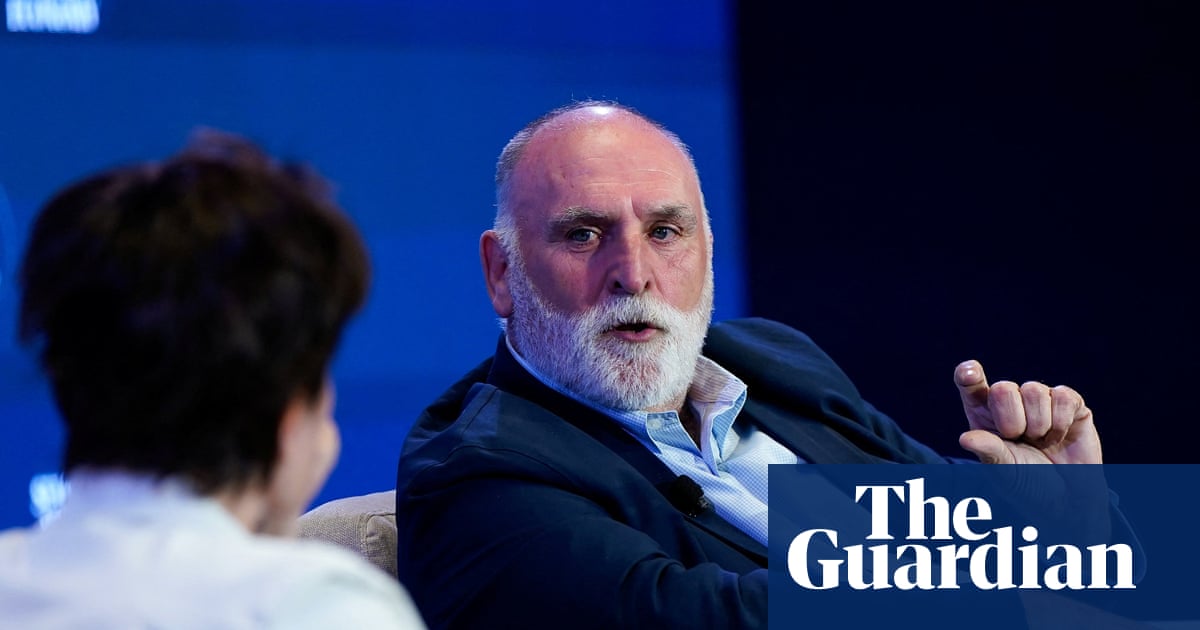
The celebrity chef and humanitarian José Andrés has a warning for the suits in Washington and around the world: stop looking at the oil tickers and start looking at the soil.The World Central Kitchen (WCK)...
The celebrity chef and humanitarian José Andrés has a warning for the suits in Washington and around the world: stop looking at the oil tickers and start looking at the soil.
The World Central Kitchen (WCK) founder believes that the world is sleepwalking into a massive, multi-year famine, being slow-walked by the “silent” collapse of the global fertilizer trade as a byproduct of the war with Iran.
“I foresee a very big increase in famine across the world by the fall of 2026 and 2027,” Andrés told the Guardian on the sidelines of Semafor’s global economy conference in Washington.
In the wake of disruptions around the strait of Hormuz, a global shipping chokepoint central to ceasefire negotiations between the US and Iran, Andrés pointed to nitrogen fertilizer supply chains, which he says have tightened and are pushing up costs for farmers and raising concerns about global food production
“It is not only oil that leaves through the strait of Hormuz,” he said. “It is also heavy, heavy fertilizers.”
The danger, he explained, was the delay. When fertilizers don’t arrive in time for key planting windows, yields can fall in the following harvest cycle. Disruptions in global trade can ripple into higher prices and lower output, hitting the poorest countries hardest.
“In America, you can have a 2% or 3% increase and people will manage,” he said. “But in places like Haiti, they don’t serve you a kilo of rice, they serve you one ounce at a time. Those people are going to be suffering the consequences.”
There is one solution he has been pushing that he believes is insultingly simple: a 3% “peace tax” based on the total GDP of every country.
“The amount of money we are now increasing in the defense of every single country – if we would only put 3% on the side, there would be plenty of food to make sure we wouldn’t have hunger on planet Earth,” Andrés argued.
Under a Donald Trump defense proposal for 2027, spending would rise to $1.5tn, $445bn more than 2026 levels.
Global military spending had already hit a record-breaking $2.7tn in 2024, the highest ever recorded and the steepest annual rise since the end of the cold war, according to Sipri, meaning a 3% diversion would generate roughly $81bn a year. Oxfam, which also backs the 3% solution, in a 2022 report estimated that donor governments need to invest around $37bn every year until 2030 to tackle both extreme and chronic hunger.
Instead, Andrés said, we choose “mayhem”.
“It seems,” he added, “that we are led by people who like to be warriors”.
That reality is hitting home for WCK, which relies on donations and has over the years served millions of meals in both Gaza and Ukraine. The non-profit organization is going to have to wind down operations in the region because of those high costs.
“We don’t want to scale back, but we have the cash in hand we have,” he said. “The increase in the cost is going to make us make certain decisions … I shouldn’t be in the moment of deciding who eats. Everybody should be fed.”
As the US and Europe grapple with the migration question, the political consensus has coalesced around the idea that there should be more barriers. Trump’s One Big Beautiful Bill Act, signed into law last July, authorized $165bn for the Department of Homeland Security, including $46.5bn specifically for the border wall.
In the European Union, the sweeping new pact on migration and asylum is set for full adoption this June, which would impose mandatory border screening, speed up asylum and return decisions at the EU’s external frontier, expand detention-like processing, and require member states to share responsibility either by relocating asylum seekers or paying financial contributions.
Andrés has a message for those who think the solution is more concrete and blockages. Hunger, he said, is the ultimate border-crosser.
“We can build all the walls we want, but if there are hungry mothers that need to feed their children, there is no wall thick or big enough that is going to stop them,” he said.