The tipping point: what happens when deaths outnumber births?
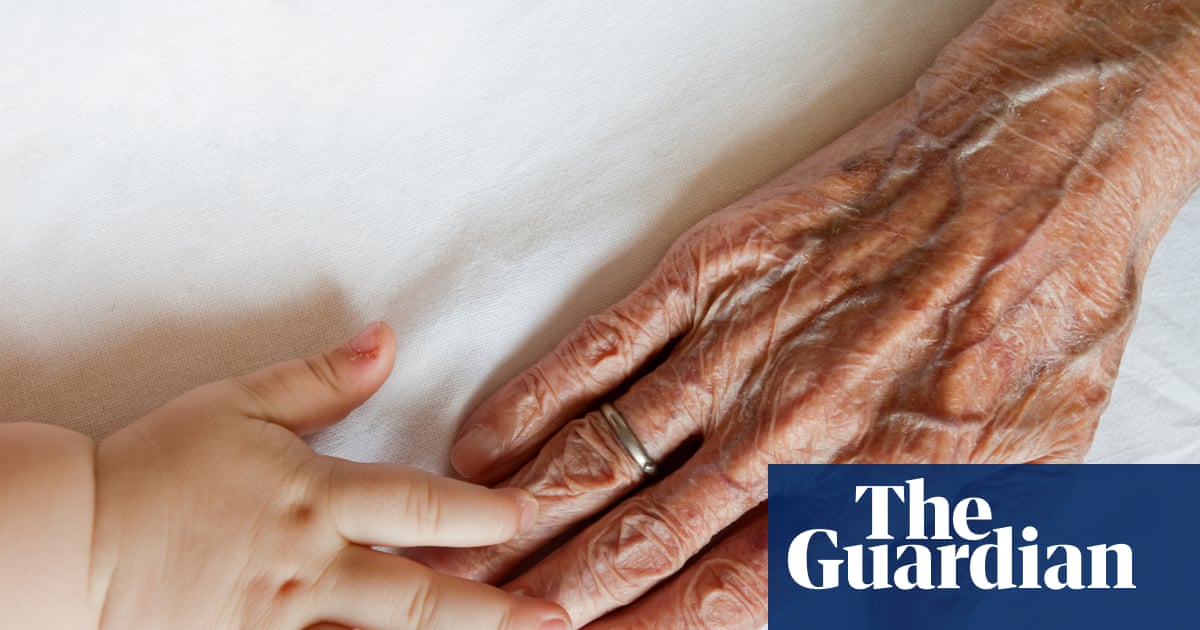
In Japan, there are now companies that specialise in cleaning the apartments of elderly people who have died alone and gone undiscovered for weeks or months, while adult incontinence pads have outstripped...
In Japan, there are now companies that specialise in cleaning the apartments of elderly people who have died alone and gone undiscovered for weeks or months, while adult incontinence pads have outstripped nappy sales for more than a decade. In Italy, depopulating villages are selling homes for €1 to attract new residents and keep services running. In the UK, falling pupil numbers are already closing schools and classrooms in parts of London.
These are not isolated curiosities, but signs of a broader shift taking place across much of the developed world. “In the EU in 2024, 21 of 27 countries had more deaths than births,” said Prof Sarah Harper, the director of the Oxford Institute of Population Ageing. Across Asia and the Americas, too – from Japan and South Korea, to Cuba and Uruguay – many countries are seeing the same pattern.
It reflects two long-running demographic changes: people are living longer, and the average number of children they are having – something demographers refer to as fertility – is falling.
In the UK, the latest projections from the Office for National Statistics (ONS) suggest that deaths will outnumber births every year from 2026 onwards, driven by falling fertility and the large, postwar “baby boom” generation living longer than previous generations, but now reaching later life. The population is still expected to grow, but more slowly than previously forecast, peaking at about 72.5 million in 2054 before beginning to gradually decline. Earlier projections had suggested growth would continue until 2096.
“Although the point where there are more deaths than births is emotionally significant, it’s part of a long process,” said Dr Paul Morland, a demographer and author of No One Left: Why the World Needs More Children. Life expectancy has been rising since the late 18th century, while fertility has been declining since the late 19th century, aside from a brief mid-20th century rebound.
“There comes a point when these two lines cross,” he said.
The reasons people are having fewer children are complex. A fertility rate of 2.1 children per woman is typically needed for a population to replace itself over time. The UK rate is 1.44.
“Recent fertility declines in the UK have been especially marked in those under 30, indicating some postponement,” said Prof Melanie Channon, of the University of Bath. “However, even accounting for the trend towards later parenthood, fertility is still declining.”
These changes are already being felt. “In the short run, those in sectors that serve children – maternity care, schools, childminders – and new parents are feeling the falling number of births,” said Dr Bernice Kuang, of the University of Southampton. Falling enrolment is forcing some schools to close, while businesses such as soft play centres and childminders are struggling. Even midwifery training is affected, as students must attend a minimum number of births.
The effects of such struggles extend beyond children themselves. “Working parents – disproportionately mothers – may have to leave the labour force or reduce their hours,” Kuang said, with implications for the economy and gender equality.
Meanwhile, longer lifespans are contributing to a gradual “greying” of the population, with consequences of its own. As populations age, Morland says, they tend to become more risk-averse, with investment flowing into safer assets rather than innovation, while a smaller, older workforce may be less entrepreneurial and able to sustain economic growth.
The pressures on public finances are also stark, with fewer workers supporting rising spending on pensions, health and social care. Older people require far higher levels of support, placing a growing burden on younger workers.
At the same time, consumption patterns are shifting. Younger people tend to spend more on goods and appliances, whereas older people spend more on care and other services that cannot easily be automated or offshored. “Just as your labour force is drying up, you have more demands for local hands-on labour,” Morland said.
Many developed nations face similar pressures. What is striking, however, is how these trends have spread beyond the richest economies. In many middle- and lower-income countries, fertility is falling despite more limited economic development. Parts of Latin America, as well as countries such as Jamaica and Thailand, and states in India including Tamil Nadu and Kerala, have fertility rates comparable with – or lower than – those in Britain.
“There are countries that will grow old before they grow rich,” said Morland.
All this marks a shift in how demographic change unfolds. Historically, falling birthrates followed rising incomes, urbanisation and education – the so-called demographic transition. But now fertility is declining more rapidly than economic development, driven in part by changing aspirations and social norms.
Even so, the pattern is not uniform. Israel remains unusual in maintaining much higher birth rates – about 3 children per woman – suggesting that culture may play a role. The UK, too, may be more resilient than some of its neighbours. “There is a very strong and persistent two-child norm in the UK, which means our fertility rate is slightly more buoyant than some other European countries where single children are more accepted,” said Channon.
In parts of sub-Saharan Africa, fertility remains high and populations are growing rapidly, even as mortality declines. In parts of central Asia, meanwhile, economies have grown without the same decline in births.
Migration also plays a crucial role. While deaths may outnumber births, the UK’s population is still expected to grow for now, largely because of net inward migration, albeit at lower levels than previously assumed.
Demographic projections are not destiny. They do not account for unexpected shocks or policy shifts, and migration is particularly difficult to predict. As the ONS puts it: “Projections are not forecasts.”
If the direction of travel is clear, the question becomes not so much whether demographic change can be reversed, but how societies respond to it.
Some changes are already “baked in”, reflecting what demographers call population momentum – the way large generations moving through populations continue to shape their size and age structure. “Population growth will slow down, but it will be a long time before it reverses,” said Kuang, pointing to China, where decades of low fertility have only recently translated into population decline.
This means there is time to act. Morland argues that countries with low fertility rates face difficult trade-offs between economic growth, migration and birthrates – though others suggest the picture is more complex.
Rather than trying to “fix” falling birthrates, policymakers should prepare for an older population – from rethinking how old age support is funded, to enabling people to remain in work for longer. “Simply telling people to have more babies is unlikely to work,” said Kuang.
These changes may need to be far-reaching. As Harper, the author of the forthcoming book Ageing Societies: Risk and Resilience, puts it: “The main challenge is that 20th-century labour markets, pension systems, family norms, healthcare institutions and long-term care arrangements were built under demographic conditions that no longer prevail.”
Adapting to longer lives will therefore require rethinking how people work, retire and are supported in later life. “The traditional linear life course – education, continuous employment, abrupt retirement – is increasingly obsolete,” said Harper.
Instead, longer lives may involve more flexible patterns of work, retraining and phased retirement, alongside efforts to tackle ageism and support lifelong learning, as well as redesigning homes, transport and public spaces to support independence and connection in later life.
And even if telling people to have more children is unlikely to work, there may be ways of supporting them to have the children they want. “Everyone should have the right to decide how many children they have, and when,” said Channon. Yet, many are unable to do so: in three-quarters of surveyed countries, more than 40% of women end their reproductive lives with fewer children than they would like, reflecting economic insecurity, work-family conflict and wider social constraints.
Policies that support families, particularly affordable childcare and parental leave, can make a difference, said Channon, but are more effective at helping people realise their intentions than dramatically raising birthrates.
She and others also call for more comprehensive reproductive health education in schools, noting that “curricula often don’t include important topics such as fertility, preconception health, pregnancy and miscarriage”, which might impact young people’s ability to make informed choices, Channon said.
Migration can help ease labour shortages in the short term, as those who move for work are typically young and economically active, but it is not a magic bullet. Migrants also age, meaning a fixed level of migration would not be enough to keep pace with reduced fertility and an ageing population.
“And I am also wary of the ethics of encouraging migrants to come to the UK solely to fill labour gaps while making a path to settlement, or any kind of viable long-term future here, extremely difficult,” said Kuang.
Others point to wider ethical questions, including the impact on countries that lose skilled workers to richer economies.
The good news is that demographic change rarely arrives with a jolt. It unfolds gradually until its effects are visible everywhere – in classrooms, in health and social care, and in the shifting relationships between generations.
The question now is whether those changes continue to accumulate quietly, or whether governments and societies begin to confront them more openly, and work on ways to adapt.