More than 16,000 civilians detained by Russia in its invasion of Ukraine are still held, UN says
Over 16,000 civilians captured by Russia during its conflict in Ukraine are still "deprived of their liberty," with many being held incommunicado and for reasons that violate international law, an informal UN...
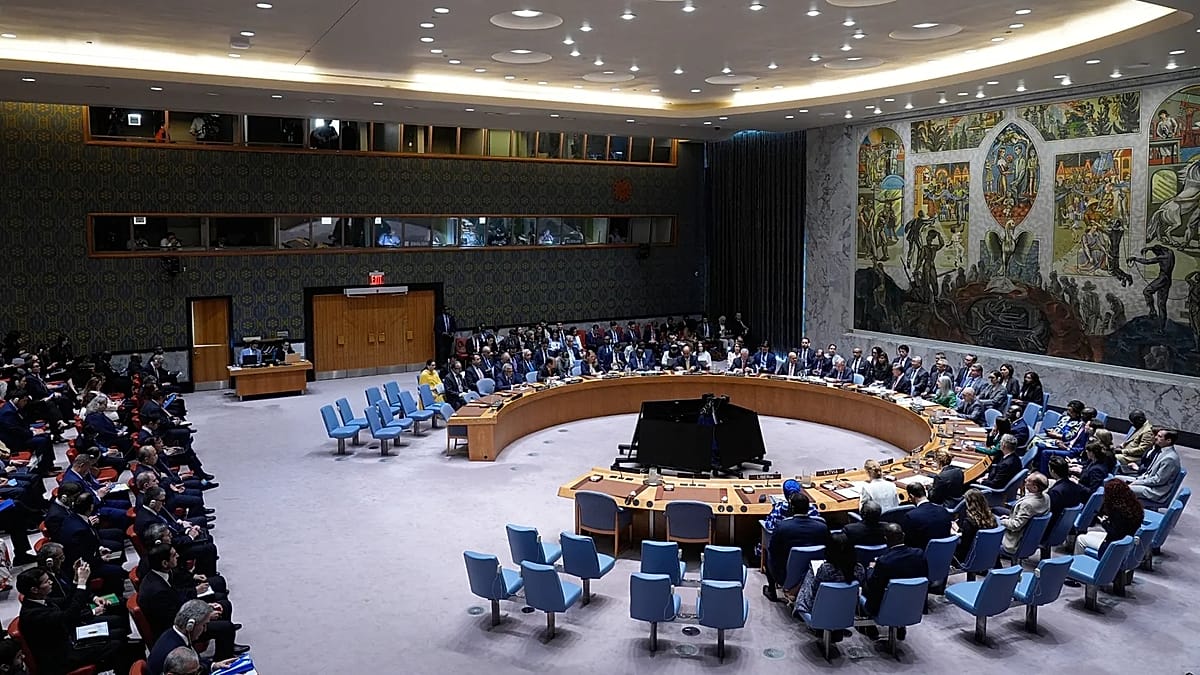
Over 16,000 civilians captured by Russia during its conflict in Ukraine are still "deprived of their liberty," with many being held incommunicado and for reasons that violate international law, an informal UN security council meeting has been told.
According to Claudia Fuentes Julio, the UN assistant secretary-general for human rights. “Widespread and systematic torture and ill-treatment” of both Ukrainian civilian detainees and prisoners of war by Russia are continuing, including sexual violence.
Julio gave the estimates at the informal meeting of the Security Council called by Latvia and the United Kingdom on Monday to spotlight the plight of civilians and soldiers taken during the war that Russia launched with a full-scale invasion of its neighbor in February 2022.
The council, which counts Russia as a permanent member, heard the accounts as both Russia and Ukraine have escalated attacks in the four-year conflict.
According to Julio, since the invasion, 910 Ukrainian prisoners of war and 403 civilian detainees have been interviewed by UN human rights personnel following their release.
And more than 95% of the Ukrainian prisoners of war and 85% of the civilian detainees reported being tortured or ill-treated, often repeatedly, the U.N. official said.
They also reported sexual attacks and inhumane conditions, including food deprivation and inadequate medical services.
The Geneva-based human rights office “has documented the execution of 129 Ukrainian prisoners of war at the beginning of their captivity and the deaths of 48 Ukrainian prisoners of war in custody, resulting from torture, denial of medical care, or other inhumane conditions of detention,” Julio said.
The UN has not been permitted to visit Russian detention facilities, and its estimate of the number of people detained does not include a breakdown of adults and children.
Some former detainees shared their ordeal with the UN
The Security Council also heard emotionally wrenching accounts from some former detainees who shared their ordeal.
Crimean Tatar human rights activist Leniie Umerova, who called herself a “political prisoner” of the Russians for almost two years, and Khuan Leyva Garsiya, a Ukrainian soldier who was among the hundreds that held out for months at the Azovstal steel plant in the besieged city of Mariupol before turning themselves over to the Russians in May 2022 shared their stories.
Garsiya, who was born in Mariupol to a Ukrainian mother and Cuban father, spent 1,183 days as a POW. He said he weighed 55 kilograms (120 pounds) when he was freed, pulling out a picture of his emaciated body to show the council.
Garsiya said he was tortured, beaten harder, and humiliated more than other prisoners because the Russians suspected that he was a foreign mercenary due to his Cuban ancestry or an American spy because he went to college in the United States.
“Russians were outraged that someone with a connection to Cuba, whom they consider an ally, would fight against their occupation army,” said Garsiya, who is still in the Ukrainian military.
UN also said Russian detainees reported abuses
UN human rights experts also interviewed 816 Russians and 57 third-country national prisoners of war from over 45 countries who were members of the Russian armed forces in Ukraine, said Julio, the assistant secretary-general.
About half reported torture or ill-treatment, primarily during the initial stages of captivity and interrogation by Ukrainians, she said.
But UN monitors reported that once they arrived in Ukrainian detention facilities, “the conditions generally comply with international humanitarian law and have improved since 2022.”
Responding to the claims, Russia’s deputy UN Ambassador Maria Zabolotskaya told the council the Russian armed forces are complying with international humanitarian law, which includes the treatment of prisoners. She claimed Russian prisoners in Ukraine faced “torture and degradation and moral and physical abuse.”
She called the Security Council meeting part of “a disinformation campaign against Russia,” funded by NATO countries involved in the Ukraine conflict. The aim, she said, “is to derail efforts towards a peace settlement and to justify strikes on the territory of Russia and against civilians.”
For Ukraine's part, Volodymyr Pavlichenko, Kyiv's deputy UN ambassador, expressed his displeasure that Russia was not prepared to talk about the return of POWs, "including their POWs," and all civilian detainees, including kidnaped children.