Russia to close German cultural centres after Berlin blames Moscow for airport drone plot
Moscow has been widely accused by Western officials of running a campaign of sabotage and disruption with the aim of undermining support for Ukraine and destabilising European nations.
Russia will shutter German cultural centres across the country, Foreign Minister Sergei Lavrov said on Thursday after Berlin blamed Moscow for an attempted attack at Leipzig/Halle Airport and announced the closure of both the Russian Consulate in Bonn and the Russian House cultural centre in the German capital.
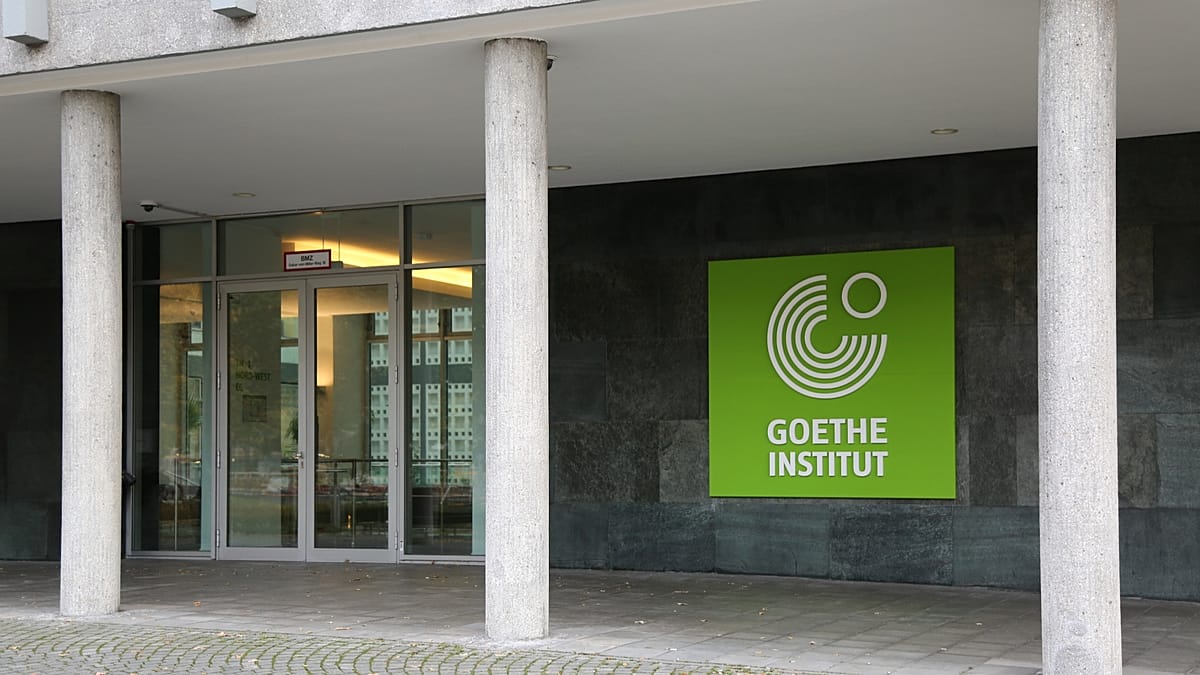
Lavrov said that cultural centres belonging to Germany’s Goethe-Institut would be closed in Moscow, St. Petersburg and Yekaterinburg, adding that any other response would show a lack of “self-respect” on Russia’s part.
Speaking at the Eastern Economic Forum in Vladivostok, Lavrov said that Germany “could not have failed to understand” that the closure of Russian House would “signify the end of their cultural presence in Russia.”
A drone laden with explosives was found near a Ukrainian plane at Leipzig/Halle Airport on 4 August and later defused. The airport is a major international freight hub used for providing support to Ukraine.
Moscow has been widely accused by Western officials of running a campaign of sabotage and disruption with the aim of undermining support for Ukraine and destabilising European nations.
German Foreign Minister Johan Wadephul said Berlin had carefully prepared its response “and now Russia must live with these consequences.”
He called on Russia “to show that it is also ready for reasonable talks and negotiations, particularly regarding the situation in Ukraine.”
Putin has dismissed the allegations, saying Berlin wants to distract from its own failings and dissatisfaction among voters. Any proof being offered “has been planted,” Putin said.
Why did Merz not react sooner?
According to SPIEGEL news magazine, Chancellor Friedrich Merz wanted to respond to the drones at Leipzig/Halle airport with sanctions against Russia shortly after returning from his summer holiday on 25 August.
According to the report during his three-week holiday at Lake Tegernsee, Merz was often briefed several times a day on the airport drone incident.
At a closed-door meeting at Neuhardenburg Castle, Merz held talks with Interior Minister Alexander Dobrindt, Foreign Minister Johann Wadephul and the chancellor's security policy adviser, Günter Sautter.
According to the report, the two ministers spoke out against immediate punitive measures.
The interior minister argued that publicly accusing Russia of the attack could jeopardise the investigation.
The foreign minister wanted to warn German diplomats in advance of any Russian response and secure data and documents.
EU looks to respond
European Union ministers weighed how best to respond to the attempted drone attack on Wednesday but struggled to find new ways to meet the challenge without resorting to military means.
“It is clear that it has all the hallmarks of state-sponsored terrorism. The question is: what do we do about this,” EU foreign policy chief Kaja Kallas told reporters before chairing a meeting of the bloc’s foreign ministers in Ireland.
They discussed sanctions, visa restrictions and shutting Russian consulates, among other measures.
The EU has slapped almost two dozen packages of sanctions on Russia over the war in Ukraine, hitting more than 3,000 officials, oligarchs and entities including banks, energy companies and drone makers.
The EU was already preparing to impose more travel bans and asset freezes on another 1,600 people, Kallas said.