
'It's terrifying': Ukraine and Europe on edge as Trump sides with Putin
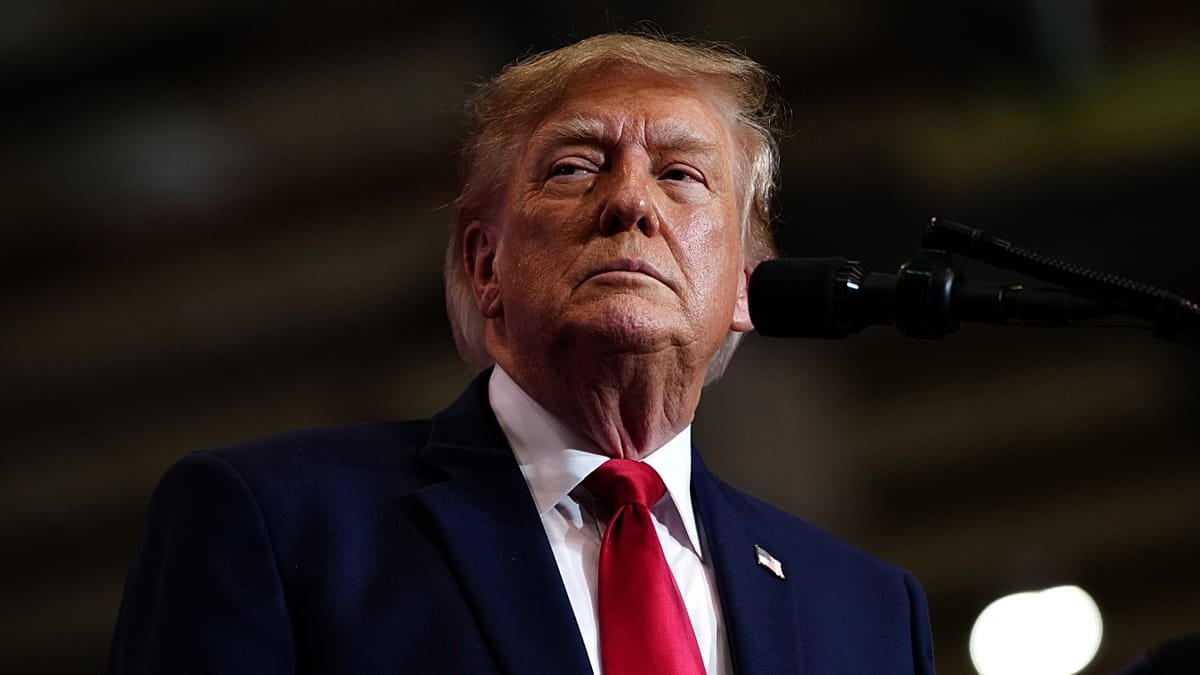
Trump’s pivot towards Putin has reignited fears that Washington is pushing Ukraine towards capitulation, regardless of the consequences. Alarmed, Europeans are scrambling to get the peace talks back on track.
Ukraine and its European allies have long suspected Donald Trump had a soft spot for Vladimir Putin.
Now, they are discovering it goes far beyond anything they imagined.
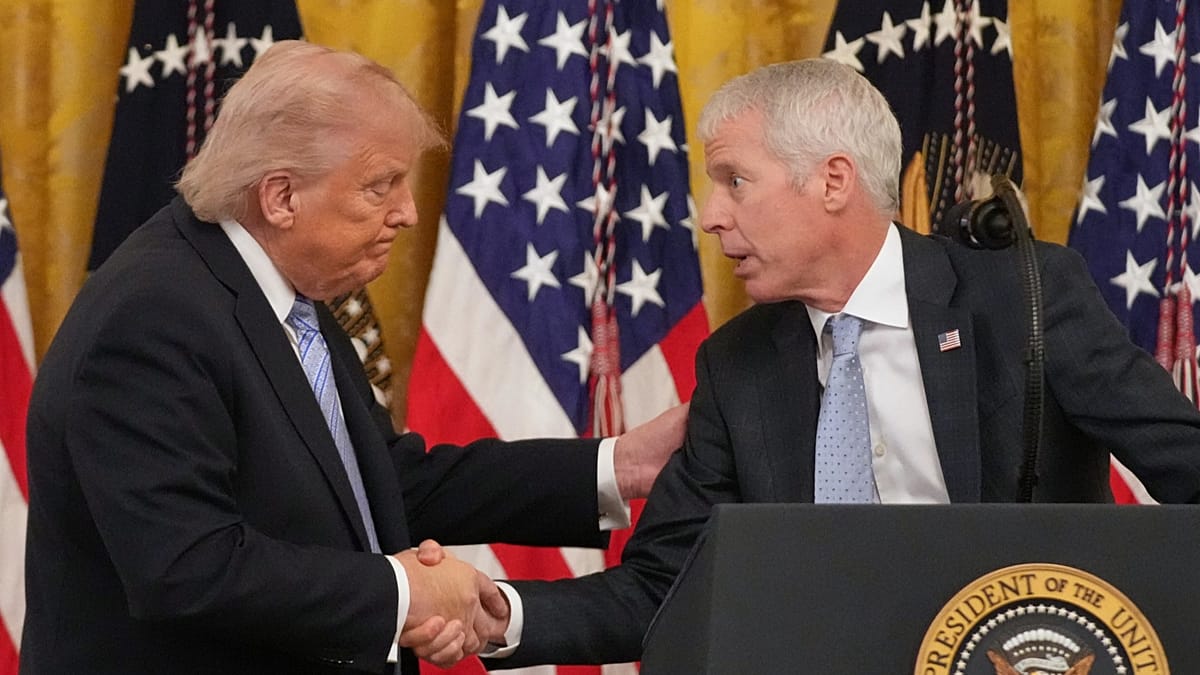
In a shell-shocking sequence of events, the US president aligned himself with his Russian counterpart, struck a diesel deal, moved to ease years of sanctions and appeared to sidestep punitive legislation he had signed just one month earlier.
His broadsides against Ukrainian President Volodymyr Zelenskyy, a recurring feature of life at the White House, took on a new bitterness.
The Kremlin, long betting that the Western front would eventually crumble, seized the opening to dangle further joint ventures and float a trilateral summit between Putin, Trump and Chinese President Xi Jinping. For Russia, whose economy is showing signs of strain, such a meeting would confer the great-power status Putin has long craved.
Trump says he is on board.
Meanwhile, in Ukraine, sudden restrictions on Starlink, the satellite technology controlled by Trump's close ally Elon Musk, and unexplained delays in US-made weapons deliveries have fuelled fears that Washington is undermining Kyiv to Moscow's advantage.
"American negotiators have been trying to push Ukraine into surrender for almost two years," EU foreign policy chief Kaja Kallas told the European Parliament earlier this week, in strikingly undiplomatic terms.
"Why Ukraine hasn't surrendered on Putin's terms is because Europe has been supporting Ukraine."
Speaking off the cuff, Kallas gave voice to fears that have haunted Ukraine and its European allies since Trump's re-election — and that are now coming into sharper focus: that, in his relentless pursuit of a grand deal worthy of a Nobel Peace Prize nomination, Trump could be prepared to sell Ukraine out.
"Nobody can quite understand Trump fascination with Putin. He elevates Putin to a point far beyond what he's entitled to - I mean Russia has an economy the size of Italy," a senior European official told Euronews.
"This is all very disturbing. It's terrifying that you send two property dealers into a negotiation with Putin, where they decide they want to divide up a country."
The remark was a reference to US special envoys Steve Witkoff and Jared Kushner, both of whom, like Trump, made their fortunes in real estate.
The pair have caused consternation across Europe over reports that they have floated proposals to release frozen Russian assets and resume Russian gas supplies to Europe as incentives in peace talks. European governments have rejected both ideas.
Witkoff came under widespread fire this week after describing Putin as a "humanitarian". Hours later, Russia launched 21 ballistic missiles at Kyiv, three carrying cluster-munition warheads designed to maximise casualties and damage among civilians.
"The US keeps trying to lure Putin with lucrative deals if he can just get the Ukraine problem out of the way. But Putin is already one of the richest men in the world. What he wants is to establish a greater Russia," the official added.
"For Europe, we are simply not built to operate in this kind of ruthless transactional environment."
Another official, also speaking on condition of anonymity, said it was "worrying and frustrating" to hear Trump's pro-Russian tirades, which have been linked to mounting political pressure ahead of next month's midterm elections.
Republicans risk losing control of both the House and the Senate as voters grow disillusioned with Trump and inflation bites amid high energy prices.
Trump has sought to deflect blame by pointing to Ukrainian strikes on Russian oil refineries, even as energy experts identify his war on Iran as the main driver of disruption in global oil markets.
"Until the midterms, it's hard to draw any firm conclusions from his statements. It feels like we need to hold our nerve until then," the second official said.
"That's obviously much harder for Ukraine in practice. Still, I don't get the sense that they're on the verge of collapse."
A Democratic victory would constrain Trump's domestic agenda, but its impact on his foreign policy is less clear. As his latest moves demonstrate, the president has considerable latitude to reshape the American position on the world stage.
Trump's disdain for Europe and affinity for Russia long predate the current electoral cycle.
"There's a clear feeling around the table that it is even more important to support Ukraine," a senior European diplomat said.
"Some optimists hope things will improve after the midterms, but I doubt it."
Trump vs Zelenskyy
US pressure on Ukraine has been mounting for at least a year.
In November 2025, a US-backed 28-point peace proposal, reportedly drafted in Moscow before being submitted to Washington, called for Ukraine to cede territory, limit the size of its armed forces and permanently renounce NATO membership.
European governments quickly closed ranks, seeking to revise the proposals they warned would leave Ukraine vulnerable to renewed Russian aggression.
Since then, the divide has widened beyond the terms of a potential peace deal to the military capabilities Ukraine needs to defend itself.
Kyiv has accused Washington of delaying deliveries of Patriot interceptor missiles funded by European allies, interrupting intelligence-sharing on incoming Russian ballistic missiles and restricting access to satellite communications.
Ukrainian officials believe the measures are intended to pressure President Volodymyr Zelenskyy into accepting a deal more favourable to Moscow.
The White House has denied imposing restrictions for political reasons. US officials have also denied claims that Witkoff and Kushner, the special envoys, threatened to withdraw military and intelligence support unless Kyiv made concessions.
The stakes are potentially fatal. Patriot interceptors are among Ukraine's key defences against Russian ballistic missiles, while US intelligence provides crucial early warning of incoming attacks. The early-warning system has since been restored.
"Without America, things would be much harder for us," Zelenskyy told US senators.
In mid-September, Ukrainian government sources told Euronews that Washington would not grant Kyiv a licence to manufacture Patriot interceptors, effectively shutting down Ukraine's ambitions to produce the technology domestically.
This came despite Trump's earlier public promises to grant Ukraine a production licence. Zelenskyy later said the US president had approved the move, although no final licensing agreement had been officially confirmed.
The dispute highlights a broader vulnerability for Kyiv: its continued dependence on Washington for both weapons deliveries and the ability to manufacture critical military technology.
Pressure has also extended to Ukraine's strikes on Russian oil refineries, which have reduced Moscow's export capacity and hit its war revenues.
Trump has demanded that Kyiv halt the attacks. Zelenskyy initially refused, arguing that the strikes represented one of Ukraine's strongest sources of leverage.
As tensions with Trump escalated, however, he offered to suspend refinery strikes for 30 days in exchange for additional Patriot interceptors to protect Ukrainian cities from Russian ballistic missile attacks.
No Patriot interceptors were delivered.
In parallel, Trump has stepped up his personal attacks on Ukraine’s president, urging Kyiv to hold new elections and appoint "someone else" to negotiate with Moscow. Ukraine’s constitution prohibits elections during wartime.
The contrast is particularly striking when it comes to political legitimacy.
In March 2024, the US government under President Joe Biden rejected Russia’s presidential election as neither free nor fair, citing the exclusion of genuine political opposition and voting in occupied Ukrainian territories.
Yet Trump has not called for new elections in Russia or demanded a change of leadership in Moscow. Instead, he has invited Putin to attend the G20 summit in December, another overture that has caused alarm.
Trump appears uninterested in demanding concessions from Russia, shifting the burden instead onto Ukraine, which he sees as the weaker party. Washington has even eased sanctions on Russian diesel without securing any change in Moscow's behaviour.
"Let's face it: one guy is looking for cash, and the other is looking for glory," another senior diplomat said, dismissing Trump's approach to lure Putin with economic partnerships as "futile" because the two have ultimately competing aims.
Europeans are aghast, but not yet ready to break away.
After months of dealing with Trump's outbursts — over tariffs, Greenland, the ICC, Big Tech and other flashpoints — European leaders have adjusted their approach to the mercurial president. Not every Truth Social post warrants a public response, officials privately say.
The strategy remains threefold: support Ukraine, pressure Russia and engage with the US — all at once. Europe must preserve its seat at the negotiating table to influence Washington's thinking as much as possible, even if it means enduring pain and swallowing its pride.
This week offered a case in point.
Just as tensions between Trump and Zelenskyy threatened to spiral, Norwegian Prime Minister Jonas Gahr Støre and Finnish President Alexander Stubb hastily organised a new round of peace talks in Oslo before Witkoff flew to Moscow.
"We fully understand that there has been a lot of noise in the public space," Stubb said, in a not-so-subtle reference to the row.
"In my experience, peace requires patience. But unfortunately, war does not wait."