The real story of Bad Bunny's 'Casita': colonialism, slavery and resistance
This week’s public debate seems, this time, to revolve around the controversy surrounding the huge Spanish-language music phenomenon. We are talking, of course, about Benito Martínez Ocasio’s Casita, Bad...
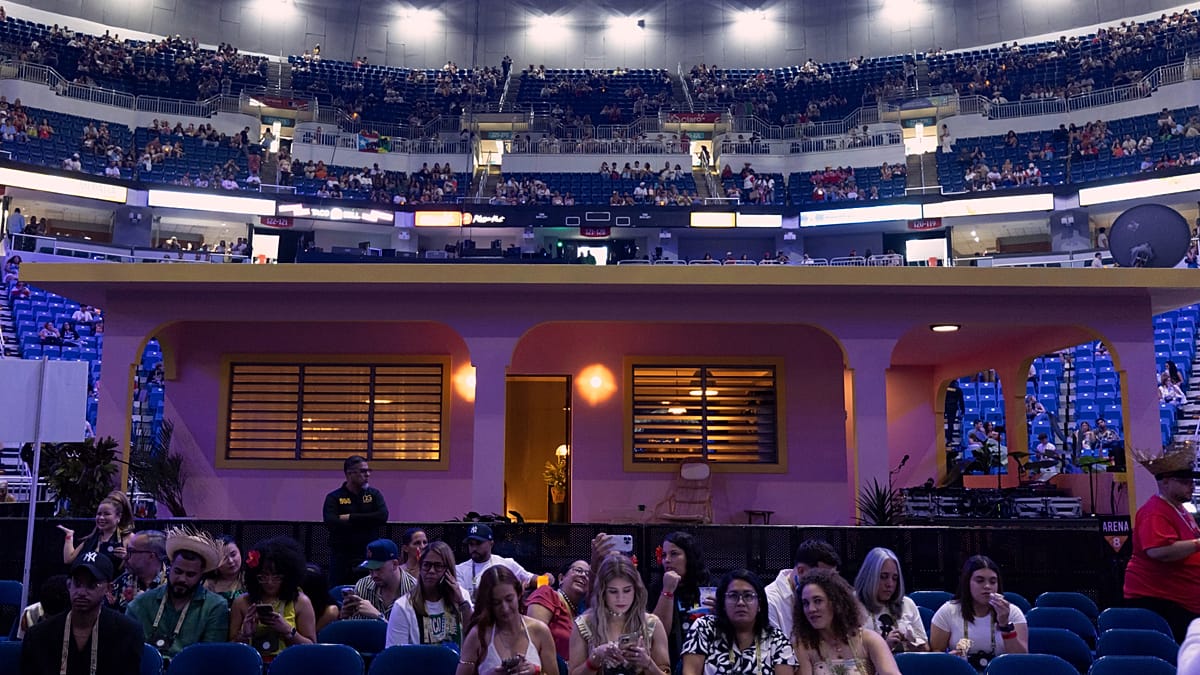
This week’s public debate seems, this time, to revolve around the controversy surrounding the huge Spanish-language music phenomenon. We are talking, of course, about Benito Martínez Ocasio’s Casita, Bad Bunny: a segment of his concert in which several public figures (until recently mostly women) dance live in front of the cameras.
The event has been criticised by conservative feminists such as Paula Fraga (are the women in the audience - Marta Ortega, Ester Expósito and others - who appear in it being objectified?) but defended by journalists such as Ana Requena and Alejandra Martínez. They argue that there is an interest in shining a light on feminism’s contradictions in order to instrumentalise it and, in particular, on the women who go to the concerts of a genre that, although increasingly less so, is still stigmatised to this day: reggaeton.
At the centre of the controversy, though overshadowed by the ideological dispute at stake, is the physical building itself. And, like every detail of the touring project, "Debí tirar más fotos", it has a strong activist dimension linked to Boricua, or Puerto Rican, identity.
The Antillean island belongs to the United States as an unincorporated territory often referred to as a Commonwealth: an issue addressed in the tracks on "DTMF" and in Bad Bunny’s public statements. This means, in practice, that its citizens have fewer rights than citizens of the US states: they cannot vote in presidential elections, nor do they have voting representation in Congress, and several activists campaigning for the island’s independence have been imprisoned.
From Indigenous peoples to enslaved labour on the sugar plantations
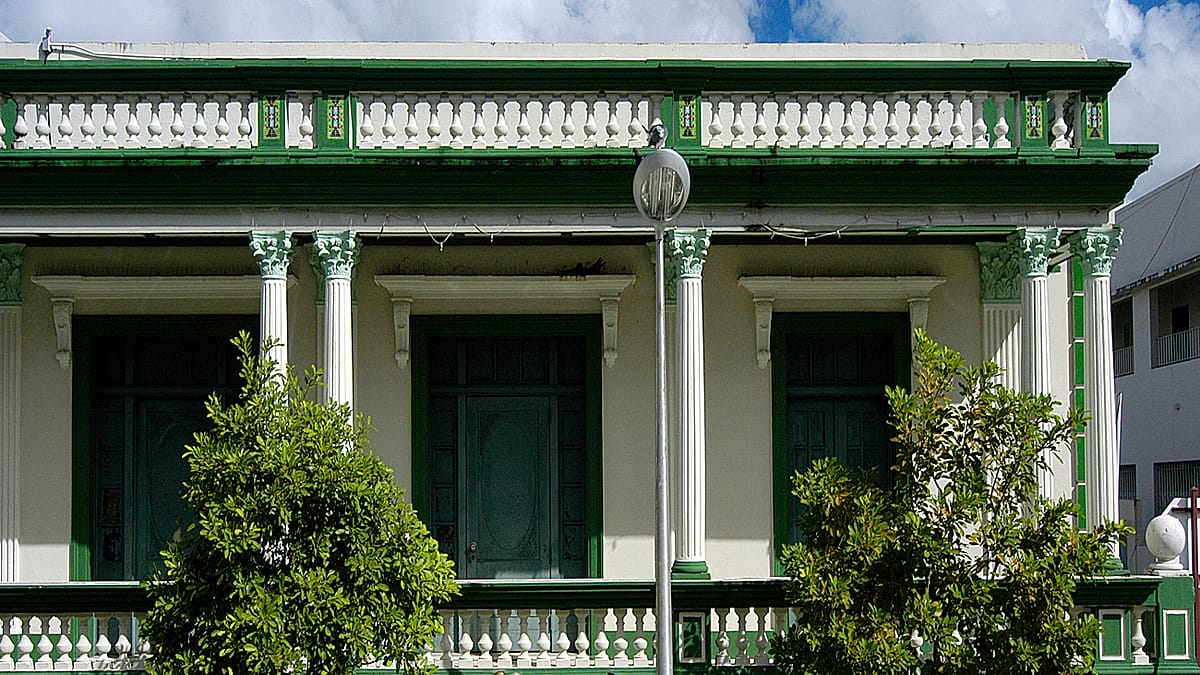
The building, as "Architecture Digest" explains, is based on a real house in Humacao, a town on Puerto Rico’s eastern coast where the short film bearing the same title as the album was shot. The municipal anthem makes its history clear, linking it both to the island’s original inhabitants, the Taínos, and to the diaspora and enslavement of its Afro-Caribbean population up to the 19th century.
Modern-day Humacao was founded in 1722 on the ruins of the old Macao by settlers from the Canary Islands and Jíbaro Taínos, those who came from the mountainous region in the centre of the island. It takes its name from Jumacao, one of the last Indigenous leaders to fight the Spanish. His descendants kept this combative tradition alive when the Canary Islanders arrived and protested against the redistribution of farmland.
Because of its relative isolation until the 18th century, its architecture is distinctive. The urban planning of Humacao follows the grid laid out by the Laws of the Indies based on the spatial relationship between square and church - as historian Norma Medina recounts (source in Spanish) - but its inhabitants continued to use materials such as thatch, tiles and local timber.
From the 19th century onwards, elements typical of European Neoclassicism, such as masonry, were introduced, thanks in part to the boom in the sugar trade, built on the labour of enslaved Black people, which was by no means limited to Puerto Rico within Latin America. This style was incorporated into public buildings such as the town hall, the prison, the barracks and the cemetery.
From 22 September 1898, Humacao was transferred from Spanish to US government control (in what Spanish-speakers of the time knew as the Disaster of ’98, prompted by the loss of other colonies such as the Philippines and, finally, Cuba), altering the island’s "statu quo", which never achieved full independence, as well as its architectural development.
It is through this fusion of Taíno, Spanish, African and US influences that the creator of the Casita, Mayna Magruder Ortiz, saw the potential of Humacao’s buildings beyond the feature-length film that Bad Bunny’s team had originally produced.
Her inspiration for reinventing the house from the music video for the tour, "AD" reports, comes from houses that draw on 19th-century heritage to create the housing estates for US expatriates of the 1950s. Specifically, the structure - built by the team led by Rafael Pérez - imitates a home in the white community of Levittown in Toa Baja, the first development planned for Second World War veterans on the island. A fusion upon a fusion.
The decoration inside the house is also filled with Antillean pieces and works by Boricua artists such as Lorenzo Homar (co-founder of the Puerto Rican Art Centre after an early spell in the United States and known as "El Maestro") and Alexis Díaz, an artist and muralist who should not be confused with baseball player Alexis Omar Díaz, born in Humacao itself.
Bad Bunny, who follows in the anti-colonial tradition of other Puerto Rican artists such as Residente and his siblings, singer iLe and producer Eduardo Cabra, all former members of Calle 13, is continuing his Spanish and European tour until mid-July.