

NASA sends robot into orbit to stop telescope crashing to Earth
Published on 03/07/2026 - 16:52 GMT+2 A rescue spacecraft has blasted into orbit on a mission to save a NASA telescope from crashing back to Earth. The three-armed robot,...
Published on 03/07/2026 - 16:52 GMT+2
A rescue spacecraft has blasted into orbit on a mission to save a NASA telescope from crashing back to Earth.
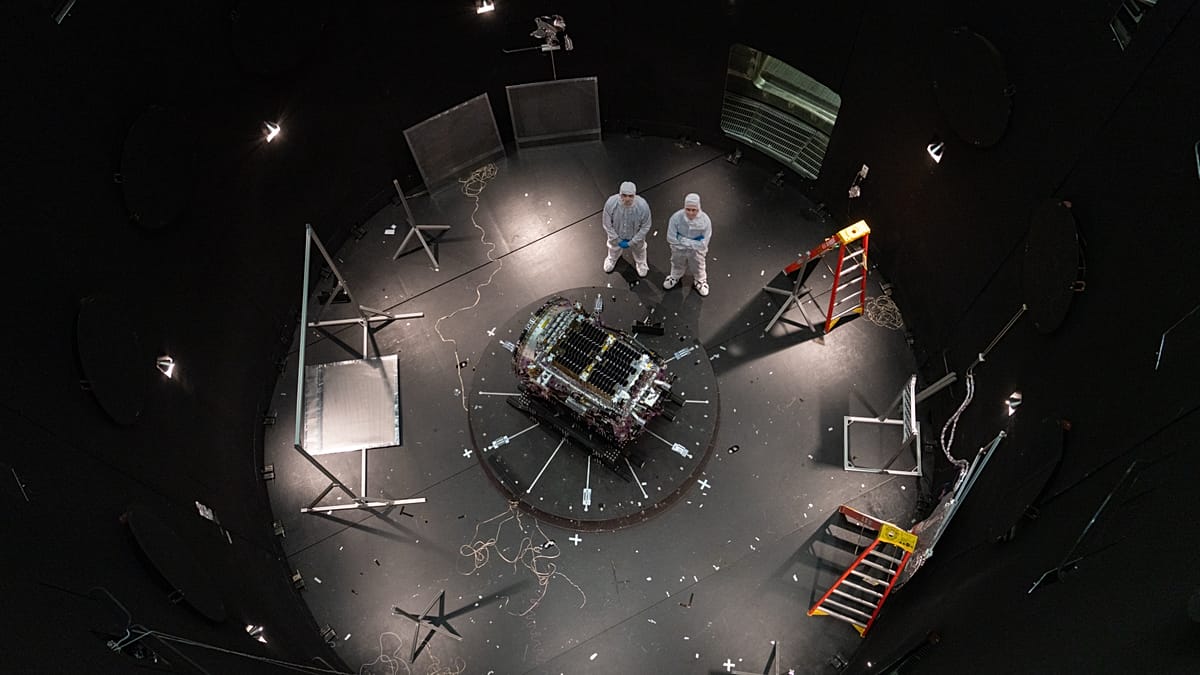
The three-armed robot, named Link, launched from the Marshall Islands on Friday and will take about a month to reach its target: the Neil Gehrels Swift Observatory, a telescope that has been circling Earth since 2004.
Swift has been losing altitude faster than expected. Recent solar activity has heated and expanded Earth's outer atmosphere, creating extra drag that is pulling the telescope steadily earthward — and NASA is running out of time to save it.
The agency is paying $30 million (€27m) to aerospace startup Katalyst Space Technologies to catch Swift and push it back up to a safe orbit, where it can carry on tracking some of the universe's most violent events, including gamma-ray bursts and exploding stars.
Link reached orbit after a Northrop Grumman Pegasus XL rocket, on its final-ever flight, dropped from the belly of a modified aircraft and ignited above the Pacific.
If all goes well, Swift could be back in action by September. For now, observations are on hold to slow its descent.
Currently circling at 360 kilometres above Earth, Swift needs to be pushed up by 240 kilometres to reach a safe orbit. Link's thrusters will fire gradually to avoid jolting the ageing spacecraft.
The mission came together in just nine months. Without a boost, Swift was predicted to reenter the atmosphere by October, by which point it will be too low to save.
NASA's Hubble Space Telescope could face a similar fate in the coming years, also losing altitude as the sun's activity increases.
Bad weather and technical issues caused a string of delays before Friday's liftoff.
"This is a high-risk, high-reward mission," Katalyst chief executive Ghonhee Lee said.
"The biggest danger was always we don't launch anything and we let Swift burn up in the atmosphere. So we were always trying to avoid that risk, and our team has done that."