Hungary’s lakes and rivers hit record lows as severe drought deepens
Video. Hungary is facing a severe water crisis, with prolonged heat and drought driving water levels sharply lower. Around 99% of the country is under severe or extreme drought, while desertification threatens the Great Hungarian Plain.
At Lake Velence, Hungary’s third-largest lake, the water level at Agárd fell to around 20 centimetres on 16 August. That is far below the roughly 150 centimetres considered optimal for August and well below the previous record low of 53 centimetres, recorded during the 2022 drought.
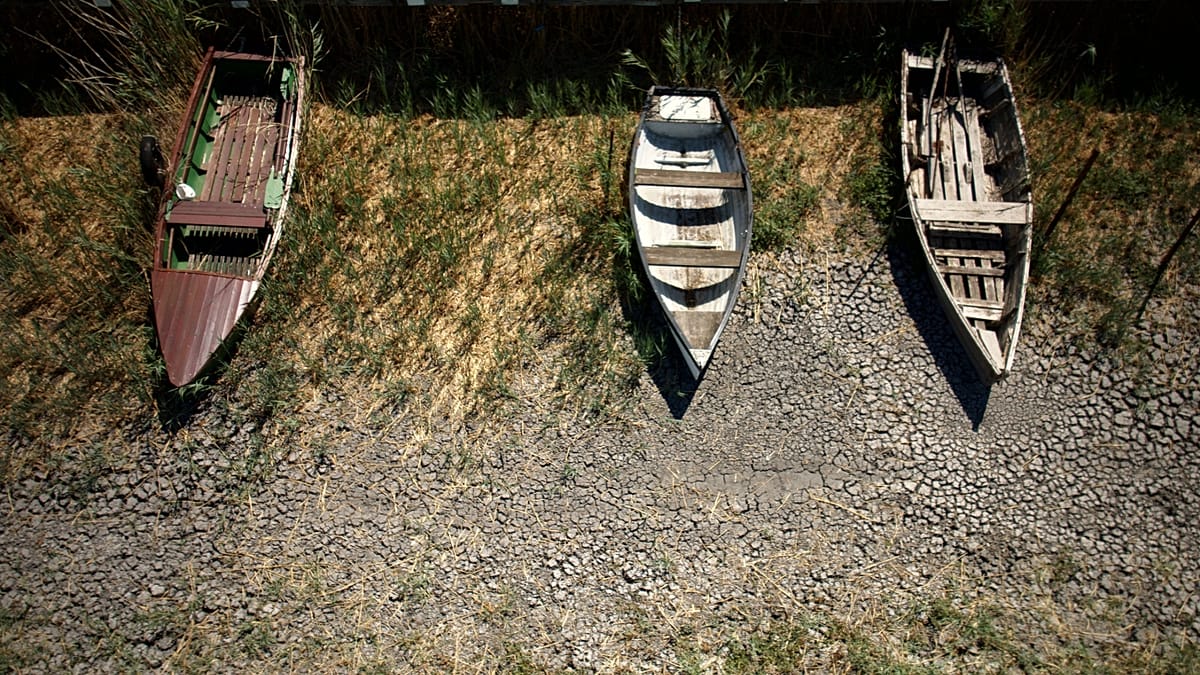
The shallow, warm water has forced swimming beaches to close and made boating increasingly difficult. Dead fish have appeared along the shore, while large sections of the lakebed are exposed, cracked and dry.
The smaller Lake Garancsi, north-west of Budapest, is also close to disappearing. Once popular for fishing, swimming and ice skating, and known as a filming location for the Hungarian comedy Üvegtigris (Glass Tiger), it now consists largely of shallow pools surrounded by exposed lakebed. Its water level has fallen by about a centimetre a day during the hottest periods.
The Danube has also reached record lows in Budapest, exposing sandbanks and parts of the riverbed beneath the city’s bridges and making navigation more difficult.
The low water is also putting pressure on Hungary’s energy system. At the Paks nuclear power plant, which relies on the Danube for cooling and generates nearly half of the country’s electricity, output fell to around 25% of capacity. Engineers have taken measures to maintain sufficient cooling water and prevent a shutdown.
Climate change is intensifying heat and contributing to longer dry periods, but experts say Hungary’s water-management system has also made the country more vulnerable. For decades, drainage networks have been designed to remove water from agricultural land and wetlands rather than retain it.
Hungary now has more than 40,000 kilometres of drainage canals, while a 2023 study estimated that more than 80% of the country’s historical wetlands had been lost. Environmental groups are calling for a shift towards retaining water in the landscape by restoring wetlands, repairing water-control infrastructure and allowing floodplains to absorb more water.
Authorities have begun directing water towards vulnerable wetlands, including the Hortobágy marshes, but environmental groups say much broader changes will be needed to protect Hungary’s remaining lakes, rivers and wetlands from increasingly severe droughts.