More than 1,000 birds found dead in three mass mortality events amid ‘significant’ H5 escalation in Australia
South Australian premier Peter Malinauskas has declared a “significant escalation” in H5 bird flu in the state after the detection of three mass mortality events involving more than 1,000 greater crested...
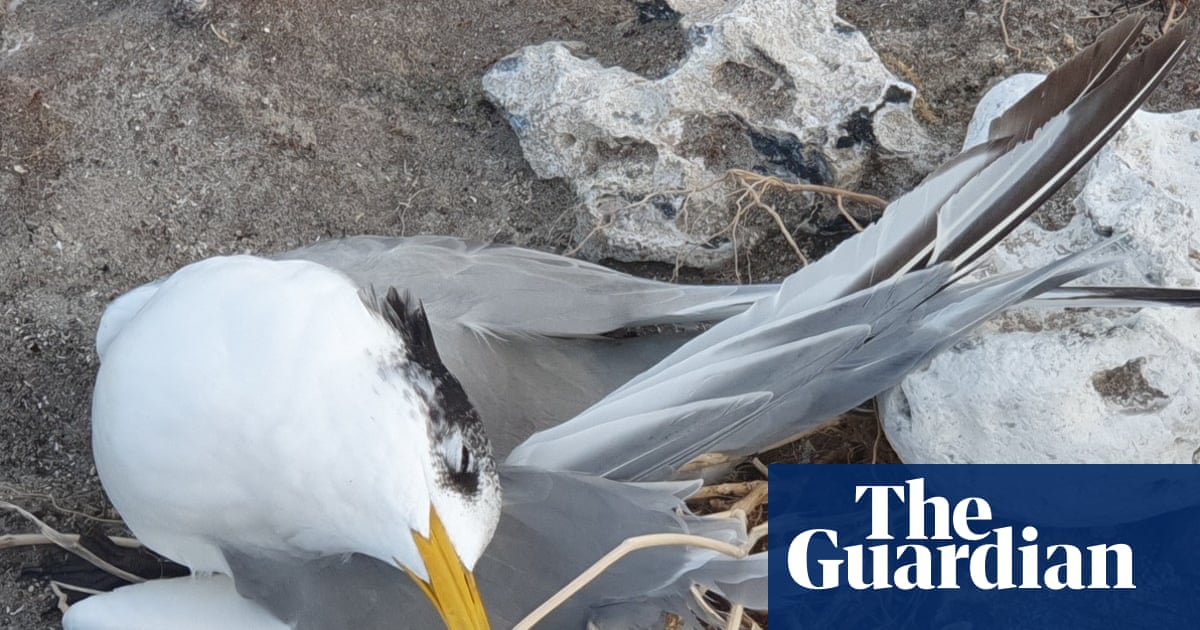
South Australian premier Peter Malinauskas has declared a “significant escalation” in H5 bird flu in the state after the detection of three mass mortality events involving more than 1,000 greater crested terns.
Malinauskas said the cause of the deaths was presumed to be H5 bird flu.
State authorities were also investigating a suspected case in a little penguin found on Kangaroo Island, with the premier telling the state parliament the development was “of particular concern”.
Separately, the Tasmanian government said it was investigating 28 little penguin deaths on King Island with testing under way to determine whether the birds died of H5 bird flu.
Malinauskas said aerial surveillance on Wednesday detected the three mass mortality events, all on offshore islands where H5 bird flu had been detected in recent weeks.
He said more than 1,000 dead crested terns were found across Troubridge Island off the Yorke Peninsula and the Pages Islands – known as North Page and South Page - off Kangaroo Island.
The deaths would represent the biggest detected mass casualty events from suspected H5 bird flu since the deadly strain arrived on the Australian mainland in June.
Greater crested terns, a common Australian seabird, have been the most affected local species so far.
The Pages Islands are a known breeding site for a colony of endangered Australian sea lions and long-nosed fur seals are known to visit the islands.
Troubridge Island Conservation Park is an important breeding area for birds and home to a large colony of little penguins, as well as black cormorants and many crested terns.
Malinauskas said the state’s aerial patrols, involving helicopters, planes, and drones with support from field crews, were not limited to coastal sea birds. He said crews also looked for mammals, such as Australian sea lions or long-nosed fur seals, which might be affected by H5 bird flu.
“Fortunately, so far, no mass mortality event … involving mammals, has yet been detected or reported,” he said.
He said there remained no detections in poultry or livestock.
He said the state would continue to take “every practical and appropriate action available” to protect South Australia’s wildlife, industries and communities.
He told the parliament broad-scale vaccination of wild birds was “neither practical nor appropriate”
But he said the state was considering “targeted vaccination of selected captive and managed populations of our most threatened native birds, where it is safe, feasible, and likely to provide a conservation benefit”.
In Tasmania, the state government said aerial surveillance on Wednesday spotted 28 dead little penguins, while three dead crested terns were spotted at the Port of Grassy on King Island on Wednesday.
The natural resources and environment department said samples had been collected and sent for laboratory testing for H5 bird flu, with results expected “during the week”.
“Unfortunately, our surveillance team found 28 dead penguins and three dead crested terns at the Port of Grassy on King Island yesterday,” a spokesperson said.
“Tasmanians care deeply about our wildlife, and particularly our penguins, so we understand that reports like these may be distressing for the community.
They said staff planned to collect the dead birds on Thursday to reduce the risk of transmission.