Record fuel price rise sparks protests in Portugal
By Lina Ferreira Published on 07/09/2026 - 19:07 GMT+2 Portugal woke up to yet another fuel price rise, which in the case of diesel...
By Lina Ferreira
Published on 07/09/2026 - 19:07 GMT+2
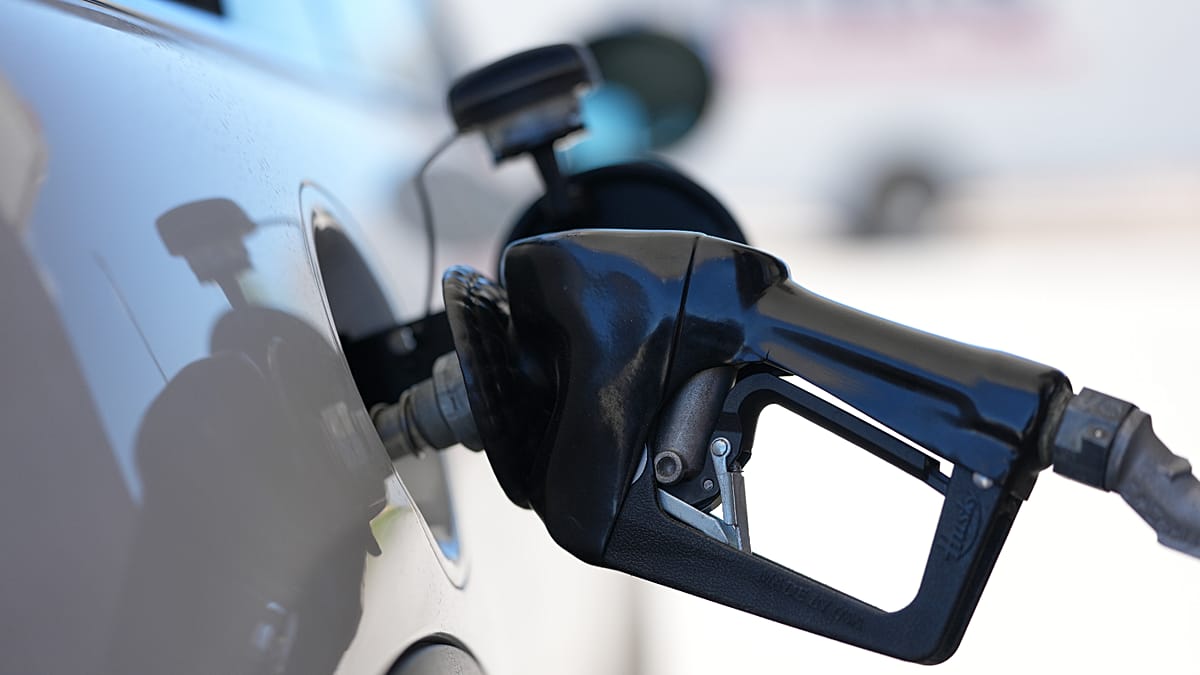
Portugal woke up to yet another fuel price rise, which in the case of diesel reached a historic high. This time, the increase in prices, which has been happening throughout the year, was marked by protests on roads across the country.
In the morning there was a mass horn protest on the 25 de Abril bridge, the crossing that links Lisbon to the city of Almada, on the south bank of the Tagus.
At the same time, further south, a slow-moving convoy was setting off towards Galp’s refinery in Sines, in the district of Setúbal. The protest, organised on WhatsApp and social media, was still under way after lunchtime and did not have a set finishing time.
Images on social networks showed cars with Portuguese flags on their bonnets, sounding their horns. According to the Lusa news agency, protesters were also carrying placards reading "Enough of rising fuel prices" and "Families can’t take any more". The GNR police told the agency that between 60 and 100 vehicles took part.
Petrol at its highest since the invasion of Ukraine
According to forecasts by the Automobile Club of Portugal (ACP) (source in Portuguese), diesel rose on Monday by 15 cents (to €2.169 per litre) and petrol went up 12 cents (to €2.142 per litre).
These amounts do not take into account the reduction in the Tax on Petroleum Products (ISP), applied by the government on an exceptional basis, which set the rises at a further 12 cents for diesel and 9 cents for petrol.
This is the highest diesel price ever recorded, according to calculations by Dinheiro Vivo (source in Portuguese). In the case of petrol, this is the highest level since the energy crisis triggered by Russia’s invasion of Ukraine in 2022.
Portugal among the highest-priced countries
Across Europe, fuel prices have been rising throughout the year. In Germany too, the Frankfurter Allgemeine (source in Portuguese) reports that fuel prices have hit an all-time high, with petrol surpassing the record of €2.203 per litre reached in March 2022.
But Portugal is among the countries with the highest fuel prices. The fuel-prices website (source in Portuguese), which compiles fuel prices in 21 European countries, showed on Monday that Portugal ranks 19th for the most expensive petrol. Only France and Denmark have higher prices.
For diesel, Portugal’s position improves to 17th place, ahead of the United Kingdom, Italy, France and Denmark.
The rise in prices even prompted Portugal’s Environment and Energy Minister, Maria da Graça Carvalho, to request a study from the Energy Services Regulatory Authority (ERSE).
But the study, published in mid-August, did not find "evidence of operators taking advantage". It also concluded that there is no "rockets and feathers" phenomenon: prices that rise quickly and fall slowly.
"The results therefore do not support the idea that price cuts are passed through in a persistently slower or less complete way than price increases," the study says.
ERSE also attributed the price difference with Spain to taxation. But it stressed that in Portugal the tax burden has remained constant, "in line with most European Union and eurozone countries".
Hormuz and refinery capacity
The increase in fuel prices in Europe has been linked to the conflict in the Middle East and the blockade in the Strait of Hormuz, which has disrupted trade routes.
But experts also point to limits on refinery capacity, even when crude oil is available. This situation affects diesel in particular.
On the fiscal front, an extraordinary tax on oil company profits is now on the table. According to AFP, ministers from Portugal, Germany, Italy, Austria, Poland and Spain have sent a letter to Ireland’s finance minister asking that the issue be discussed at the next meeting of finance ministers. The meeting is scheduled for 18 and 19 September in Ireland, which holds the rotating presidency of the European Union.