

Spain changes Ceuta patrol rules over ships' "innocent passage"
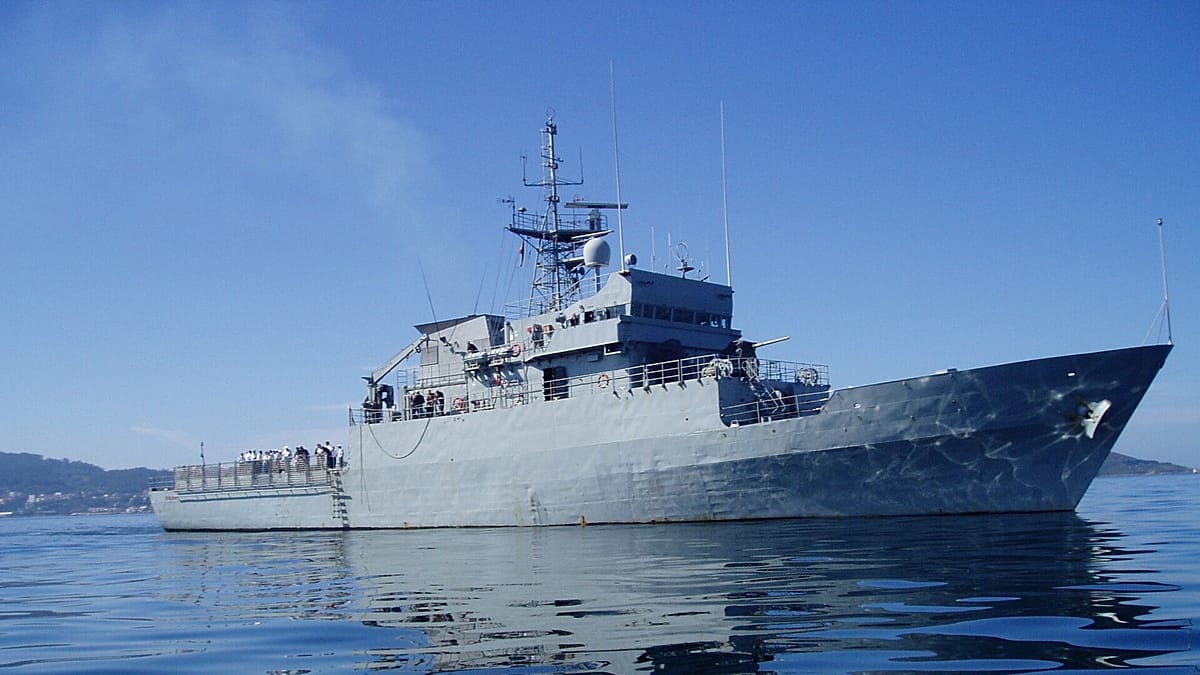
The Spanish Navy has changed its protocol in response to the innocent passage of Moroccan vessels through the waters off Ceuta or Melilla, acting now without requiring higher authorisation.
Published on 18/10/2026 - 20:00 GMT+2
The maritime law concept of "innocent passage" allows foreign vessels to transit through a coastal state's territorial waters. This is the legal basis Morocco invokes in incidents such as that of 30 July and for the presence of Moroccan ships while the mass influx of migrants at the Ceuta border was under way.
This concept is governed by the United Nations Convention on the Law of the Sea. In fact, until 30 July Spain monitored these movements without intervening, but the situation has changed since the last two days of July.
A military source cited by the Spanish daily "El Mundo (source in Spanish)" confirms that previously innocent passage was monitored by the Maritime Action Operations and Surveillance Centre (COVAM). Now that monitoring is reinforced with ships that sail out to meet Moroccan vessels: "We are more alert; we no longer wait for them to enter before we act."
Activity by ships flying the Moroccan flag has decreased and, according to the Interior Ministry, the Civil Guard and the Navy, there was no innocent passage during the royal visit nor in the days afterwards.
Patrol vessels are deployed
The patrol vessel Atalaya (source in Spanish), part of the Navy's Maritime Action Force, has been deployed to Ceuta. Its mission is to protect Spain's maritime interests, detect unusual activity and enforce compliance with international law.
The Atalaya is based in Ferrol, carries four machine guns and one cannon, and has a crew of 48.
In Melilla the patrol vessel Isla de León (source in Spanish) has been deployed, with a crew of 10 and a Browning machine gun. It also operates in the waters off Ceuta and Perejil Island. At present it is focused on Melilla because of the Moroccan offensive.
The newspaper "El País (source in Spanish)" reported on 12 October that, during the land breach of the Ceuta border at the end of July, the warship Mohammed VI had entered Spanish waters. The Defence Ministry was forced to send two more patrol vessels from Rota. The Chief of the Defence Staff contacted Morocco to demand that the incursion stop.
Monitoring without giving up relations with Rabat
According to "El Mundo", the difference compared with the period before the mass arrival of migrants and the presence of a Moroccan ship in Ceuta's waters does not lie in detection capability, which was already functioning, but in the addition of an active response, namely the direct deployment of patrol vessels.
In this way Spanish ships shadow the movements of Moroccan vessels. The key to this shift is distinguishing between innocent passage, as defined under international law, and conduct that could threaten Ceuta's sovereignty or security.
The dispatch of patrol vessels to intercept ships will therefore be used as a tool for surveillance and deterrence.