West Nile virus: 290 cases and 24 deaths in Greece — Cyprus calls for calm
West Nile virus circulation in Greece is particularly intense this year, with Attica accounting for the largest share of cases. The burden is also increasing in Thessaly and Central Macedonia as the Hellenic...
West Nile virus circulation in Greece is particularly intense this year, with Attica accounting for the largest share of cases. The burden is also increasing in Thessaly and Central Macedonia as the Hellenic National Public Health Organisation (EODY) expects new cases in the coming weeks.
According to the EODY's latest weekly report, with data up to 2 September, 290 domestically acquired West Nile virus infections have been diagnosed and reported since the start of the current transmission season. In the past week alone, 58 new cases were added, indicating that transmission remains at high levels.
Of the 290 cases, 199 had neurological symptoms affecting the central nervous system (CNS), including encephalitis, meningitis or acute flaccid paralysis. The remaining 91 patients had milder symptoms or no CNS involvement. The median age of patients who developed central nervous system manifestations is 74 years.
As of 2 September,24 deaths had been recorded, all in people over the age of 65. The median age of those who died was 83.
Pressure on hospitals remains significant. A total of 63 patients were in hospital, 32 in intensive care units and 31 in ordinary wards, while 182 patients had already been discharged.
Where most cases are being reported
Attica is clearly at the epicentre of this year's surge. Adding up the municipality-level data published by EODY shows that around 166 of the 290 cases are in Attica — more than half of all cases nationwide. Thessaly and Central Macedonia follow, with 52 cases each.
Three cases have been recorded in Crete, two in Central Greece and one in the Peloponnese, while the place of exposure for another 14 cases is still under investigation.
The EODY describes this year's circulation of the virus in the Region of Attica as "particularly intense", noting an increase in cases compared with previous years. In total, cases have been detected in 69 municipalities, 20 regional units and six regions: Attica, Thessaly, Central Macedonia, Peloponnese, Central Greece and Crete.
At the municipal level, Larissa has the highest total number of reported cases, with 27. It is followed by Spata–Artemida with 19 cases, Markopoulo Mesogaias and Agia Paraskevi with 14 each, the Municipality of Pella with 13, and Vari–Voula–Vouliagmeni and Halandri with 12 cases each.
Particular caution is required in Eastern Attica. Spata–Artemida has recorded 17 patients with CNS involvement, Markopoulo Mesogaias 11 and Vari–Voula–Vouliagmeni 11, while significant numbers are also reported in Pallini, Marathon and Acharnes. In the Northern Sector of Athens, Agia Paraskevi and Halandri each have 10 severe cases with CNS manifestations.
At the same time, EODY has designated additional municipalities as "high risk", even though no human cases had been recorded there up to 2 September. These include municipalities in Attica such as Iraklio, Nea Smyrni, Palaio Faliro, Nea Filadelfia–Nea Chalkidona, Dafni–Ymittos and Ilion, as well as areas in Trikala, Serres, Thessaloniki, Pieria, Kilkis, Corinthia, Heraklion in Crete, Thasos and Tinos. The designation is based on a combination of epidemiological, geomorphological and other risk data.
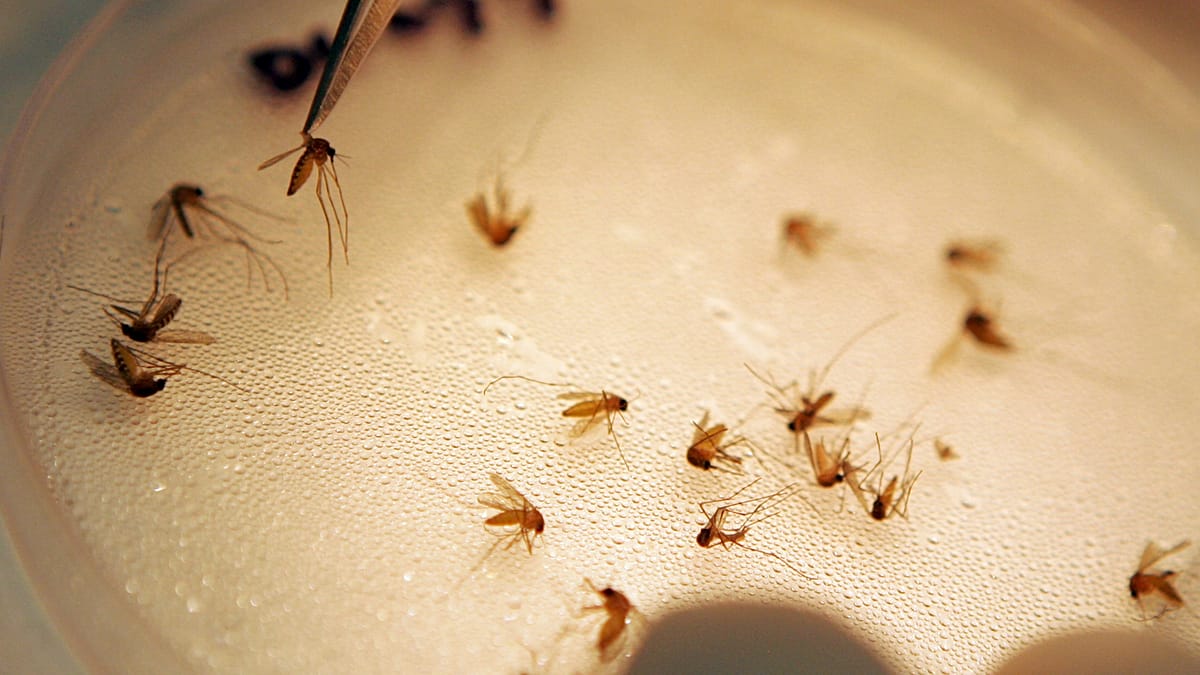
EODY points out that further cases are expected to be diagnosed both in already affected areas and possibly in new ones, stressing that the geographical spread of the virus cannot be predicted with certainty. For this reason, it recommends individual protection measures against mosquitoes throughout the country for the entire period of their activity.
Cyprus: Four confirmed cases – Health Services call for calm and vigilance
In Cyprus, the Health Services are urging calm and vigilance, stressing that, based on the data so far, there is no particular cause for concern over West Nile virus.
The Deputy Head of the Health Services, Herodotos Herodotou, speaking on the "Protoselido" programme on SIGMA, said that there is no need for anxiety, while underlining the need for caution and vigilance so that the competent services are in a position to deal with any developments.
As he explained, the virus is transmitted to humans through the bite of an infected mosquito, and he noted that the Health Services have been implementing measures to control mosquitoes and address related risks for decades. He also clarified that this particular mosquito species is not imported into Cyprus but has existed on the island for many years.
Four confirmed cases – two under investigation
The situation in Cyprus remains at four confirmed cases of West Nile virus, while a further two cases are under investigation.
According to Herodotou, the Health Services continue to apply prescribed measures around the areas where cases are detected. Among other actions, immediate spraying is carried out around patients' homes, along with on-site inspections and door-to-door tracing.
Removal of standing water and self-protection measures
Particular emphasis is being placed on prevention, with the main recommendation being the removal of standing water from plant pots, fountains, gutters and other places where water may accumulate, as such spots can become breeding grounds for mosquitoes.
For individual protection, the public are also urged to use window screens, especially in places where elderly people live, as well as fans, which can help limit mosquitoes.