Fed raises rates for the first time since 2023 in unanimous vote defying Trump
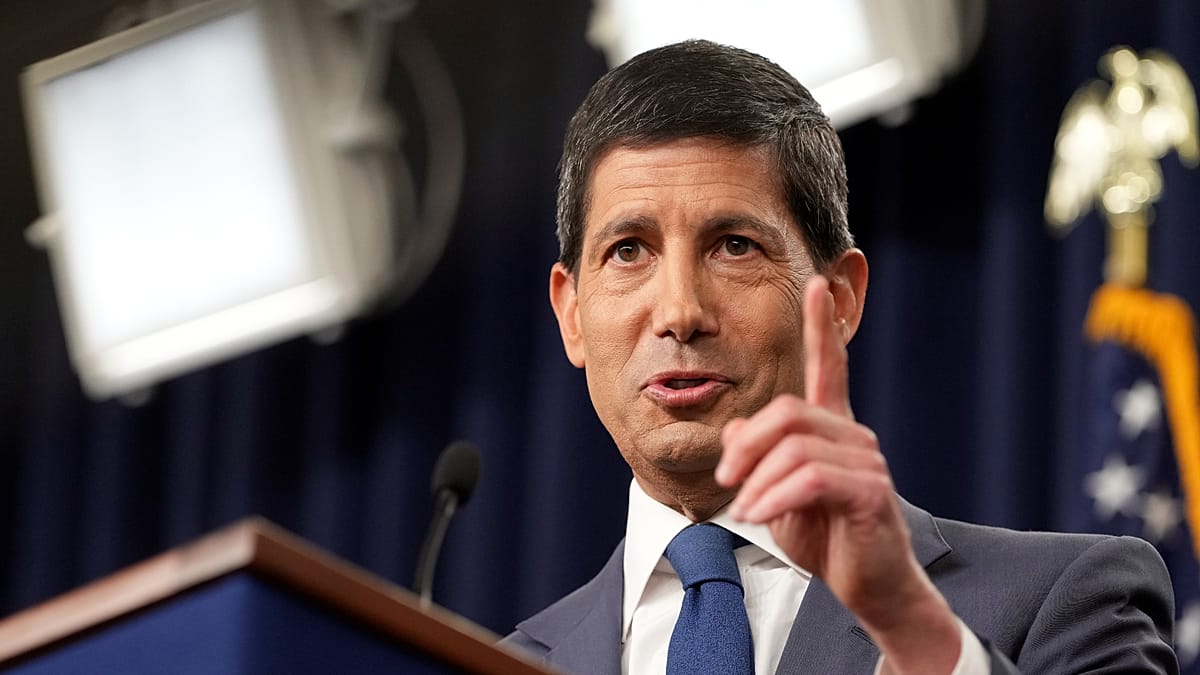
The Federal Reserve has raised its benchmark interest rate by a quarter point to a range of 3.75% to 4%, its first increase since July 2023, in a unanimous 12-0 vote that puts Chair Kevin Warsh directly at odds with the US president who appointed him.
Kevin Warsh has broken away from US President Donald Trump in his first Fed move, and he has done it with the entire committee behind him.
The Federal Open Market Committee lifted rates on Wednesday after holding them at 3.5% to 3.75% since December, ending a pause that had grown harder to justify as energy costs pushed prices higher.
Not a single member dissented in an unanimous 12-0 vote.
That matters because the pressure ran in both directions as three regional presidents had voted for a hike in July, while the White House spent months demanding cuts.
Nobody voted for either extreme.
At the time of writing, the market reaction to the decision has been fairly muted likely due to the fact that the hike was widely expected.
A statement stripped to the bone
The Fed's communication was as striking as its decision.
The statement ran to three short paragraphs, a fraction of the length markets are used to, with no forward guidance and no hedging.
"Inflation remains elevated," it read, adding that "today's policy action will support a timelier return to the Committee's 2 percent goal."
The word "timelier" carries an implicit admission that the return had been too slow.
Then a sentence the Fed almost never writes: "The Committee will deliver price stability." Not seeks to, not is committed to. Will.
The economic assessment was also confident throughout.
Activity is "expanding at a solid pace", domestic spending "has been resilient", productivity growth is "strong" and capital investment "robust", while job gains "have kept pace with the workforce".
Uncertainty remains elevated, the Fed said, owing partly to "geopolitical developments", its formulation for the Iran war.
By describing an economy in good health, the committee removed the argument that higher rates would damage growth, which is precisely the case US President Donald Trump has been making.
Boxed in by the data
The decision had been building for months.
Three regional Fed presidents dissented in July in favour of an increase, the most in one direction since 2016, and several others said afterwards they were ready to move unless inflation eased which it did not.
The Fed's preferred gauge, the personal consumption expenditures index, ran at 3.7% in both June and July, with core inflation at 3.3%. Before the Iran war sent fuel prices climbing, core stood at 3%.
Consumer prices held at 3.4% in August, but the monthly increase of 0.4% was the sharpest since May, evidence the energy shock is feeding through. Inflation has now been above the 2% target for more than five years.
Warsh had effectively committed himself at Jackson Hole in August, telling the symposium he "would be hard pressed to describe broad financial conditions as restrictive" and warning that unless underlying inflation moved to target "clearly and at sufficient speed", the Fed had "work to do".
Markets took him at his word as the CME's FedWatch tool put the probability of a rate hike above 90% before today's decision.
Defying the president who chose him
US President Donald Trump had spent months demanding the opposite, insisting the country should have the lowest interest rates in the world and choosing Warsh partly on the expectation he would deliver them.
Warsh himself said while campaigning for the job that rates could come down.
The treatment of his predecessor sharpened the stakes as Jerome Powell was publicly attacked for moving too slowly, and the US Justice Department opened a criminal investigation into testimony he gave to Congress.
Today's decision could also have a restoring effect on the perceived independence of the Federal Reserve as an institution.
The technical details point to a Fed settling in at the new level.
The interest rate on reserve balances rises to 3.90% from Thursday, the primary credit rate to 4%, and standing repurchase operations will run at 4%. Seven regional reserve banks requested the discount rate increase.
The Fed’s new dot plot shows 12 of 18 officials expect another 0.25% hike by year-end, taking rates to 4.125%, while four see rates reaching 4.375%.
The hawkish signal extends well beyond 2026 as 14 officials see rates ending 2027 above today’s level, while the 2028 median stands at 3.9% versus 3.4% expected.
The longer-run rate also rose to 3.2%, suggesting officials increasingly believe neutral rates have moved higher while economists also expect more to follow.
Roughly 53% of those polled by Reuters anticipate at least one further increase by the end of March, and futures markets are pricing additional moves into next year.
KPMG chief economist Diane Swonk described a quarter-point move as potentially "an opening move, not the final one".