Brussels’ double deadlock
In today's newsletter: EU ambassadors aim to end the impasse on the 21st package of sanctions for Russia and whether to crack down on trade with illegal Israeli settlements, and more.
Morning. Angela Skujins holding the newsletter pen today from an overcast Brussels, reporting that sanctions are on the lips of locals and European Union officials.
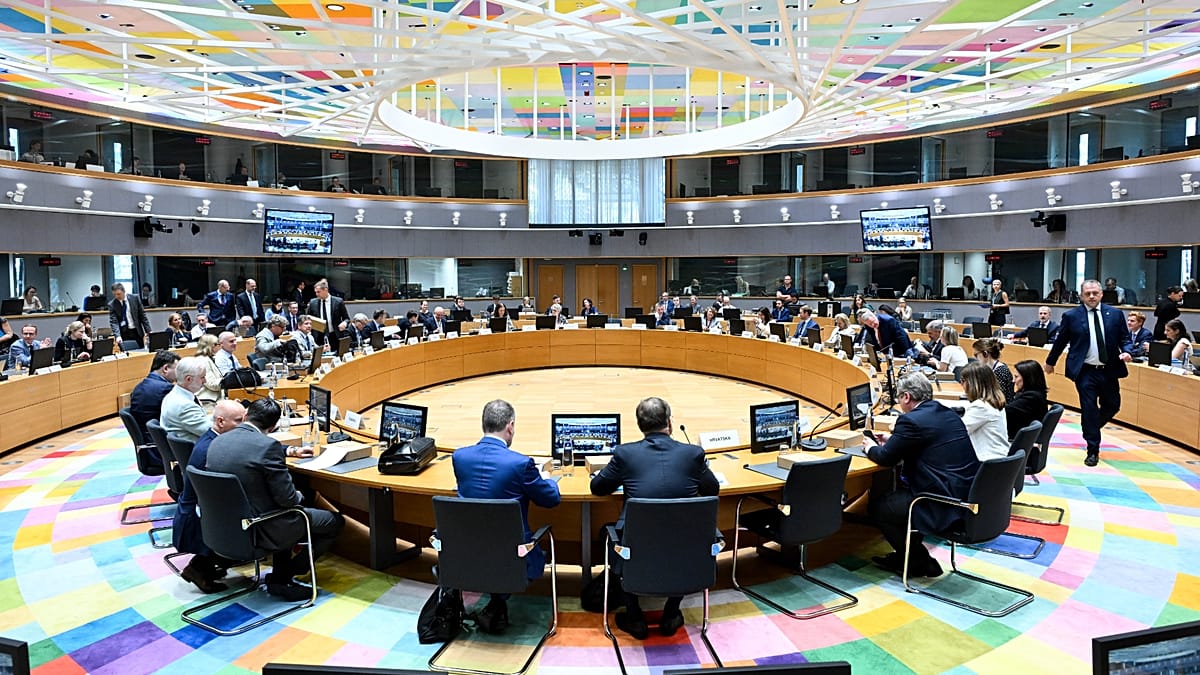
EU ambassadors will meet in the Belgian capital to discuss two thorny issues: the 21st sanctions package against Russia and EU trade with illegal Israeli settlements.
My colleague Jorge Liboreiro has been doggedly following the Russian sanctions file, and reports the biggest problem facing the suite of measures right now is Greek opposition.
A Greek tragedy. Athens is currently pursuing a workaround to the sanctions package — a pool of policies aimed at depriving the Kremlin of profits during wartime. Part of the package includes the ban on liquefied natural gas (LNG) scheduled to come into full force in 2027.
But the Mediterranean country hosts the world's largest merchant fleet, and wants the legal text revised to allow the transport of Russian LNG to continue past the cut-off date. Jorge has a breakdown of three ways to melt the impasse, which you can read below.
But there is a major problem. EU ambassadors — much like most of the institutional staffers here in Brussels — are expected to go on holiday from Friday.
Readjusting the oil price cap mechanism, a key part of the package, has been delayed until Thursday, after the 21st sanctions package has faced weeks of deadlock, which has endangered the mechanism.
This means the clock is certainly ticking for EU support for Ukraine.
Trade clash. Exploring how and if trade can be suspended between the bloc and illegal Israeli settlements will be brought to the fore today, with the Middle East back on the agenda of EU ambassadors.
To recap: earlier this month the European Commission recently presented three options for cracking down on trade between the 27 EU member states and illegal Israeli settlements in occupied Palestinian territories. This was first reported by Euronews.
These settlements are considered illegal under international law and by the EU.
At a Foreign Affairs Council meeting in Brussels last week, the EU’s top diplomat Kaja Kallas said one of the options — a full ban on Israeli settlement trade — had received the “most support”. But whether this is enough to move forward with the proposal, and whether the discussion will progress today, is unclear.
Berlin in the driver's seat. The biggest obstacle to the full trade crackdown is European heavyweight Germany, which has wanted to take a more cautious route when it comes to dealings with its ally Israel. The Czech Republic also opposes the trade ban.
This division is also apparent in the makeup of the most influential and senior EU positions, with European Commission President Ursula von der Leyen being a German national. “In the Commission, the member states' views are equally reflected like you see them in the Council,” Kallas pointed out last week.
“This is unfortunately where we are. In Europe we need to have a unified position and so far we have not been able to have that unified position,” she said.
Important to highlight: Von der Leyen has previously said that the 27 EU member states are required to make the decision regarding how to move forward with a “solution or an agreement”. The decision does not rest with her.
Going to the Philippines. Kallas will not be present at the ambassadorial meeting, as is par for the course, but instead will be travelling to Manila, in the Philippines, for the Association of Southeast Asian Nations (ASEAN) foreign ministers’ meeting.
Russian Foreign Minister Sergey Lavrov will be in attendance, as Russia is a dialogue partner of the 10-country association. There is no meeting scheduled between the foreign ministers of the EU and Russia at this event, and despite the hype, no meeting between the US top diplomat Marco Rubio and Lavrov, either.
European Commission spokesperson Anouar El Anouni told Euronews Kallas’ other meetings are “fluid, as is always the case”, but she is expected to hold court with leaders of Thailand, Pakistan and New Zealand, and others.
She will also open an event, the Kyiv–Manila Dialogue, with Ukrainian Foreign Minister, Andrii Sybiha. We did not receive a response to our question about what the two would talk about if they were to meet.
Trouble in Ukraine. In the biggest shake-up of Ukraine’s military leadership in years, and amid mounting protests, Ukrainian President Volodymyr Zelenskyy yesterday dismissed his top general, Oleksandr Syrskyi.
A new younger commander-in-chief, Mykhailo Drapatyi, has been tapped to replace him. Sasha Vakulina writes in to report that Drapatyi is a frontline favourite, and has built a strong reputation among the battle-hardened civil society and the military.
The dismissal of defence minister Mykhailo Fedorov remains another central demand of protesters, with his reinstatement expected to be decided on Wednesday. The question is, in what position will Fedorov return to power?
With Russia, Israel and Ukraine all on Wednesday's agenda, it is up to the next 24 hours to see how these files unfold.
Three possible ways to lift the Greek veto on new Russia sanctions
Greece is holding up the latest round of European Union sanctions against Russia over a ban on liquefied natural gas (LNG) that is scheduled to come into full force in 2027.
The ban, as agreed last year, will prohibit the "purchase, import or transfer, directly or indirectly," of LNG that "originates in Russia or is exported from Russia". But Greece, which hosts the world's largest merchant fleet, wants the legal text revised to allow the transport of Russian LNG to continue past the cut-off date.
The main beneficiary would be Dynagas, a company specialised in shipping in sub-zero temperatures and owned by Greek billionaire George Prokopiou. Dynagas and its subsidiary have chartered 11 vessels, including seven Arctic-resistant icebreakers, to Russia's largest gas facility, Yamal LNG.
The Greek government and Dynagas argue that the ban on Russian LNG will damage Europe's maritime services industry, destroy employment opportunities, empower foreign competitors and ultimately fail to weaken Moscow's war chest.
As the dispute drags on, read the three possible ways to solve the crisis. Read the full story.
More from our newsrooms
Three wounded in strike on Ukraine-bound LPG tanker off Romania in the Black Sea
Romania’s president says the attack on the Ukrainian ship carrying dangerous chemicals was “most likely” the result of a Russian attack, calling it a “serious incident” and launching a probe to determine its cause. Read more about this story by Malek Fouda.
Spain backs Hernández de Cos in first-ever bid for the ECB presidency
The Spanish government has chosen Pablo Hernández de Cos, general manager of the Bank for International Settlements and former Bank of Spain governor, as its candidate to succeed Christine Lagarde at the ECB. Quirino Mealha has the details.
France becomes the first country in Europe to officially ban social media for under-15s
French lawmakers have adopted a bill banning children under 15 from using social media, making France the first country in the European Union to approve a blanket ban on platforms as concerns grow worldwide over the harmful effects of digital content on kids. Read more.
We're also keeping an eye on
- European Commission Executive Vice-President Roxana Mînzatu will deliver a press conference about the European Pillar of Social Rights.
- Executive Vice-President Raffaelo Fitto — recently minted as the EU’s Cyprus special representative — meets with María Ángela Holguín Cuéllar, United Nations Secretary-General’s Personal Envoy on Cyprus.
- European Commissioner for the Economy Valdis Dombrovskis attends the ECB Governing Council meeting.
That’s it for today. Jorge Liboreiro and Sasha Vakulina contributed to this newsletter.