Alsace farmers turn to pulses to cope with drought
Published on 06/08/2026 - 19:06 GMT+2 They have been appearing more and more often in fields in the Bas-Rhin in recent years: lentils, chickpeas and quinoa. Faced with...
Published on 06/08/2026 - 19:06 GMT+2
They have been appearing more and more often in fields in the Bas-Rhin in recent years: lentils, chickpeas and quinoa. Faced with repeated heatwaves and droughts, a group of farmers from Illkirch-Graffenstaden, south of Strasbourg, decided to bet on these pulses, which use less water and fewer pesticides.
An initiative that is slowly catching on, as explained by Cédric Steinlé, who switched to these crops during the COVID-19 pandemic six years ago: "We realised we really needed to do something, because it was very interesting for consumers to be able to eat these products, local produce that is still quite unusual. Chickpeas, for example – we'd never seen any here."
Soon, three producers from nearby farms joined him and together they launched their brand, "Graines d'Alsace". Today, organised as "a small cooperative", they produce more than 100 tonnes of pulses a year, twice as much as three years ago. Other crops have been added, such as chia seeds and red beans.
"Being able to offer these products directly from local production was really where we needed to take things further," says Cédric Steinlé.
Pulses have numerous nutritional advantages: they are rich in protein and fibre and contain little fat. From an environmental point of view, they fix atmospheric nitrogen in the soil, which is why they are described as green manures, and they need very little water.
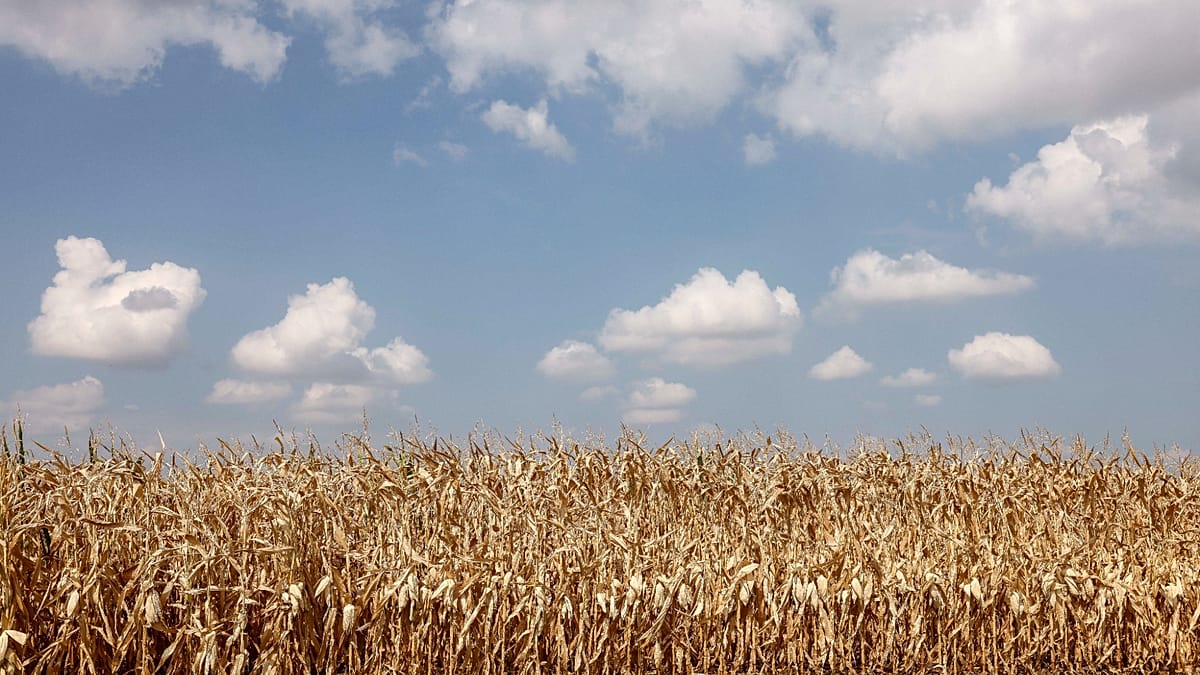
This year's exceptional drought has nevertheless required some adjustments.
"In these temperatures, the problem with these plants is that they abort. So we get a flower, but then the flower drops off the plant and there's nothing after that. And my aim is still to achieve a yield, because behind that there are people who are satisfied with our products," explains Cédric Steinlé.
The "Graines d'Alsace" cooperative is proving highly successful across the region, selling to workplace canteens, hospitals and producer-run shops. Cédric Steinlé hopes that consumption of pulses will continue to grow. At an average of 1.6 kg per person per year, it is still too low in France to meet health recommendations, according to a recent study.