Austria opens police station at Hitler birthplace to deter neo-Nazi tourists
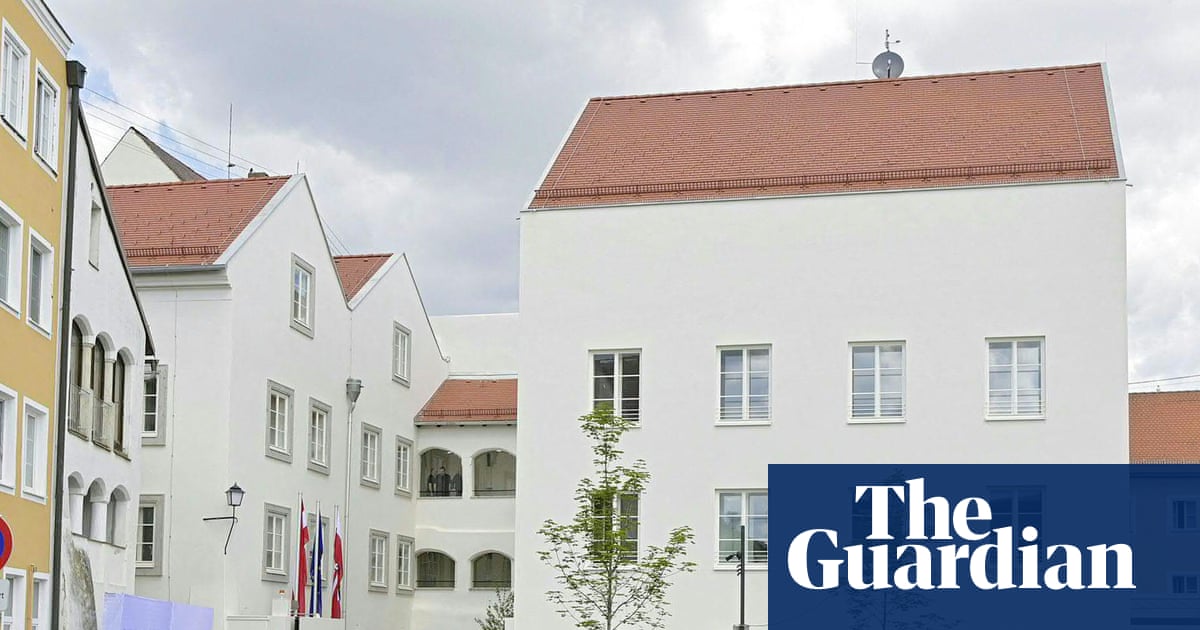
Austria has opened a police station in the birthplace of Adolf Hitler in an attempt to “neutralise” its toxic legacy, after years of debate over how to stop neo-Nazis visiting it as a pilgrimage site.Hitler...
Austria has opened a police station in the birthplace of Adolf Hitler in an attempt to “neutralise” its toxic legacy, after years of debate over how to stop neo-Nazis visiting it as a pilgrimage site.
Hitler was born on 20 April 1889 in a rented flat of the building in the town centre of Braunau am Inn and spent the first weeks of his life there.
Now it will be the workplace of a police unit specialised in tackling narcotics trafficking, with the building’s new occupants meant to put off Nazi displays which are illegal under Austrian law.
Given the community’s proximity to the German border, it is on a key drugs running route, according to district police commander Stefan Haslberger.
The conversion, whose estimated cost reached €20m, followed an intense public discussion about how to deter today’s fascists from using the site as a shrine.
News agency APA reported that even construction rubble from the remodelling had been disposed of in a secret location to avoid it becoming a gathering place for Hitler devotees.
At the opening ceremony, Austrian interior minister, Gerhard Karner, called it a “new chapter” in which the building would be a “place of democracy, the rule of law, security”. At the same time, he said, “memory will not disappear”.
In recent years skinheads laid roses and wreaths for the Nazi leader’s birthday before the elegant building’s ochre facade, while extremists and drunken revellers posed for pictures doing the straight-armed Hitler salute.
Local people, fed up with such stunts, often call the former residence the “house of evil”.
An expert commission tasked with determining a future for the building had recommended a “use for social or charitable, or for official or administrative purposes”.
It said a museum on the site could continue to draw rightwing extremists, especially those whose “blood and soil” ideology particularly reveres birthplaces and gravesites. Demolition, on the other hand, would obfuscate an important chapter of local history.
Polls showed a majority of Austrians preferred it to become a centre for promoting democracy.
The building, parts of which stem from the 1600s, hosted an inn and brewery with flats on the upper floors, one of which was briefly occupied by the Hitler family.
A decade ago, the Austrian government agreed to take over ownership from a private proprietor, who had previously rented it out to the interior ministry which used it as a care home for disabled people.
It stood empty from 2011, with a small memorial stone outside taken from the former Mauthausen concentration camp whose inscription only hinted at its problematic past: “For peace, freedom and democracy. Never again fascism. The millions who died serve as a warning.”
German news magazine Der Spiegel reported recently that hackers had replaced the building’s proper address on Google Maps with the street number 88 – neo-Nazis code for Heil Hitler based on the eighth letter of the alphabet.
The government said it hopes the opening of the police station will foster the “neutralisation of the whole place” and repel Hitler admirers.
Hitler’s private apartment as Nazi leader on Munich’s Prinzregentenplatz has served as a police station since the late 1940s while his official residence in Berlin’s Reichskanzlei was destroyed by bombing during the second world war.
Germany under Hitler annexed Austria in 1938, a fact that historians say led many in the country to long dismiss its shared responsibility for the Holocaust and other Nazi crimes.
The far-right Freedom party (FPÖ), which was founded by former Nazis, won the most votes in an Austrian general election for the first time since the war in September 2024 but was unable to take power because mainstream parties refused to form a coalition with it.
Since then, the FPÖ has seen its support in the polls continue to rise.