Portugal has just used up its natural resources for 2026. Is the rest of Europe doing any better?
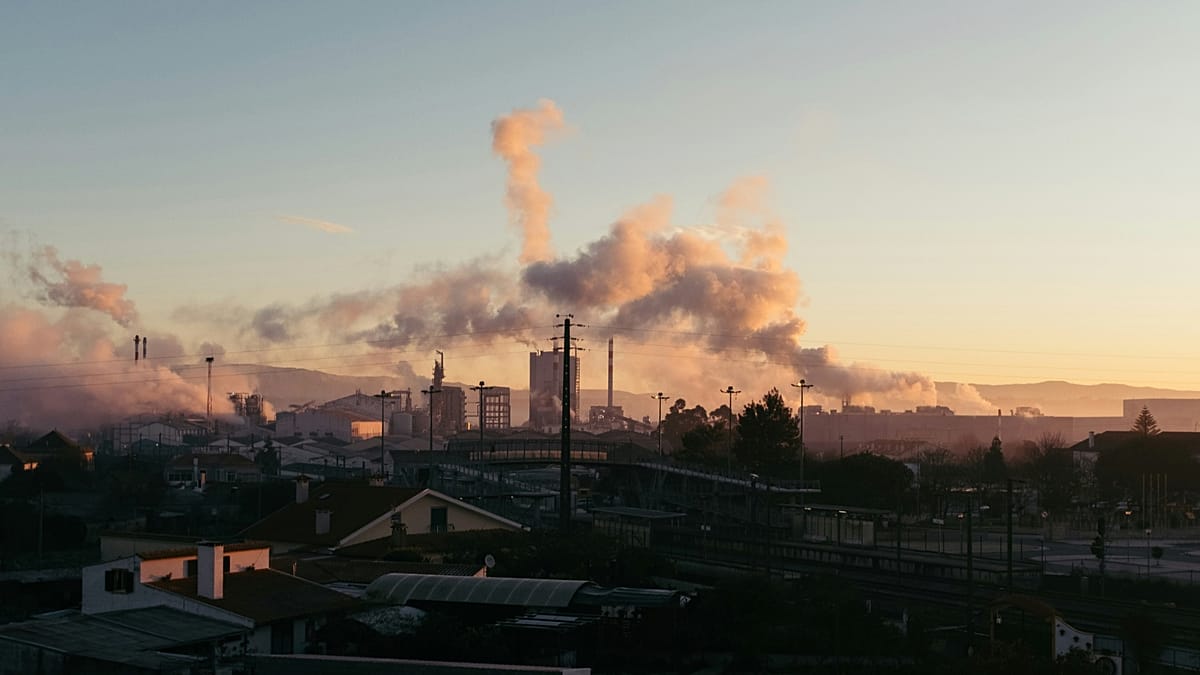
As of today (7 May), Portugal has exhausted the natural resources it has available for 2026. This means that if every person on Earth lived like the average Portuguese citizen, humanity would need 2.9...
As of today (7 May), Portugal has exhausted the natural resources it has available for 2026.
This means that if every person on Earth lived like the average Portuguese citizen, humanity would need 2.9 planets to sustain itself.
According to Portuguese environmental NGO ZERO - the Sustainable Earth System Association, in partnership with the Global Footprint Network , the country ran out of resources on 5 May in 2025 - meaning it has slightly improved its ecological footprint.
Still, from today, the country will start using natural resources that should only be used from 1 January, 2027.
For many years, Portugal has been unable to provide the natural resources it needs to maintain its activities, ZERO states. In a statement, the association explains that the environmental imbalance is the result of the production and consumption model associated with the Portuguese lifestyle, with food and transport identified as the main culprits.
How can Portugal reduce its ecological footprint?
Among the main measures pointed out by ZERO to reduce Portugal's environmental debt are investing in more sustainable agriculture, which produces quality food, uses less water and increases the production of plant-based food.
In the EU, animal-sourced foods make up between 81 and 86 per cent of total greenhouse gas emissions of total food production – despite only supplying around 21 per cent of calories and 64 per cent of protein. According to the carbon footprint calculator CO2 Everything, one 100g serving of beef is equivalent to 78.7 km of driving, releasing 15.5 kg CO2 equivalent.
Reducing commuting and travelling by teleworking and holding more events online could also help Portugal's footprint, according to report.
Investing in more sustainable transport, such as cycling and public transport, and creating rules to ensure that products last longer and can be reused and recycled were also identified as key measures.
In 2023, the transport sector was the largest source of CO2 emissions in Portugal (52 per cent) - far outpacing electricity and heat (16.2 per cent) and industry (15.2 per cent), according to the International Energy Agency (IEA).
How do other European countries compare?
The result puts Portugal almost on average with EU countries, which this year held its Overshoot Day on 3 May**.** According to the Global Footprint Network, Planet Overshoot Day marks the date on which the planet would go into overload if everyone consumed natural resources in the same way.
ZERO states that this year, the first EU country to reach Overshoot Day was Luxembourg - on 17 February - while the last is expected to be Hungary, on 24 June.
Worldwide, the country that depleted its natural resources the fastest in 2026 was Qatar on 4 February and the last is estimated to be Honduras, on 27 November.
Among the countries that consume more resources than Portugal are, for example, Canada, the United States and Denmark, which reached Overshoot Day in March.
Austria, France and Croatia began consuming more than the planet can replenish in April, while Germany, Cyprus, the United Kingdom, Greece and Spain are not expected to reach Overshoot Day until 4 June.
World Environment Day is celebrated on 5 June, the date on which the Global Footprint Network will announce Planet Overshoot Day 2026, i.e. the day on which humanity has already consumed more natural resources than the Earth can regenerate that year.
In 2025, humanity used up that year's resources on 24 July, a week earlier than in 2024, which was on 1 August.