Canada chooses Sweden's Saab in defence deal over US rivals, PM Mark Carney says
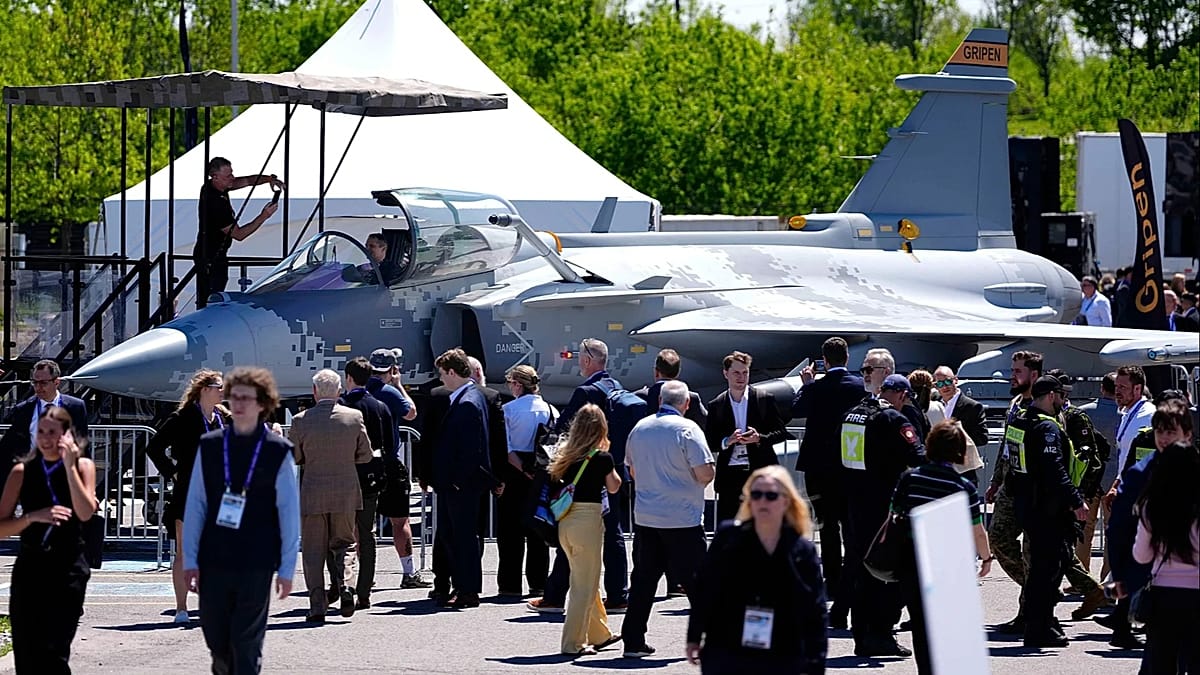
Published on 27/05/2026 - 20:38 GMT+2 Canada is moving ahead with the Swedish firm Saab on procuring a new fleet of Arctic surveillance aircraft, Prime Minister Mark Carney...
Published on 27/05/2026 - 20:38 GMT+2
Canada is moving ahead with the Swedish firm Saab on procuring a new fleet of Arctic surveillance aircraft, Prime Minister Mark Carney announced on Wednesday, choosing the Stockholm-based company over US competitors.
For Carney, the move addresses two key priorities; improving Canada's defence capabilities in the Arctic and reducing the country's economic integration with the United States.
By entering into formal negotiations with Saab on the procurement, Canada has sidelined two US alternatives: the Aeris X by L3Harris and the E-7 Wedgetail by Boeing.
"The GlobalEye procurement will help us secure our North and build our economy at once," Carney said at a defence industry event in Ottawa on Wednesday.
Saab applauded the news and noted plans "to transfer knowledge and technology to Canada that will grow the domestic defence industry," a message also shared by Carney.
The Canadian premier has listed the Arctic as a strategic priority, warning Canada needs to rapidly improve its defence posture in the region, where geopolitical competition is rising, notably with Russia.
But in choosing a European partner over a US firm, Carney may further anger President Donald Trump's administration, which has already voiced frustration over Ottawa's decision to reconsider a multi-billion-dollar deal for a new fleet of US-made F-35 fighter jets.
When US Undersecretary of Defence Elbridge Colby announced earlier this month that the Pentagon was suspending cooperation on an 86-year-old joint defence advisory board with Canada, he cited the stalled F-35 deal as an aggravating factor.
Carney says Canada's historically close relationship with the United States has been permanently altered and Ottawa needs to diversify its economic and security relationships, insisting bilateral ties will not return to a pre-Trump normal.