Is Bulgarian prime minister Rumen Radev sizing up the EU’s Orbán-shaped hole?
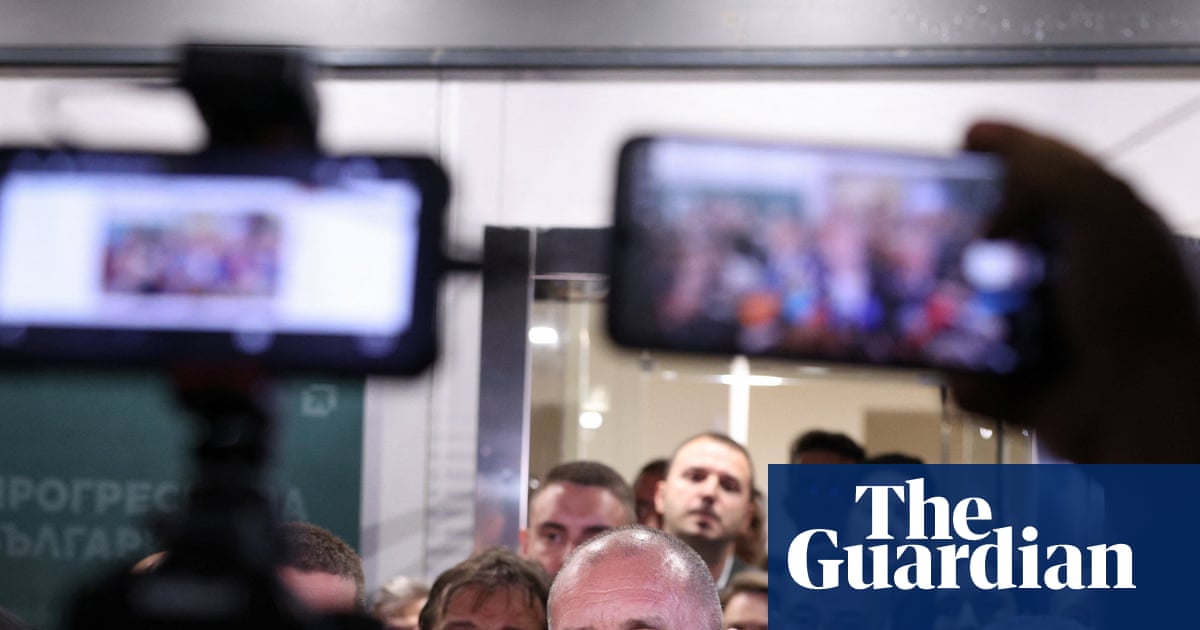
One evening nine years ago in the Bulgarian town of Balgari, a Brazilian tourist approached the casually-dressed, middle-aged man surrounded by bodyguards, bystanders and photographers. “Why are you...
One evening nine years ago in the Bulgarian town of Balgari, a Brazilian tourist approached the casually-dressed, middle-aged man surrounded by bodyguards, bystanders and photographers. “Why are you important?” she asked. “I’m not so important,” he replied. She repeated the question and he admitted: “I’m the president.”
Now, in 2026, the rightwing populist Rumen Radev is no longer the president, but the prime minister – the more powerful of the two positions – after his Progressive Bulgaria party secured an overwhelming majority in April’s election. While many in Europe breathed a sigh of relief that month at the demise of Viktor Orbán in Hungary, others wondered if Radev would become the EU’s next disruptor-in-chief.
His first months, analysts suggested, have pointed towards a more transactional foreign policy with the US and Europe, and some initial moves that could be seen to benefit Russia.
In May, Bulgaria halted its military support to Kyiv, with Radev saying he believed the Ukrainian cause was “doomed”. When 36 countries signed up to a special tribunal to prosecute Russia over its invasion of Ukraine, Bulgaria did not.
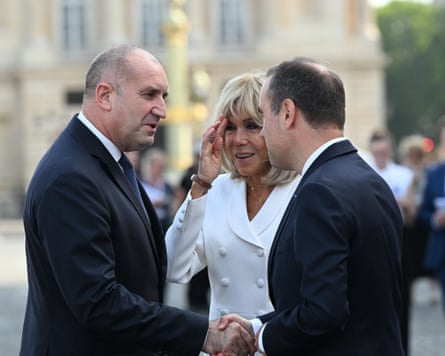
Visiting Paris on Bastille Day, Radev pulled Bulgaria out of the “coalition of the willing”, saying his country does not have the capacity to help Ukraine, and that military support will only prolong the war.
Days later, Bulgaria agreed to host up to eight US aerial refueling tankers at the Bezmer military base to support US operations in the Middle East.
“He’s already an awkward leader for Europe because his moves are surprising Europeans by the fact that Bulgaria, for many years, despite its internal challenges, held its pro-European course,” said Maria Simeonova, the head of the Sofia office at the European Council on Foreign Relations.
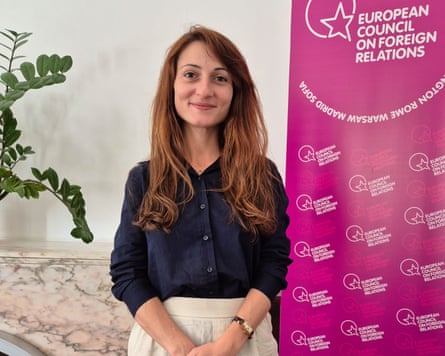
She said Radev, while maintaining Bulgaria’s commitment to the EU and Nato, was distancing the country from the emerging European security architecture yet hoping to continue benefiting from US security guarantees. “There’s clearly a lack of any ideological consistency in the way he conducts foreign policy in those first months,” she said. “And this is becoming very visible now.”
Meanwhile, the prime minister, who had never previously expressed any strong views about his faith, religion or the church, has now found an affinity with Orthodox Christianity.
In June, Progressive Bulgaria supported the March of the Family, a Christian and patriotic event supporting traditional family values defined as being in direct opposition to Sofia Pride, which happened on the same day.
Radev also threatened to veto the EU’s 21st package of sanctions against Russia over its war against Ukraine, which included measures against the head of the Russian Orthodox Church, Patriarch Kirill.
“I am not interested in the Russian patriarch as an individual,” Radev told reporters. “I am interested in the fact that he is the head of the Russian Orthodox Church, which is Eastern Orthodox, just like our church. I am concerned about the millions of people who belong to that church.”
A source close to the Bulgarian Orthodox Church, speaking on condition of anonymity to preserve its relationship with the patriarch, said Radev’s recent rapprochement with the church was purely political.
“He doesn’t have anything to do with the church and religion. It is 100% political,” they said. “I think it was just a gesture towards Moscow. It has no practical benefit for Bulgaria, nor for Radev.”
Dimitar Keranov, a visiting fellow at the German Marshall Fund of the US, said Radev was “sitting on two chairs” with pro-European and pro-Russian statements in an attempt to appease his diverse electorate. However, he said, this tactic would not prevail.
“There’s this idiom in Bulgarian: He who sits on two chairs falls,” said Keranov. “My opinion is that if he continues this, sooner or later it will turn against him.”
after newsletter promotion

Vladislav Bonev, 19, an IT student at Sofia university, said he was disappointed with the government and that the pro-Russian rhetoric was not showing Bulgaria in a good light to other European leaders. Yet, he said, he was not too concerned about the possibility of Radev pulling Bulgaria out of the EU and Nato.
“I don’t think we have anything to worry about because he doesn’t have that much power to pull us out of the EU,” he said. “But what would be good is to have him kept in check by the EU.”
It is too early to determine whether Radev is emerging as the new Orbán. Simeonova said she believed Radev, who does not see the EU as a solidarity club, would not be as disruptive or block crucial EU decisions. But some of his actions may have dire consequences for the country and prevent its development.
“The difference with Orbán, is that Orbán’s actions had consequences for the EU and Hungary, whereas Radev’s actions will only have consequences for Bulgaria, marginalising the country, isolating the businesses from any opportunities,” she said.
Keranov said Radev lacked the infrastructure to be as disruptive as Orbán. He said he believed, however, that Radev could yet become a more awkward leader for Europe.
“If he is given enough time, like Orbán was given as prime minister, we could expect him consolidating his power more and more, blocking some reforms that are not really in his interest, or even turning this pro-Russian rhetoric into even more pro-Russian policy in practice,” he said. “We need to be aware that, right now, he’s also just testing the ground.”
Nevertheless, some believe Radev will face some serious problems in the autumn once Bulgarians are back from their holidays.
A newly approved budget, freezing the minimum monthly wage at €620.20, projecting a 5.7% GDP deficit, and authorising up to €10.1bn in new government borrowing, has considerably rattled part of the electorate. Last December, the proposed state budget for 2026 provoked mass-protests, resulting in the resignation of the then prime minister, Rosen Zhelyazkov, and his cabinet.
Tsvetelina Mareva, 27, who runs a children’s centre in Sofia, said she was disappointed about Radev’s pro-Russia stance and wished he was focusing on his campaign promises.
“We can see now that he lied to us,” she said. “So probably we’ll go to protest after the summer. We are already talking about that on social media. In September I am sure there will be a lot of protests.”