Denmark, Portugal, Lithuania lead the way as EU share of electricity from renewables hits 46%
Published on 02/07/2026 - 9:55 GMT+2 The EU’s share of electricity generated from renewables continues to grow, new Eurostat data reveals. In the first quarter of 2026, it...
Published on 02/07/2026 - 9:55 GMT+2
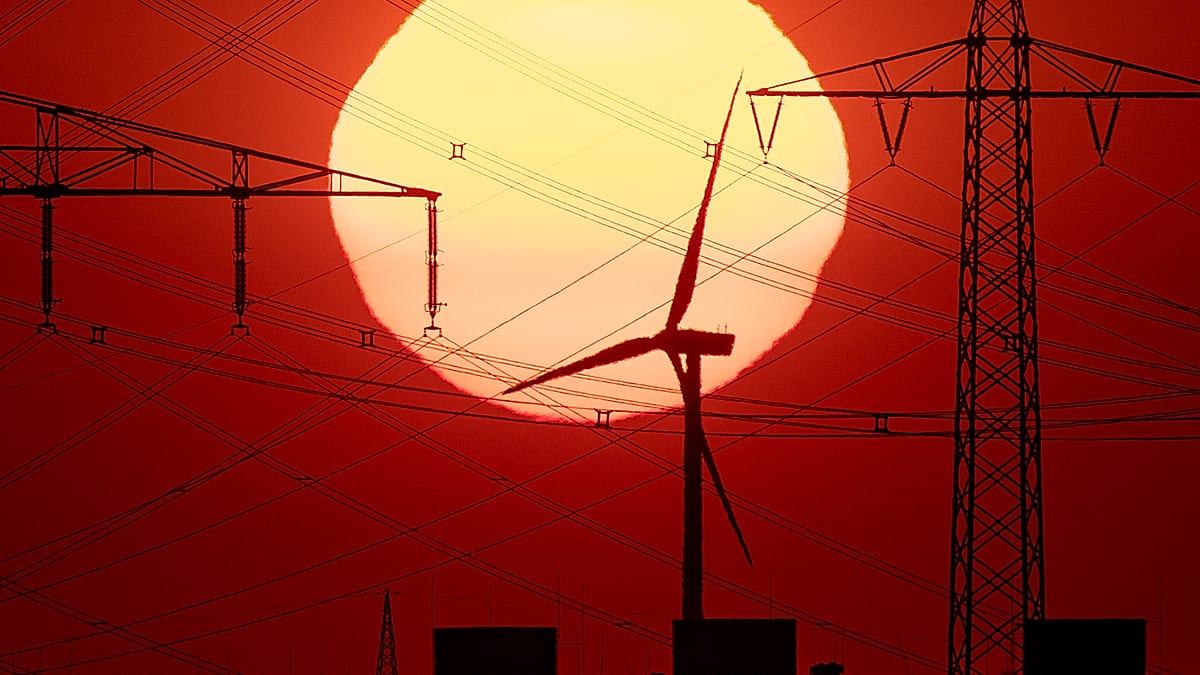
The EU’s share of electricity generated from renewables continues to grow, new Eurostat data reveals.
In the first quarter of 2026, it reached 45.5 per cent of the total electricity generated. This is up from 42.7 per cent in the same period in 2025.
Wind led the way, covering 44.9 per cent of the total renewable electricity, followed by hydropower at 28 per cent and solar at 17.3 per cent. The remainder came from combustible renewable fuels (9.4 per cent), geothermal and other energy sources (0.4 per cent).
It comes as the EU doubles down on green, homegrown power as a national security measure after the Iran war energy crisis highlighted the volatility of relying on fossil fuel imports.
Which EU countries are leading on renewables – and which are falling behind?
Denmark leads with the highest share of electricity from renewable sources in the EU at 90 per cent – mostly wind power – according to Eurostat. In second place thanks to an abundance of hydropower, Portugal boasts 82.9 per cent, followed by Lithuania – another wind leader – with 75.7 per cent.
At the other end of the spectrum, the countries benefiting least from the green transition are Czechia, with 12.7 per cent of its electricity generated from renewables, Malta (13 per cent) and Slovakia (17.2 per cent).
Renewables are lowering household bills in Europe
As well as slashing planet-heating emissions, investment in renewables is helping to reduce energy bills at a time when gas prices are at an all-time high. The EU saved €51.4 billion in 2025 by lowering fossil fuel imports, according to a recent report by the International Energy Agency (IEA).
A separate report by the Centre for Research on Energy and Clean Air (CREA) found that consumers in five EU countries – Denmark, Finland, France, Sweden and Slovakia – will save €8.5 billion on their energy bills this year thanks to the high clean energy share in their electricity mix.
On top of the elevated oil and gas prices due to the ongoing crisis in the Strait of Hormuz shipping route, which Iran closed in response to the US-Israel offensive, European energy bills rose further amid June’s unprecedented heatwave.
Electricity bills in France and Germany alone rose by more than €700 million in just one week as energy demand for cooling spiked, forcing them to fall back on gas to meet demand, according to new analysis by environmental NGO 350.org.
It has raised fresh questions over whether Europe’s ‘merit order’ system – in which the most expensive power source required to meet demand, typically gas, sets the price for the entire grid – can ever be compatible with a renewables-dominated future.
Focusing on building enough storage and renewables to push gas out of the pricing equation altogether could be the long-term solution – but the recent price spikes show how far Europe still has to go.