€25 million invested, €150 million earned: the 'miraculous' return on the Pope's visit
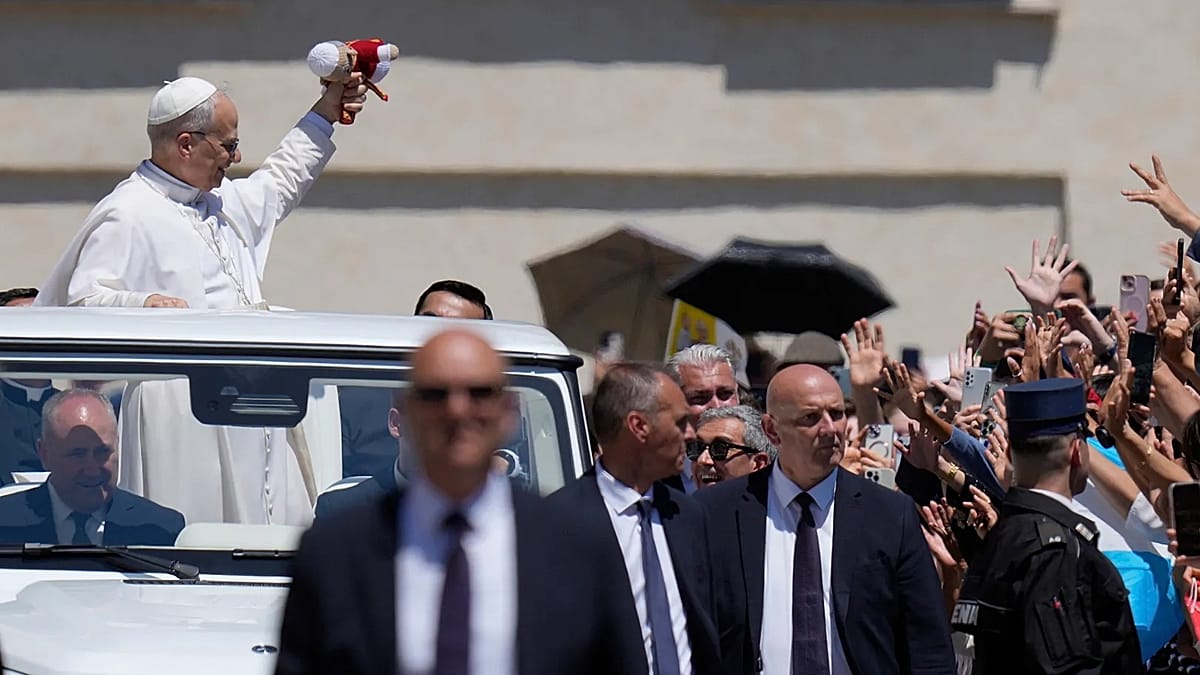
In what it hails as a loaves-and-fishes miracle, the Spanish Bishops' Conference says Pope Leon XIV’s trip to Spain will bring in five times its cost, though less than the 2011 visit’s 354 million euros.
Pope Leo XIV's visit to Spain will leave behind far more than images of crowds and a packed pastoral schedule. According to estimates presented by the Spanish Episcopal Conference (CEE), the Pontiff's seven-day stay in the country will entail an approximate cost of 25 million euros, but could generate an economic return of more than 150 million, which amounts to five euros in revenue for every euro invested.
"We are currently estimating that the consolidated budget, without of course having all the figures finalised, will amount to 25 million euros," explained on Tuesday the deputy general coordinator of the visit and deputy secretary for Economic Affairs of the CEE, Fernando Giménez Barriocanal, at a press briefing.
The figures, still provisional and released just days before the Holy Father's arrival in Madrid next Saturday, provide a frame of reference for the dioceses involved in the trip: Madrid, Barcelona, Gran Canaria and Tenerife. In any case, Giménez Barriocanal stressed that the financial aspect pales in comparison with the spiritual and social impact of the prelate's visit: "That's not why we're doing this."
Of the total budget, around 85% will go directly to the scheduled events, while the rest will cover logistics, communications and overall organisation. The Episcopal Conference itself will take on around 1.4 million euros for expenses such as accommodation and transport for the papal entourage, accreditation, liturgical materials and equipment for volunteers.
Funding will be split between donations from benefactors and companies, contributions from the dioceses and the Church, support from public authorities - especially in the Canary Islands and Catalonia - and small contributions from the faithful through channels such as Bizum. Once the visit is over, a specialist firm will audit the accounts and draw up a final report.
The ObservaTUR figures: immediate impact and the "showcase effect"
More cautious in its estimates is the report (source in Spanish) drawn up by ObservaTUR, which puts the immediate economic impact of the visit at between 90 and 125 million euros. The study distinguishes between the cost of organising the trip and the money actually changing hands in sectors such as accommodation, food service, retail or transport, and rules out equating Leo XIV's trip with major events such as World Youth Day.
According to the report, the visit is closer to an intermediate format: seven days, four venues and extensive international media coverage. That combination boosts tourism spending and spreads income across several regions, although without reaching the exceptional scale of events such as World Youth Day in Madrid in 2011, whose total economic impact reached 354.3 million euros in Spain.
ObservaTUR nonetheless insists on the importance of the so-called "showcase effect", that is, the ability of the event to strengthen tourism - especially religious and cultural tourism - in the medium term, beyond the week of events.
In that regard, the report argues that the impact of the Holy Father's visit "is not limited to a single week of consumption" and stresses that "the accelerating effect on religious tourism does not end when the visit ends". It therefore concludes that Leo XIV's trip should be understood "in two stages": an immediate and measurable cash injection, of around 100 million euros, and another, "perhaps more valuable" impact by increasing interest in Spain.
Hotels full and restaurants fully booked
That impact is already being felt in the sector. Platforms such as Booking.com have detected a sharp rise in searches for accommodation in the cities on the papal itinerary, with increases of 52% in Barcelona and 46% in Madrid.
Hotel associations expect high occupancy rates and a rise in average prices, especially in the capital, where international demand accounts for more than half of bookings.
Holiday rentals and the restaurant trade will also benefit from the profile of visitors, mainly families and groups who will extend their stay. In central areas of Madrid and Barcelona, bars and restaurants say they are already fully booked for the key days in the Pontiff's schedule (source in Spanish). In the Canary Islands, the tourism sector also highlights the promotional value of the Pope's presence, amplified by hundreds of accredited journalists.
Bad Bunny vs Leo XIV: a double boost for Madrid
Leo XIV's visit will also coincide in Madrid with concerts by Puerto Rican artist Bad Bunny, a combination that reinforces expectations for tourism activity and consumer spending in the Spanish capital. Both events, very different in nature, will bring tens of thousands of national and international visitors to the city over the same days, pushing up demand for hotel rooms, transport and dining.
Industry sources stress that this overlap of major events is unusual and acts as an additional accelerator of demand. While the papal schedule draws in the faithful, pilgrims and international media, the concerts will attract a young audience with a high propensity to spend on leisure, accommodation and food. The result will be a cumulative effect that reinforces Madrid's image as a major events stage and multiplies the short-term economic impact on the city.
Pending the final figures, the combination of moderate spending, high international visibility and strong tourist consumption explains why Leo XIV's visit is being held up as an example of exceptional profitability. A religious event which, at least in terms of direct economic impact, is expected to generate five times the money invested and leave a legacy that could last well beyond his time in Spain.