Germany's Merz announces sweeping reforms: Tax cuts, pension overhaul and new sick leave rules
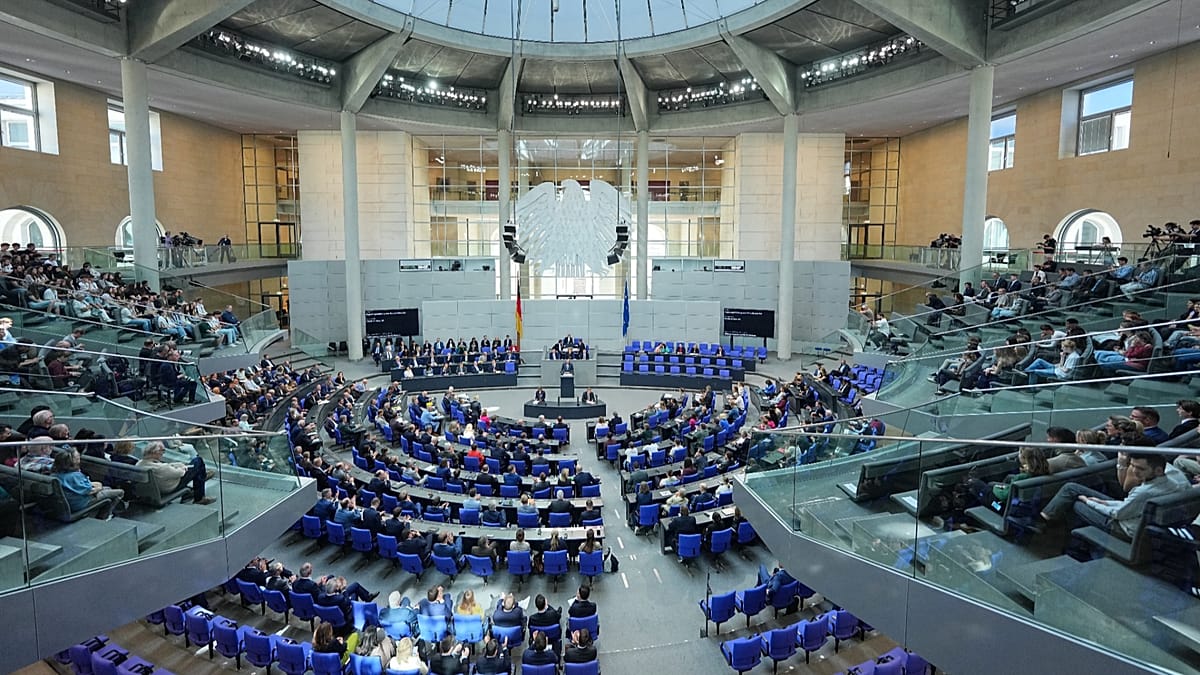
After seven hours of talks, the CDU/CSU-SPD coalition agreed on sweeping tax, labour and pension reforms, a breakthrough aimed at reviving the struggling economy and countering the rise of the far right.
Germany's ruling coalition presented a comprehensive reform package on Thursday with the goal of getting the country's sluggish economy back on track.
The coalition of CDU, CSU and SPD have agreed on 34 measures that include cuts to income tax for low- and middle income families, an overhaul of the creaking pension system and tougher rules for employees' sick leave.
"We are working to increase the flexibility of our businesses," Chancellor Friedrich Merz told a press conference in Berlin after seven hours of talks.
"We are working to cut red tape. We are working to protect our welfare state, and we are working to ease the burden on employees and companies by lowering taxes," said Merz while presenting the "Programme for Revival and Employment".
The tax relief would mean an average family is about 600 euros better off per year, the parties said.
SPD leader and Vice-Chancellor Lars Klingbeil said he was satisfied with the agreement.
The key decisions:
Income tax
The top income tax rate of 42% will remain unchanged, but in future it will only apply to incomes above the current threshold of €70,000.
On the tax on the rich, the coalition has agreed a tiered system. From an annual income of €250,000 a rate of 45% is to apply; anyone earning more than €280,000 will in future pay 47%. The coalition calls this a "fair sharing of the burden through a moderate increase in the tax on the rich."
The total tax relief provided by the reform amounts to approximately €10 billion per year.
More fixed-term employment and Sunday opening hours
To give the economy more flexibility, the coalition wants to expand the options for fixed-term employment contracts and allow longer Sunday opening hours.
End to sick notes by telephone
The tougher rules for sick leave would no longer allow employees to call in sick to work for up to three days without seeing a doctor or call up the doctor and ask for a sick leave letter of one week without actually seeing the doctor.
Instead, employers would be able to ask for a doctor's certificate from the first day a person is on sick leave.
Merz had repeatedly complained that the rate of sick leave is too high in Germany, harming productivity.
In future, employees will be required to present a certificate of incapacity for work from the very first day they are off sick.
No more nationalisation of housing companies
The nationalisation of housing companies is to be banned. The aim is to reduce uncertainty for investors.
Cutting red tape
As part of efforts to cut red tape, the legal bases for state benefits are to be time-limited, as these so-called sunset clauses are seen as an effective tool for streamlining regulation.
Pension reform
The pension system reform would include gradually raising the retirement age, currently between 65-67 years depending on the number of years worked, in line with life expectancy.
The coalition leaders said they would implement the recommendations presented by a government-mandated panel of experts and politicians last month to stabilise the pension system. The aim is to prevent the level of pensions from falling and ward off the need for a big, long-term increase of the levy employees pay into the pension system.
Labour Minister Bärbel Bas (SPD) described the pension package as a "masterpiece" and Merz also promised to implement the proposals.
The most contentious issues between the Christian Democrats and the Social Democrats were the tax reforms, with the SPD wanting richer people in Germany to contribute more, while the CDU/CSU had in principle ruled out tax increases.
Pressure from state elections in September
The government is also keen to show it can get to grips with the country's problems and to diminish the appeal of the AfD, which has been topping national opinion polls for months.
State elections are scheduled for September in Saxony-Anhalt, Berlin and Mecklenburg-Western Pomerania. In the polls, the AfD is ahead in Saxony-Anhalt and Mecklenburg-Western Pomerania.
In Berlin, the CDU led by Kai Wegner has slipped to fourth place in an RBB poll for the state parliament, behind all opposition parties, the Left, the AfD and the Greens.
Alice Weidel, the co-leader of the far-right Alternative for Germany party, which placed second in national elections last year, derided the reform package.
On X, she called the measures an "even more left-wing redistribution and minimal compromises that don’t deserve to be called 'reforms.'"
"The fact that this is being sold as a ‘breakthrough’ shows only one thing: this government’s complete inability to reform," she wrote.