Italy wants to pull back on EU defence loan scheme to tackle rising energy costs
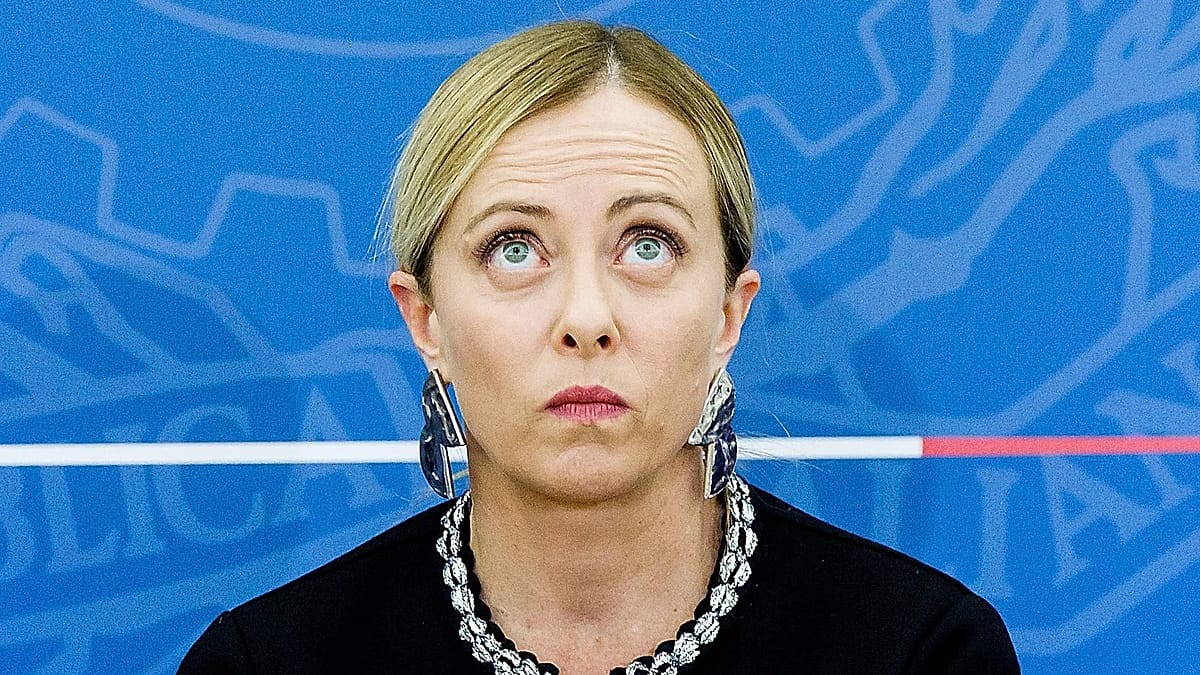
Giorgia Meloni's government is changing course on military spending and has decided to send a clear message to Brussels. Italy had reserved 14.9 billion euros under the EU's "SAFE" defence loan scheme, but...
Giorgia Meloni's government is changing course on military spending and has decided to send a clear message to Brussels.
Italy had reserved 14.9 billion euros under the EU's "SAFE" defence loan scheme, but Rome now intends to use between just four and five billion - just enough to cover projects for which contracts have already been signed.
Security Action for Europe (SAFE) is an EU loan instrument designed to provide financial support to member states to speed up defence readiness and close capability gaps.
The government's new plan was set out by Prime Minister Giorgia Meloni and Foreign Minister Antonio Tajani in a series of interviews on Thursday.
Rome says it wants to pursue a balanced approach while it awaits the outcome of negotiations with Brussels to secure flexibility on spending to tackle soaring energy prices.
"On SAFE we will ask for less than the 15 billion envisaged," Tajani said on Rete 4's Dritto e Rovescio.
"We have to honour the commitments we have made with NATO, but this is not the time to tap that loan so heavily. We hope to get at least a positive response. We are fighting for it, we hope to see some movement," he added.
The energy issue
For the government, the priority is now energy. Italy is feeling the impact of the global energy crisis triggered by the war in Iran and by the closure of the Strait of Hormuz.
"We cannot tell citizens that there is money only for defence," Meloni told Mattino Cinque. "If in the face of crises, we are unable to give answers to citizens and businesses, we risk there being nothing left to defend in this country. So, we have to try to find a balance."
To increase pressure on Brussels, the Italian government has decided to let the 31 May deadline for submitting SAFE projects pass without sending anything.
Rome considers the deadline "not binding" and will wait until Wednesday 3 June, when Ursula von der Leyen is expected to reply to a letter sent by the prime minister on 18 May.
In the meantime, a separate proposal has come from Raffaele Fitto, executive vice president of the European Commission and commissioner for regional policy.
The commissioner has written to governments and regional leaders in the EU proposing to "reallocate existing European funds" – such as the European Regional Development Fund, the Cohesion Fund and the Just Transition Fund – to combat high energy prices, cut dependence on fossil fuels and secure fertiliser supplies following the closure of the Strait of Hormuz.
His proposal comes after a review that had already diverted part of those funds, amounting to 34.6 billion euros, towards energy security, competitiveness and defence.
Gentiloni attacks the government
The government's strategy has been strongly criticised by former prime minister and former European commissioner Paolo Gentiloni, who in an interview with La Stampa took aim at the executive.
"Enough with the attacks on Europe, this way we risk making ourselves look ridiculous. We are last in terms of growth and first in terms of debt, even though Italy has received an enormous amount of European funds," Gentiloni said.
"Saying that the problem lies in Brussels' bureaucratic excesses is like those who used to say that Palermo's problem is the traffic."
Meloni, for her part, is pressing ahead and defending the stability of her government, convinced that by September it will become the longest lasting in the history of the republic. Stability which, according to the prime minister, brings international credibility.
The E5 summit
Elsewhere, a small diplomatic incident is brewing with Germany. German Chancellor Friedrich Merz wants to convene an E5 summit in Berlin on 2 June with the United Kingdom, France, Poland and Italy.
The informal summit has been called to discuss NATO and Ukraine in the presence of the Alliance's secretary general Mark Rutte and Ukrainian negotiator Rustem Umerov. But Rome has asked Berlin to move the meeting to 3 or 4 June, as it would otherwise clash with Italy's Republic Day.
"We would never have asked the French to come to Rome on 14 July," government sources say, revealing their irritation. If Germany sticks to 2 June, Italy could instead be represented by Deputy Prime Minister Antonio Tajani.