Poland’s Constitutional Tribunal crisis explained: a decade-long dispute over legitimacy of the justice
The dispute over Poland’s Constitutional Tribunal began in 2015, when the two main political camps, PO and PiS, clashed over the appointment of five judges. It later escalated into a wider conflict over judicial independence, the Tribunal’s composition and the authority of its rulings.
After taking office in 2023, Donald Tusk’s coalition moved to reverse judicial reforms introduced by PiS.
The dispute entered a new phase in 2026, when President Karol Nawrocki refused to accept the oaths of several judges elected by parliament.
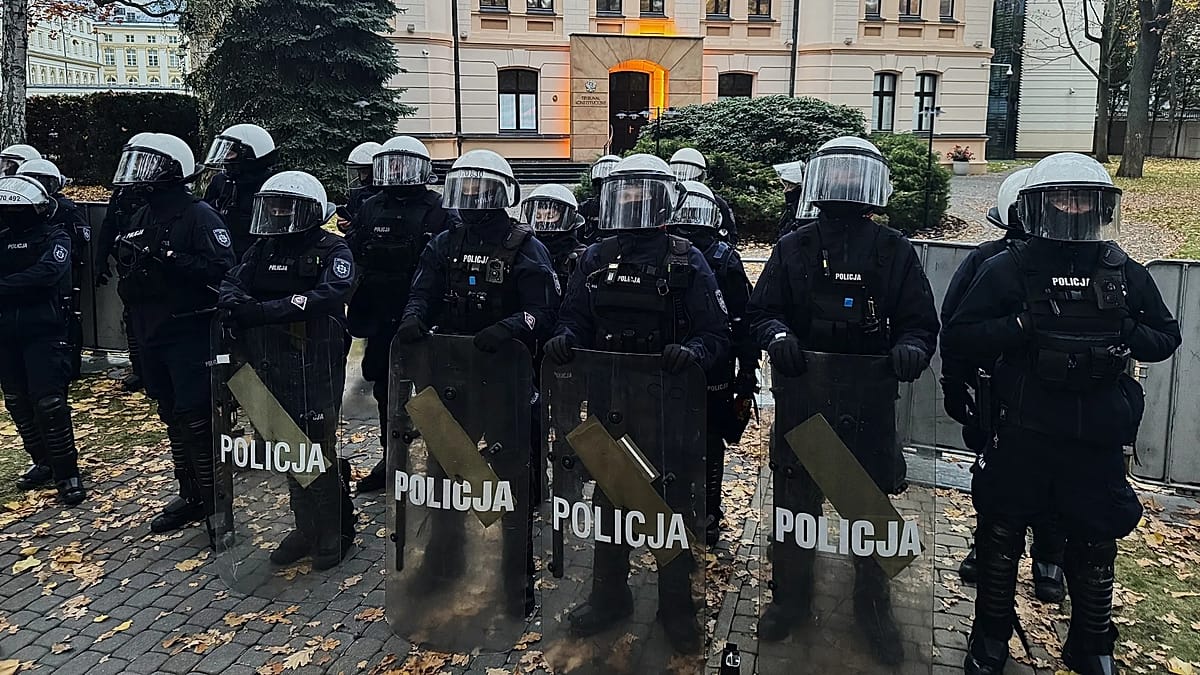
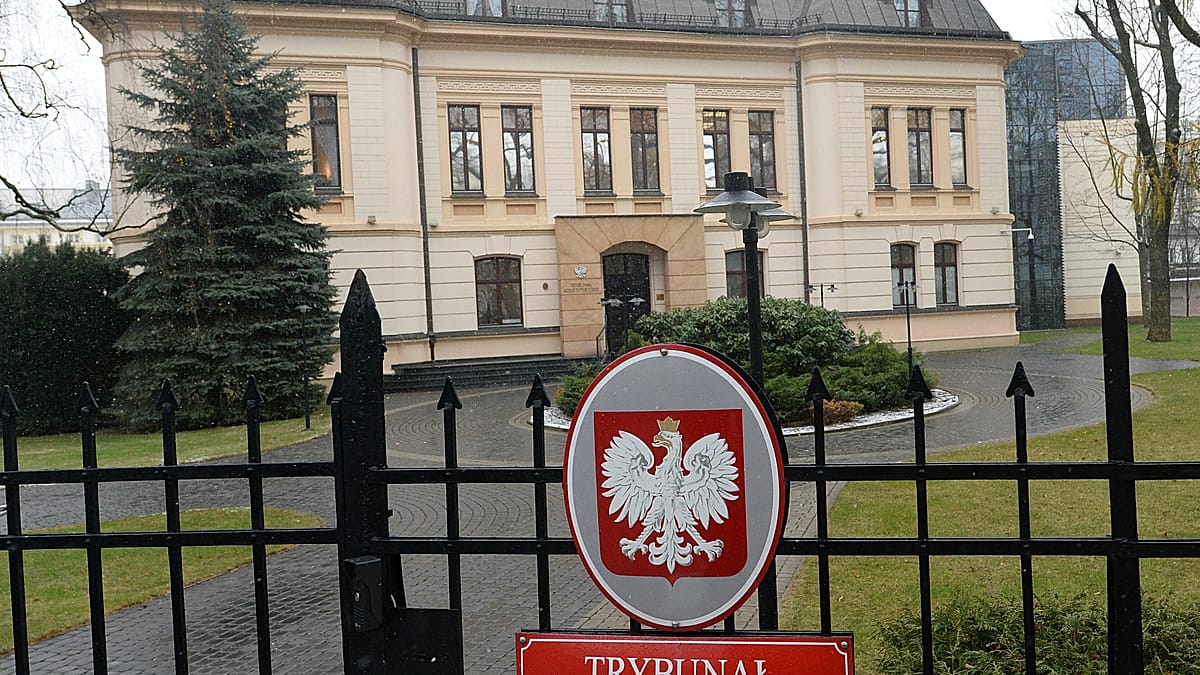
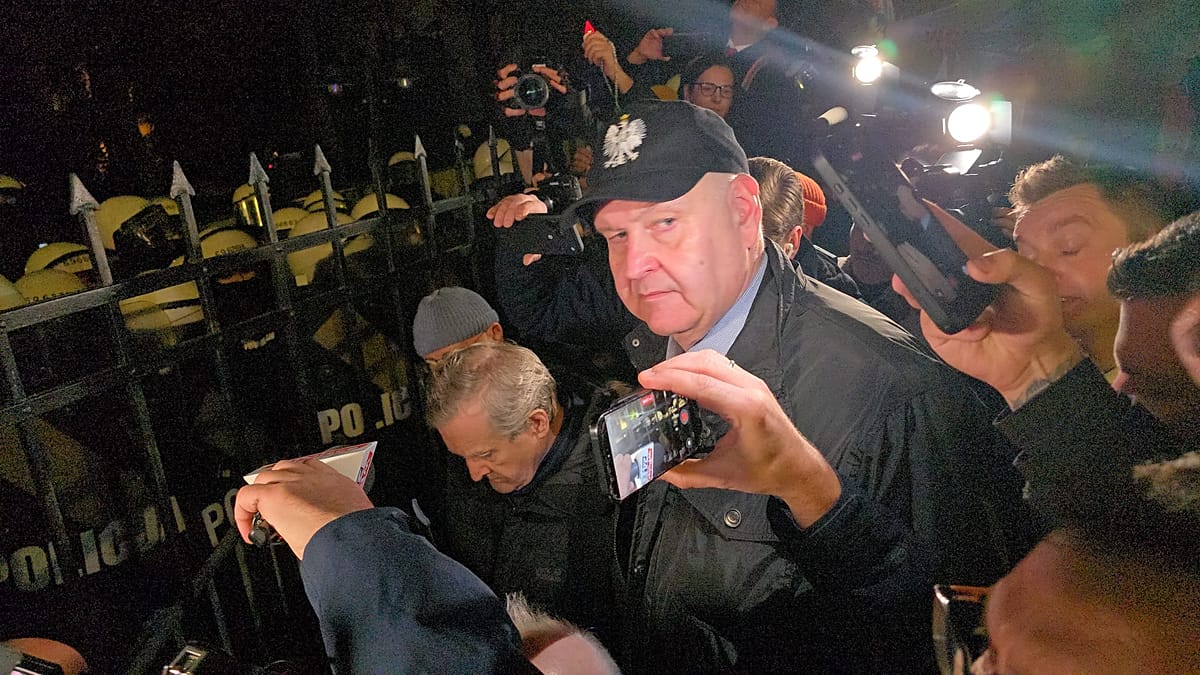
The standoff reached boiling point on Friday outside of the Constitutional Tribunal’s headquarters, with both sides disputing the other’s legitimacy.
Euronews explains the conflict in five key stages.
1. 2015: Five judges, two rival appointments
The crisis began in June 2015, when the outgoing PO-PSL coalition changed the law to allow parliament to elect five Constitutional Tribunal judges before the October elections.
On 8 October, the outgoing Sejm elected Roman Hauser, Andrzej Jakubecki, Krzysztof Ślebzak, Bronisław Sitek and Andrzej Sokala. President Andrzej Duda refused to accept their oaths.
After PiS won the election, the new Sejm declared the previous appointments invalid and elected five alternative candidates on 2 December. Duda accepted their oaths.
A day later, however, the Tribunal ruled that three of the outgoing parliament’s appointments were constitutional, while two were not. It also said the president must accept the oaths of properly elected judges without delay.
This meant three seats had already been lawfully filled. PiS’s subsequent appointments to those seats were therefore challenged. The three disputed appointees — Mariusz Muszyński, Henryk Cioch and Lech Morawski — became known as the Tribunal’s 'stand-in judges'.
While PO-PSL had overstepped its powers by filling two seats prematurely, PiS also challenged three appointments that the Tribunal had deemed valid.
2. 2016–2023: Changes to the Tribunal and questions over independence
After taking power, PiS changed the rules governing the Tribunal, including how cases were heard, the number of judges required and voting thresholds.
In March 2016, the Tribunal ruled that the first set of changes was unconstitutional. Prime Minister Beata Szydło’s government refused to publish the judgment, arguing that it had been issued under the wrong procedures.
The dispute deepened after Julia Przyłębska became Tribunal president in December 2016. The three disputed PiS appointees were also allowed to take part in its work.
Critics said the changes undermined judicial independence and brought the Tribunal under political control. PiS argued that it was restoring the institution and reforming the justice system.
The conflict also reached European courts. In 2021, the European Court of Human Rights ruled that the Tribunal's composition, including Mariusz Muszyński, did not meet the requirement of a tribunal established by law.
That year, Poland’s Constitutional Tribunal also issued rulings challenging the primacy of certain EU law provisions concerning the judiciary.
By 2022–2023, divisions had emerged within the Tribunal itself. Several judges questioned Przyłębska’s continued leadership, arguing that her six-year term as president had expired. She maintained that she could remain in office until the end of her nine-year judicial term.
3. 2024–2025: Tusk’s coalition attempts to reverse the reforms
After the October 2023 election, Donald Tusk’s coalition made restoring the rule of law a central priority.
In March 2024, the Sejm adopted a resolution questioning the status of the three disputed PiS appointees and Przyłębska’s authority to lead the Tribunal.
Two reform bills followed in September. They proposed changes to the appointment of judges and the institution’s functioning. President Andrzej Duda referred both to the Constitutional Tribunal for review, preventing them from taking effect.
In December 2024, Duda appointed Bogdan Święczkowski, a former national prosecutor and close associate of Zbigniew Ziobro, as Tribunal president.
Meanwhile, the government restricted the publication of Tribunal rulings in the Journal of Laws, citing concerns over the institution’s composition. Its leadership said the move was unlawful and that its judgments remained binding.
The result was a deepening institutional standoff: the government questioned the Tribunal’s legitimacy, while the Tribunal challenged the legality of the government’s actions.
4. 2026: Nawrocki refuses to accept four judges’ oaths
The crisis escalated in March 2026, when the Sejm elected six new judges to replace those whose terms were ending: Krystian Markiewicz, Anna Korwin-Piotrowska, Maciej Taborowski, Magdalena Bentkowska, Marcin Dziurda and Dariusz Szostek.
President Karol Nawrocki accepted the oaths of Bentkowska and Szostek but refused the remaining four.
His office cited concerns over the appointment procedure, including deadlines and the requirement for individual votes. It also argued that the president was not obliged to accept appointments automatically.
The government maintained that the Sejm had the constitutional authority to elect judges and that the president could not block their appointments.
On 9 April, the four judges took their oaths before a notary in parliament and sent the documents to the presidential office. Nawrocki’s office and Tribunal president Święczkowski rejected the move, arguing that the oath had to be taken in the president’s presence.
The Tribunal added to the dispute on 12 May, ruling in case K 3/26 that the president was not obliged to accept every appointment and had to be physically present for the oath.
The government challenged the ruling, pointing to the disputed status of judges sitting on the panel.
In May, the European Court of Human Rights issued an interim measure requiring Polish authorities not to obstruct the four judges from taking up their duties. The Venice Commission also said the president’s role in the oath should be ceremonial and that a refusal or delay should not prevent a judge from taking office.
5. October 2026: The dispute reaches the Tribunal’s headquarters
The conflict escalated again in October, when Maciej Berek also took his oath in parliament after receiving no invitation from the president.
Święczkowski refused to recognise oaths taken without the president’s presence and prevented some newly elected judges from sitting on cases.
On 30 October, judge Anna Korwin-Piotrowska ordered a one-month suspension of duties for Tribunal president Święczkowski and vice-president Bartłomiej Sochański, citing provisions on the temporary suspension of judges. She then took over the management of the institution.
She said the move was necessary to restore the Tribunal’s functioning and allow all judges elected by the Sejm to perform their duties.
The existing leadership rejected the decision as unlawful, arguing that there was no legal basis for suspending the president and that judges sworn in outside the presidential procedure were not full members of the Tribunal.
The confrontation then moved inside the building. After seven judges entered the headquarters accompanied by State Protection Service officers, scuffles broke out. President Nawrocki arrived during the night and described the events as an attempted takeover of a constitutional institution. He called for urgent consultations with political leaders.
On Saturday, Święczkowski said he and the remaining judges would seek to regain control of the Tribunal. Korwin-Piotrowska, meanwhile, announced that she would convene a General Assembly of judges on 3 November.
What is at stake?
Poland’s Constitutional Tribunal crisis is no longer simply about appointments or who runs the institution. It raises fundamental questions about the separation of powers, judicial independence and the authority of constitutional rulings.
The consequences extend beyond the political institutions. When judgments are not published and state bodies disagree over their legal force, uncertainty spreads to laws affecting citizens, businesses, taxation and public services.
More than a decade after the crisis began, successive governments and presidents have failed to agree on a common solution. Instead, each change of power has brought new legal interpretations and further disputes over who has the authority to decide.