Egypt to ship Cypriot gas to Europe in QatarEnergy deal
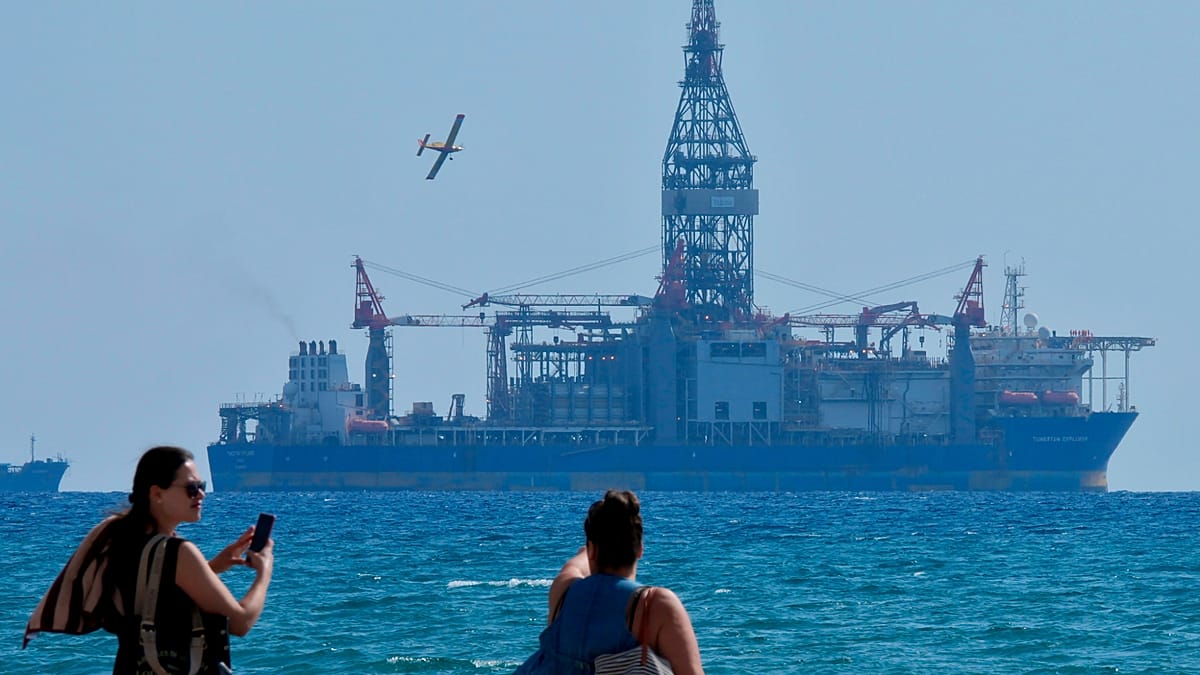
QatarEnergy and ExxonMobil have signed a deal with Egypt to pipe Cypriot offshore gas to Egyptian liquefaction facilities for export to Europe — the latest sign that Egypt is becoming the Eastern Mediterranean's dominant energy hub.
Published on 22/05/2026 - 15:42 GMT+2
QatarEnergy has signed an agreement with ExxonMobil and Egypt's Ministry of Petroleum and Mineral Resources to explore how gas discovered off Cyprus could be developed and exported through Egypt's existing infrastructure.
The memorandum of understanding, signed by petroleum minister Karim Badawi, puts the Qatari state-owned energy company at the centre of a broader effort to link Cypriot offshore gas fields with Egyptian export facilities and European buyers.
QatarEnergy said the agreement would explore future growth opportunities and commercial arrangements using Egypt’s gas infrastructure, which serves both domestic consumers and international markets.
Cyprus has no liquefaction facilities of its own, meaning gas extracted from its offshore fields must first be piped underwater to Egypt, where it is processed and liquefied before being shipped to European markets.
Cyprus has spent more than a decade trying to turn its offshore discoveries into commercial exports, and President Nikos Christodoulides said the latest approvals mark a turning point, moving the country from exploration to the exploitation of its natural gas resources.
Egypt becomes a gateway for gas from Cyprus to Europe
Egypt has already secured a central role in that plan. In April, partners in Cyprus’s Aphrodite field signed a 15-year agreement to sell all recoverable natural gas from the reservoir to the Egyptian Natural Gas Holding Company, with an option to extend the deal for another five years.
That agreement, along with the one signed on Thursday, shows how Egypt is becoming the main outlet for Cypriot gas. The deal also builds on QatarEnergy's existing partnership with ExxonMobil in Cyprus.
The two companies are partners in Block 10, where the Glaucus discovery, made in 2019 and estimated to hold around 3.7 trillion cubic feet of gas, is one of Cyprus's most significant offshore finds.
A second discovery in the same block, Pegasus, was identified in 2025, and in March the consortium formally declared both fields commercially viable, with combined reserves of around 7 trillion cubic feet.
QatarEnergy chief executive Saad Sherida Al Kaabi said the agreement was an important step in advancing regional energy cooperation across the Eastern Mediterranean.
The route could also matter for Europe, which has been looking for more diverse gas supplies since Russia’s invasion of Ukraine disrupted long-standing energy flows. Cypriot gas is unlikely to transform Europe’s energy balance on its own, but it could add another supply option from the Eastern Mediterranean.
The plan is still at an early stage. No final investment decision has been made, and details such as infrastructure links and commercial terms have yet to be agreed.
If the 2028 target is met, it would mark Cyprus’s first gas exports and a new supply route to Europe.