Meteors to light up the skies this October: How to watch the Draconid and Orionid showers
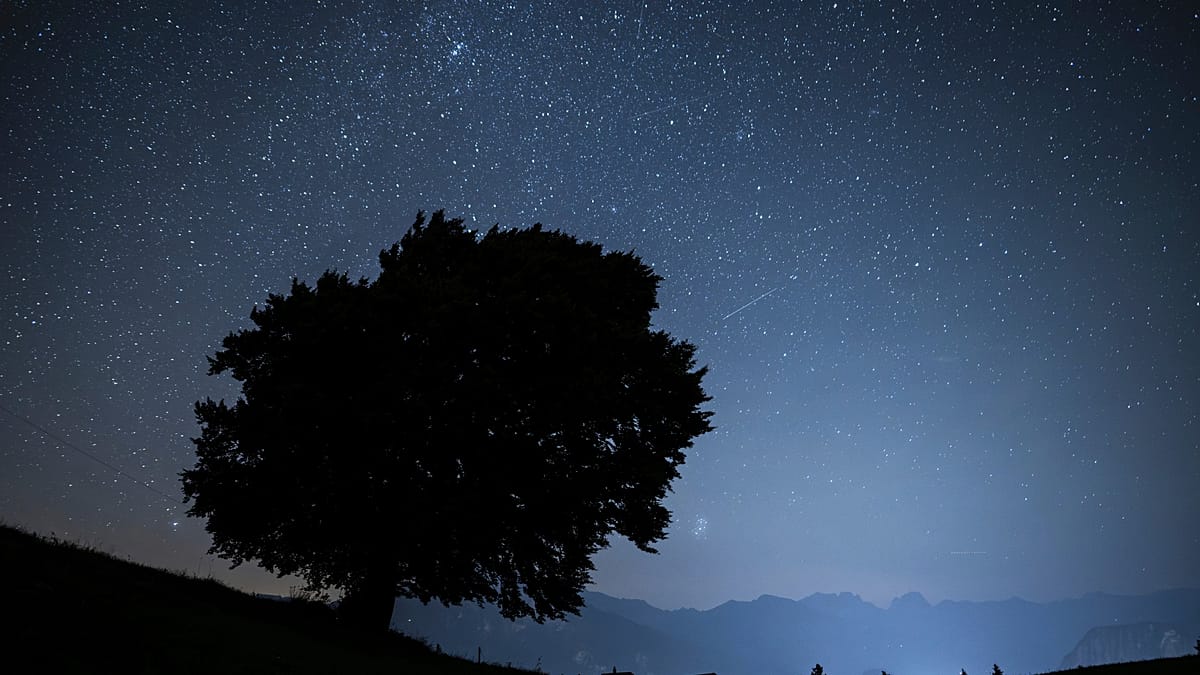
Published on 08/10/2026 - 11:01 GMT+2 Stargazers will be out in force this October as three meteor showers light up the skies – the first of which is set to peak this...
Published on 08/10/2026 - 11:01 GMT+2
Stargazers will be out in force this October as three meteor showers light up the skies – the first of which is set to peak this Friday.
The Draconid meteor shower is best seen in the evening after dusk, unlike most other meteor showers which are most visible in the early hours, making it more accessible for casual watchers. This is because the shower’s radiant point in the Draco (dragon) constellation is highest in the sky at nightfall, Royal Museums Greenwich (RMG) explains, and the thin waning crescent moon will only rise just before dawn.
Later in the month, the Southern Taurid and Orionid meteor showers will offer further viewing opportunities, followed by the pre-Halloween Hunter’s Moon on 26 October.
How to see the Draconid meteor shower
Active between 6-10 October 2026, the Draconids are expected to peak on 8 and 9 October when the skies are dark. You are most likely to see them if it’s a clear night. Choose a viewing spot with an unobstructed horizon and minimal light pollution for the best view. They can be seen with the naked eye, meaning there’s no need to use a telescope or binoculars.
The display is the result of Earth travelling through a cloud of debris from the comet 21P/Giacobini-Zinner. The streaks can be caused by particles as small as a grain of sand, according to RMG.
The relatively slow pace of the Draconid meteors mean they are less visible than faster displays, with around 10 expected to be visible per hour under ideal conditions.
What else to look out for in the night sky this October
If you miss out on the Draconids, October offers more opportunities to catch a night sky display. Active between 20 September and 20 November, the Southern Taurid meteor shower will reach its first peak around 14 October. Best viewed between midnight and 3 am, its second peak on 4-5 November is known for producing slow, bright meteors known as ‘Halloween fireballs’.
The Orionid meteor shower is active from 2 October to 7 November and will peak on the night of 21 October. Between three and six meteors per hour could be visible in suburban areas, according to NASA, and few more in darker areas. Named after its radiant, near the constellation Orion, the shower comes from debris shed long ago by Halley’s Comet.
It will be most visible in the early hours of the morning on 22 October, after the waxing gibbous moon sets.
A few nights later, on 26 October, cast your eyes up to the October full moon, traditionally known as the Hunter’s Moon – a name associated with the bright moonlight once used by hunters to track game as the autumn fields grew bare and daylight faded.