Microplastic filters for washing machines could soon be mandatory in the EU. How do they work?
By Denis Loktev Published on 06/07/2026 - 7:02 GMT+2 A small retrofit device – now sold through some of the major washing machine...
By Denis Loktev
Published on 06/07/2026 - 7:02 GMT+2
A small retrofit device – now sold through some of the major washing machine brands – could keep millions of tonnes of plastic fibres out of rivers and oceans each year.
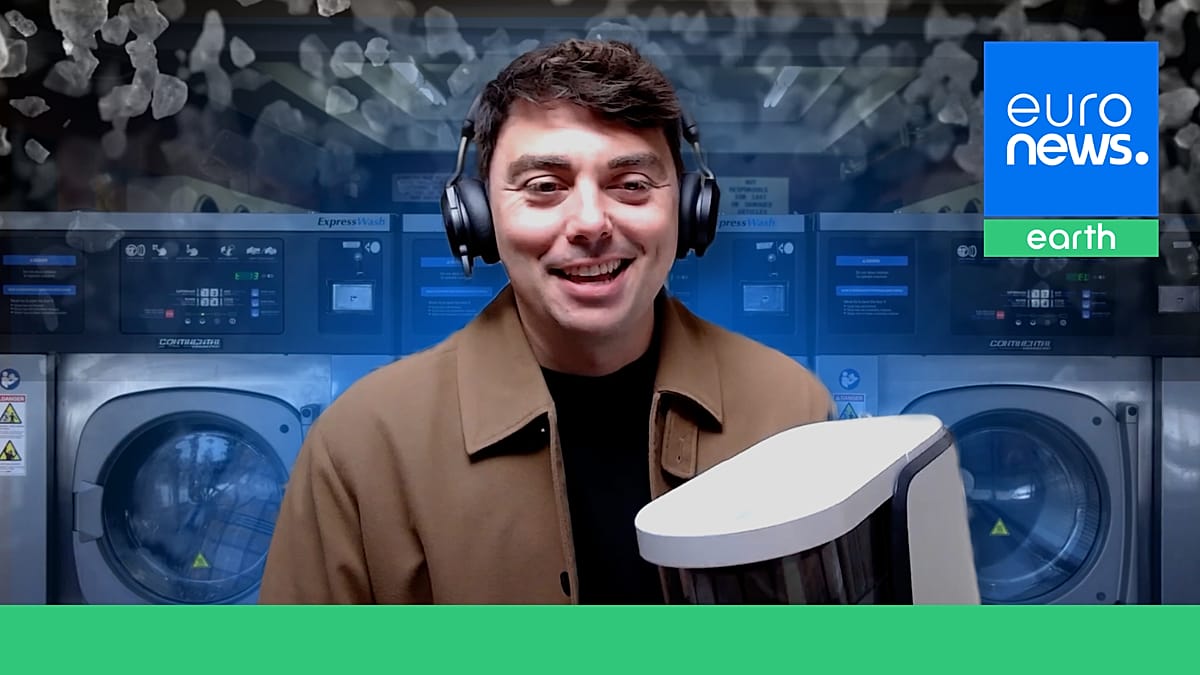
Euronews Earth spoke with Adam Root, CEO of Matter, to learn more about the innovation that made the company a finalist for the EarthShot Prize in 2025.
Synthetic fabrics release invisible pollution
Around 60 per cent of all fabric produced today is synthetic – made, in effect, from plastic. Each time a garment is washed, the machine wears away the fibres, releasing tiny fragments too small for existing filters to catch.
"Think of your washing machine – if you rub your hand on the inside, it's kind of like a cheese grater," Root tells Euronews Earth. "Think of it abrading slowly all of these pieces of plastic and turning them into tiny little pieces that go down into our water."
The scale of the problem is significant. Matter's research puts the figure at roughly a gram of microplastics released per wash. In the UK alone – with around 24 million homes, most with a washing machine – that amounts to an estimated 16 tonnes entering the water supply every day. Across Europe, with over 100 million households, the numbers climb further still.
Once in waterways, the particles do not simply dilute. Root describes microplastics as acting like a pill, carrying chemical pollutants into the organisms that absorb them.
"This material is adding into organisms like phytoplankton and zooplankton," he says. "These guys are the foundation for life on Earth. They sequester more carbon than all the plants and trees on Earth. They produce a majority of the world's oxygen."
A microplastic filter to retrofit your washing machine
Standard washing machine filters have holes of around five millimetres – designed to stop coins and buttons from damaging the pump motor, not to capture microplastics. Matter's device is different.
The unit is sold as a retrofit: it connects to the back of an existing machine and requires no replacement of the appliance. Root says installation should take under 10 minutes. In testing, the filter achieved 97 per cent efficiency at catching particles as small as 10 microns – roughly one sixth the width of a human hair.
In daily use, a small indicator light signals when the filter needs emptying – typically around once a month. "It shouldn't change the way that you wash your clothes or use things in your life," Root says.
The company is currently selling in 11 countries, with plans to expand to 22 by the end of the year and eventually across the full EU market. Partnerships with major brands were key to reaching that scale.
"I could sell a couple of thousand units in the world, but it's not going to change the millions of homes that we need to get to," Root tells Euronews Earth.
Getting those partnerships over the line required persistence. "Small business operating with big business is always challenging – it requires a lot of tenacity," he says. "But once we got over the line with proving the technology works, the response has been something we couldn't dream of."
What happens to the microplastics?
For now, collected material can legally go to landfill – EU legislation enacted since the 1990s means sealed landfills are considered an acceptable short-term disposal route. But Matter is pushing for a greener solution.
Through a programme called Love Your Lint, the company is already collecting material from users and trialling ways to turn it back into new materials. "We can technically prove that we can do that, but at the minute it's not a commercial scale yet," Root says. The company is actively seeking partners to help bring that loop to scale, and is campaigning for kerbside textile recycling across Europe.
Recognition has helped accelerate those conversations. Matter's selection as a finalist for the Earthshot Prize – the global environmental award championed by Prince William – brought the company in front of an audience of 34 million people at last year's ceremony in Rio de Janeiro. "You couldn't dream of getting that kind of visibility," Root says.
New legislation requiring all new washing machines to be sold with a microplastic filter is on the horizon across the EU, a development that could sharply expand the market for solutions like Matter's.
While microplastics might be small, tackling them is a big step forward for human and planetary health – something we all have a stake in.
"It's something we can all do something about," says Root. "If we solve the micro materials, we solve the macro problems."