Amid shifts in energy supply, which EU countries consume and produce the most gas?
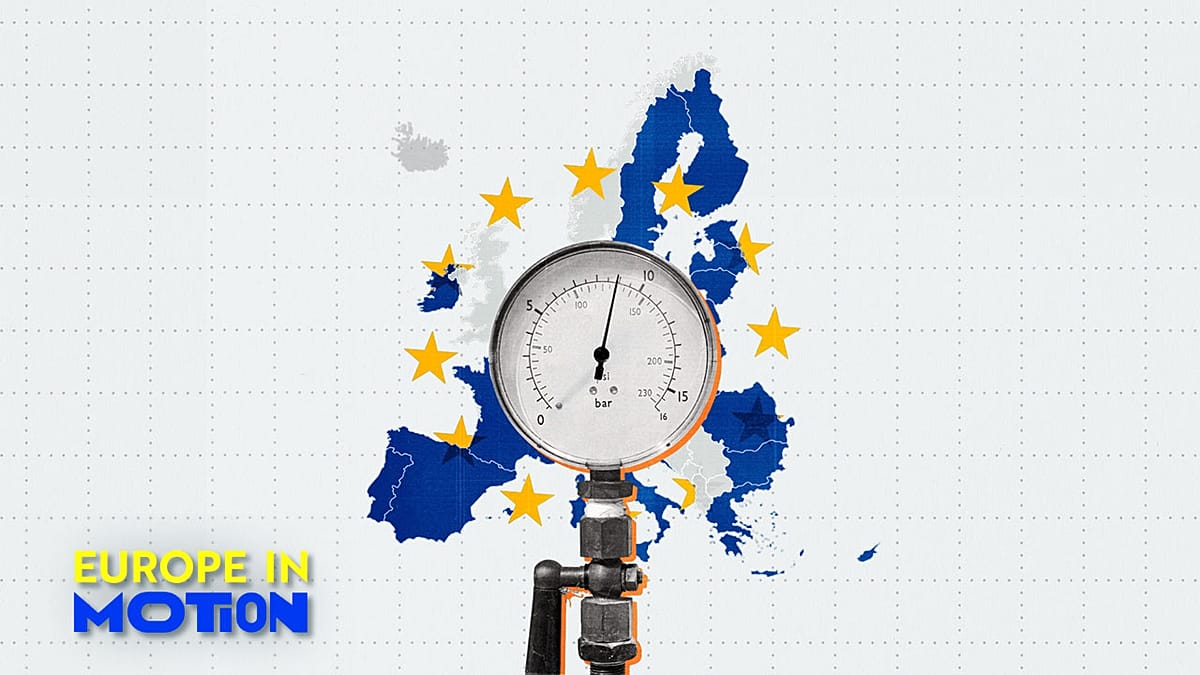
By Inês Trindade Pereira & video by Léa Becquet Published on 26/06/2026 - 9:00 GMT+2 In 2025, inland demand in the EU for natural...
By Inês Trindade Pereira & video by Léa Becquet
Published on 26/06/2026 - 9:00 GMT+2
In 2025, inland demand in the EU for natural gas increased by 2.5% compared with 2024, according to the latest Eurostat figures.
The largest increases in consumption across the bloc were recorded in Croatia (11.3%), Portugal (11.2%) and Slovenia (10.3%).
In contrast, the largest drops were seen in Finland (17.7%), Sweden (9.7%) and Estonia (9.6%).
Last year, Germany, Italy and France had the highest inland demand for natural gas.
Gas is mainly used for power generation, household heating and industrial processes.
For instance, around 30% of households in the EU are heated using gas.
Inbalance in production
Romania is the largest natural gas producer among all 27 member states. However, the country recorded a 0.8% decrease in production.
Yet, this figure might change with the new gas pipeline in the Romanian Black Sea, due to make its first gas delivery in 2027.
The 308 km Tuzla-Podișor pipeline is part of the Neptun Deep project, a large-scale offshore natural gas operation in the Romanian Black Sea that could provide an alternative to Russian gas for countries such as Hungary and Slovakia.
Romania was followed by the Netherlands in terms of gas production decreases, which registered a 3.5% drop, and Germany, with a 2.3% decrease.
On the other hand, the EU is highly dependent on gas imports, with 89% of its supply in 2025 coming from outside the bloc.
The bloc imports pipeline gas primarily from Norway, Algeria, Russia, the UK, Azerbaijan and Libya, accounting for 59% of total gas imports, according to the pan-European think tank Strategic Perspectives.
By the end of 2027, all Russian gas imports will be prohibited in a bid to end the bloc's decades-long dependency on Russian energy following the war in Ukraine.
Given their landlocked position, Hungary and Slovakia were granted temporary exemptions to the ban.
However, lawmakers argued that no loopholes or exemptions should be granted to ensure Moscow's fossil fuel exports are no longer a part of the EU's energy mix.