ECB hostage to oil prices? Lagarde leaves door open for a September hike
Just six weeks ago, the European Central Bank appeared to be winning its fight against inflation. Oil prices had fallen sharply after a ceasefire between the US and Iran, inflation was cooling faster than...
Just six weeks ago, the European Central Bank appeared to be winning its fight against inflation.
Oil prices had fallen sharply after a ceasefire between the US and Iran, inflation was cooling faster than expected and the eurozone economy was proving more resilient than initially feared.
By Thursday, the conversation in Frankfurt had changed completely.
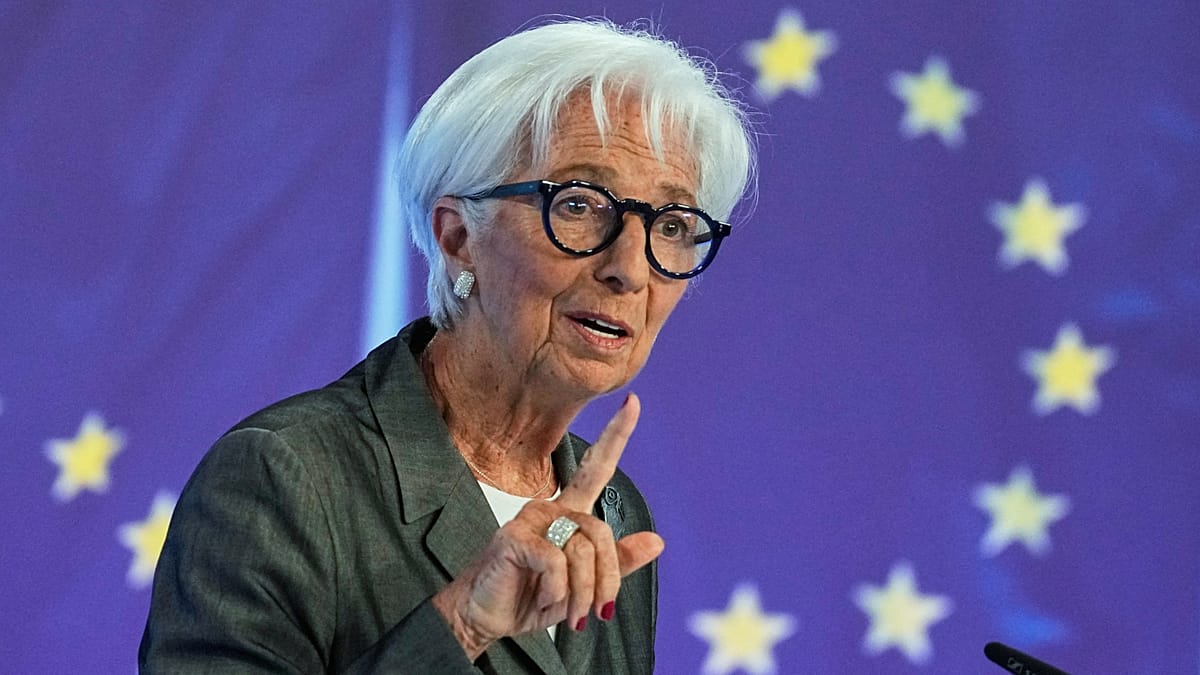
Christine Lagarde mentioned energy prices, particularly oil, repeatedly during her press conference, underscoring how rapidly geopolitical developments have reshaped the ECB's outlook.
While policymakers insist their September decision will remain data-dependent, the message was clear: the path of oil prices may now be the single most important variable determining whether interest rates remain on hold or rise again.
From ceasefire optimism...
The ECB Governing Council left its three key interest rates unchanged, as estimated.
However, the tone of Lagarde's press conference was notably more cautious than the decision itself suggested.
Lagarde revealed that the Governing Council spent the past two days reconstructing everything that had changed since its June meeting.
Initially, the news had been encouraging.
Inflation slowed more than expected to 2.8%, economic activity held up better than anticipated and the Memorandum of Understanding between the US and Iran, followed by a ceasefire, pushed crude oil prices sharply lower.
"That was the first part of that period of time," Lagarde said, but then context changed.
...to a renewed oil shock
"The memorandum of understanding was short-lived. The ceasefire was broken several times and led to the current situation where we have clearly a flaring up of the conflict and serious development taking place on the commodity markets," Lagarde stated.
That abrupt reversal is precisely why the ECB decided not to move rates on Thursday.
Rather than reacting solely to June's encouraging inflation figures, policymakers are trying to assess whether the renewed energy shock will prove temporary or evolve into a broader inflation problem.
"The full inflationary impact of the energy shock has yet to play out," she said, adding that policymakers were closely monitoring the "intensity and duration of the shock" together with any indirect or second-round effects.
For now, however, Lagarde said the central bank is not seeing evidence that companies are responding with higher wage demands.
This is perhaps the development policymakers fear most because it could make inflation persist for much longer.
"We remain well positioned to navigate the uncertainty," Lagarde assured.
Oil prices are becoming the ECB's biggest concern
The timing of the ECB meeting could hardly have been more difficult.
As Lagarde spoke in Frankfurt, Brent crude surged more than 6% towards $100 per barrel, its highest level since May, after Iran-backed Houthi militants claimed attacks on Saudi oil tankers in the Red Sea, intensifying fears of supply disruptions.
The attacks followed renewed strikes around the Strait of Hormuz and growing concerns over shipping routes through one of the world's most important energy corridors.
Lagarde acknowledged that the latest attacks occurred after the Governing Council had already concluded its policy discussions, meaning they did not directly influence Thursday's decision.
Nevertheless, she described the developments as "alarming" and confirmed that ECB staff had already been instructed to carry out deeper analysis of different oil and gas price scenarios ahead of the September meeting.
She noted that policymakers are paying close attention not only to crude prices but also to natural gas markets, where inventories remain relatively low heading into winter.
September remains wide open
Perhaps the clearest signal from Thursday's press conference came when Lagarde revealed that today's decision had been unanimous, but not without debate.
She acknowledged that several Governing Council members questioned whether the ECB should already have considered another interest-rate increase.
Ultimately, policymakers agreed that waiting until September would allow them to assess two additional inflation reports, updated growth figures and fresh staff projections before deciding whether tighter policy is needed.
"The burden of proof is on data," Lagarde said when asked whether those arguing for another rate rise or those favouring unchanged policy faced the higher hurdle.
The message leaves every option on the table for September.
The ECB insists it is not pre-committing to any particular interest-rate path but Thursday's press conference suggested the institution's reaction function has become increasingly tied to developments in energy markets.
Lagarde also dismissed speculation that she could leave the ECB before the end of her term, saying, "You are not going to see the back of me before 2027," before adding that "when there are clouds on the horizon, the captain stays on the ship."