
International film community join in protest of Iranian filmmaker Jafar Panahi’s prison sentence
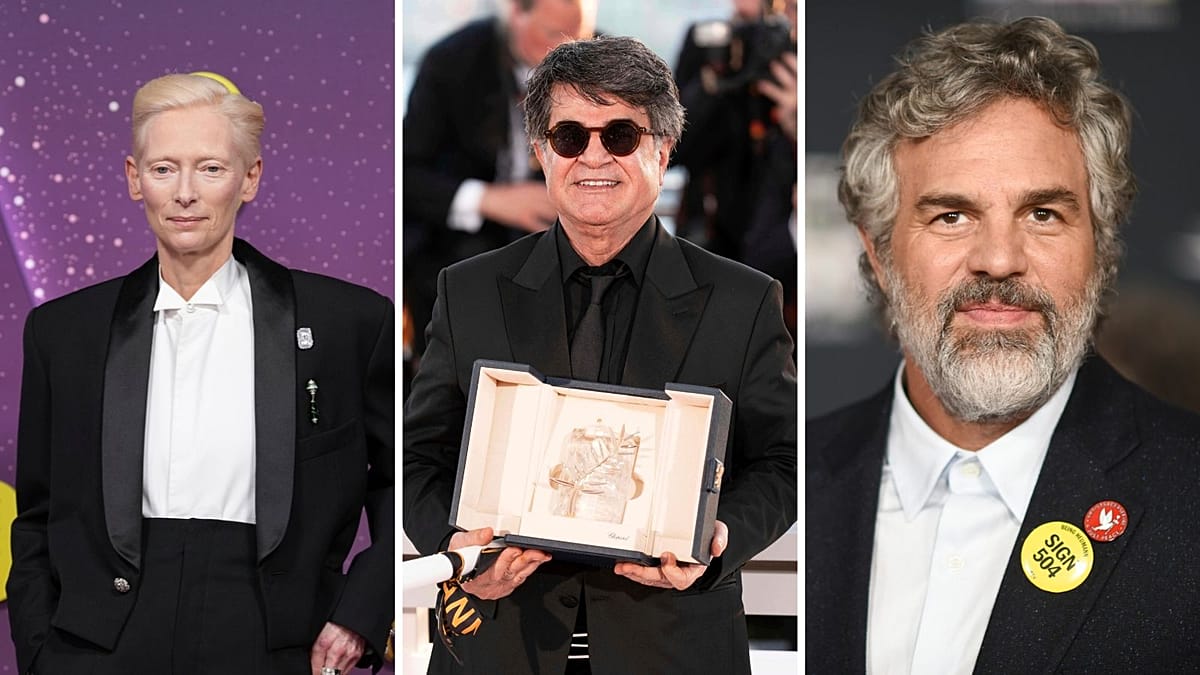
International film festivals, actors, directors and industry professionals have joined forces in condemning the ongoing persecution of the acclaimed 'It Was Just An Accident' director.
The international film community is speaking out in support of dissident Iranian filmmaker Jafar Panahi, who was given a prison sentence of five years and one month by the Tehran Revolutionary Court in October.
A letter initiated by the International Coalition for Filmmakers at Risk (and shared with Variety) so far features more than 200 signatories “deeply concerned by reports of the new prison sentence of five years and one month issued by the Tehran Revolutionary Court against Iranian filmmaker Jafar Panhi, in absentia.”
The Oscar-nominated director returned to Iran in the spring following the end of the awards run for his Palme d’Or winning film It Was Just an Accident – which was nominated for Best International Feature and Best Original Screenplay at the 2026 Academy Awards.
“In March 2026, the 66-year-old Mr. Panahi courageously decided to return to Iran, aware of the risks but having always spoken of his deep love for his country, and for his desire to stay and work there," reads the letter.
"In October 2026 he learned of the new court verdict against him after his bank accounts were frozen, his lawyer, Mostafa Nili, said in a statement to the Iranian press. The new charges against him remain unclear, but appear consistent with repeated efforts to intimidate him into ceasing his filmmaking. The case will now go to regional court, and the sentence can be appealed. This requires resources, but all of Mr. Panahi’s accounts have been blocked."
The statement concludes: “We stand in solidarity with Mr. Panahi and all Iranians facing persecution for their work at the hands of their own government. We call on the Tehran Revolutionary Court to rescind all actions to penalize and imprison Mr. Panahi and to abide by the International Covenant on Civil and Political Rights to which the Iranian government is a signatory."
"In this exceptionally heightened moment of conflict and political tension, such artists as Mr. Panahi, who create understanding within and across borders are of utmost importance. The international creative community stands together here to bear witness and to protect freedom of artistic expression everywhere.”
Actors and filmmakers who have signed the letter include Tilda Swinton, Mark Ruffalo, Barry Jenkins, Alex Gibney, Jacques Audiard, Kleber Mendonça Filho, Laura Poitras, Catherine Breillat, Michael Moore, Alice Braga, Asif Kapadia, Lucrecia Martel, and many more.
Festival leaders who signed the letter include Berlinale director Tricia Tuttle, Venice’s Alberto Barbera, Telluride head Julie Huntsinger, New York Film Festival artistic director Dennis Lim, and others including representatives for Rotterdam, Locarno, Karlovy Vary, Sydney, Tokyo, Busan film festivals – as well as the German Film Academy, the Austrian Film Academy and the Académie des César.
The statement follows a similar letter of protest published by Cannes this week, which stated that the festival “condemns the judicial persecution of Jafar Panahi and calls for the lifting of all restrictions that prevent him from traveling, creating and expressing himself freely.”
“Like artists, festivals, and cultural institutions around the world, the Festival de Cannes calls on the international community to take action and speak with one voice to prevent his imprisonment. His freedom is not just about one filmmaker, it is about the rights of all artists to think, create, and express themselves without fear of imprisonment,” it said.
Panahi won last year’s Palme d’Or in Cannes for It Was Just An Accident. He was sentenced by Iran’s Revolutionary Court to one year in prison and a two-year travel ban in absentia at the end of 2025.
Panahi was jailed shortly before making It Was Just An Accident and was only released after going on a hunger strike. He spent 86 days in Iran’s notorious Evin prison in 2022 and 2023 on charges of anti-government activity dating back to 2010 and for demonstrating against the imprisonment of his friend and fellow filmmaker Mohammad Rasoulof.
In prison, Panahi met activist and political prisoner Mehdi Mahmoudian. The two collaborated on the screenplay for It Was Just An Accident, a thriller inspired by Panahi’s time in prison.
Mahmoudian was re-arrested earlier this year on accusations of “insulting the Supreme Leader” and “propaganda against the Islamic Republic.”
Panahi has clashed with the repressive Iranian authorities as far back as 2003, has been imprisoned twice in Iran, and was banned from filmmaking for his anti-regime stance and “propaganda against the state”.
He has continued to make films in defiance of the authorities and is best known for films like This Is Not a Film, No Bears and Taxi Tehran, which won the Golden Bear at the Berlin Film Festival in 2015.
It Was Just An Accident follows a group of formerly imprisoned Iranians who contemplate whether to exact revenge on a man they believe to be their former jailer and torturer. It serves as an unflinching condemnation of the Islamist Republic’s repression and is a timeless commentary of the sins of state despotism.
In our review of It Was Just An Accident, we wrote: “Shot in secret, considering Panahi was not allowed filming permission from the authorities, the result is a taut, tense and tightly scripted drama that surprises due to its deft tonal shifts. (...) It’s a powerfully engrossing work that explores the consequences of torture, the price of revenge and whether mercy is possible, as the characters are rattled by the possibility that fighting violence with violence could dehumanize them further.”