What if AI could move your hand? Students build a wearable device using AI and electric pulses
Published on 23/05/2026 - 9:00 GMT+2 A team of students has built an AI system that can guide human hand movements using electrical muscle stimulation. Software engineering...
Published on 23/05/2026 - 9:00 GMT+2
A team of students has built an AI system that can guide human hand movements using electrical muscle stimulation.
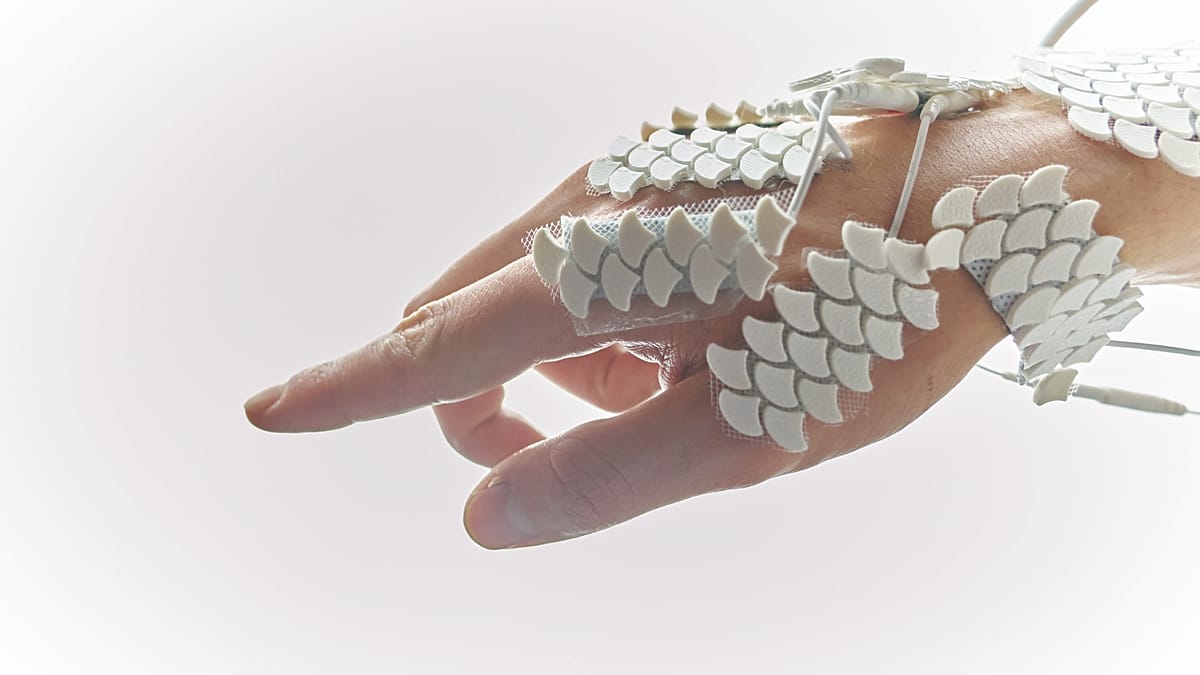
Software engineering students at Massachusetts Institute of Technology (MIT) in the United States developed a wearable device called Human Operator by combining AI models, cameras and muscle stimulation hardware into a single system.
“We gave AI a body,” said the team behind Human Operator on the project website.
“Human Operator is a human augmentation tool that allows AI to briefly take control of your body to help you learn or do things you cannot do”.
In demonstrations shared by the team, the device is shown guiding users to wave, play piano notes and make an “OK” hand gesture through muscle stimulation.
Using a vision-language model, or VLM, the device analyses the environment through a head-mounted camera and converts spoken commands into a physical response by stimulating muscles in the user’s arm, according to the team.
VLMs are AI systems trained to process images and language together.
In Human Operator, the model interprets what the user is asking and what objects or surroundings are visible through the camera feed, according to its developers.
Based on that information, the system decides what hand or wrist movement should follow.
Electrical muscle stimulation (EMS) pads attached to the user’s wrist or forearm then deliver small electrical pulses that activate specific muscles.
EMS technology is already widely used in some physiotherapy and assistive systems.
Combined with AI, such body interface tools could potentially support physical learning or recovery exercises.
Human Operator is a prototype developed during a 48-hour hackathon. The team behind it won the Learn Track at the hackathon, MIT Hard Mode 2026.
Video editor • Roselyne Min