Road freight: The silent drivers of trade face high fuel prices and an ageing workforce
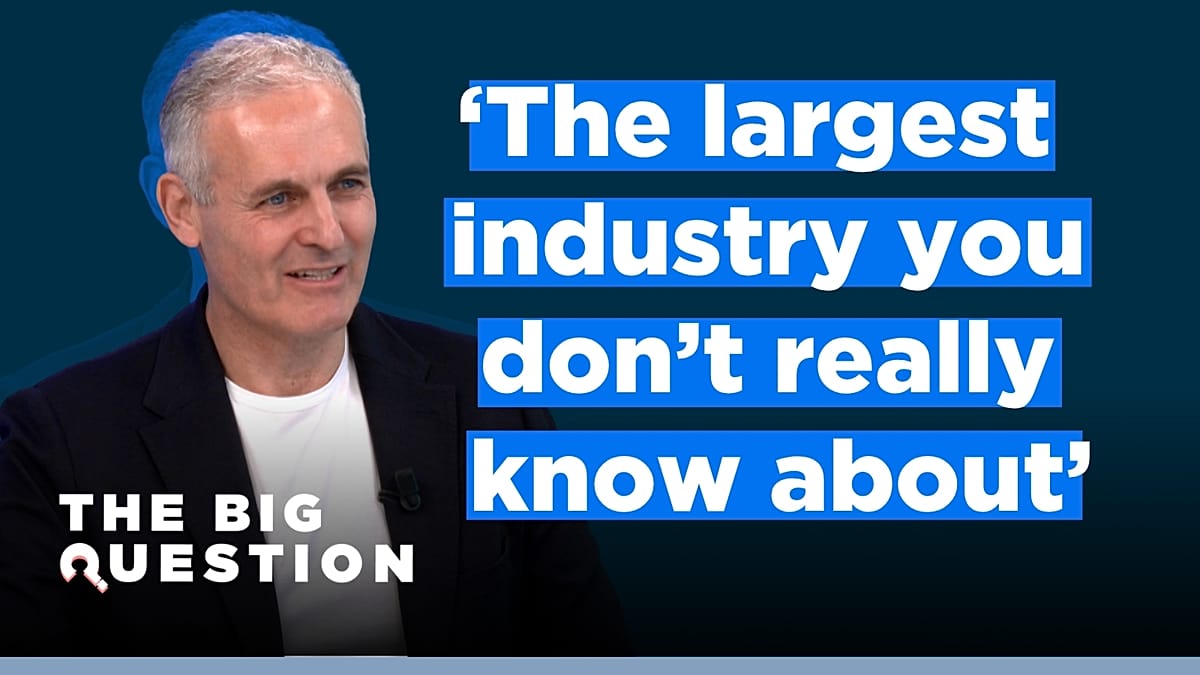
Despite rising fuel costs and mass shortages of drivers, Lyall Cresswell, CEO of the Transport Exchange Group is still confident that “there's a lot more efficiency [to] eke out of the market”.
When there’s shortages of products on the supermarket shelves, we all begin to panic. But have you ever really considered how they get there, except when a major geopolitical disruption has brought it to our attention?
Road transport carries around 80% of Europe’s inland freight and contributes approximately 3.75% to the EU27’s total GDP. But, according to the founder and CEO of the Transport Exchange Group (TEG), Lyall Cresswell, it’s still “probably the largest industry that you don't really know that much about.”
Lyall joined Angela Barnes in the studio for the latest episode of The Big Question to discuss the challenges facing the industry and the potential economic toll.
How important is road freight for the European economy?
The entire European freight and logistics market was valued at $1475.88bn (€1263.66bn) in 2025, with road freight contributing over €400 billion annually.
TEG connects over 10,000 businesses and expects to manage around 3 million loads across the continent this year.
Between driver shortages, emissions targets and underinvestment, you won’t be surprised to hear that, just like for the rest of us, the industry’s biggest challenges right now is fuel pricing — or the oscillating price of petrol due to global instabilities.
“Fuel represents approximately 30% of the cost of a transport company,” Lyall explained.
The industry works on very small margins. These companies must constantly navigate fluctuationswhile also maintaining enough cash flow, as they often have to pay for fuel long before they are paid for the labour.
As fuel prices rise, so too do the prices on the shelves, but it’s not the only problem that could send prices rising and lead to shelves looking empty.
An ageing workforce
Road freight alone employs over 3 million people in Europe, with warehousing and support activities adding another almost 2.5 million workers across the bloc.
Despite this, the industry is facing a huge shortfall of drivers. In 2024, the number of unfilled driver positions nearly doubled from 233,000 to 426,000 and rose again in 2025 to 444,000.
Some projections suggest the problem could continue, growing up to 745,000 unfilled driver roles across Europe.
“The driver workforce, unfortunately, is ageing very substantially,” Lyall explained.
“50% of German truck drivers are over the age of 55. But this is following the trend that you probably see in many other industries as well,” he continued.
“The traditional long-haul road freight in Europe meant that drivers would be away for days if not sometimes weeks from their home base, so you can imagine it doesn't appeal to everybody.”
So what’s the solution? Lyall thinks technology can play a big role.
He believes AI-powered route planning would allow haulage companies to do more with less and alleviate some of the stress brought on by driver shortages.
Can technology fix the road freight industry?
Though much effort has gone into improving driver safety and comfort, including active noise cancelling, adaptive seating and lane assist, Lyall is still concerned that poor public infrastructure, such as a lack of safe and secure parking, needs to be addressed to help attract people into the industry.
And whilst we’re considering technology, we asked Lyall whether he can envisage driverless trucks in our near future? Could that be the solution we’re looking for?
“I think what will happen at some point is point-to-point transports along the autoroute, along the motorway between distribution centres, I can see that happening,” he explained.
“But actually, when it comes to first mile from collection and then last mile to delivery, I think that will take longer to arrive,” Lyall told The Big Question.
The Big Questionis a series from Euronews Business where we sit down with industry leaders and experts to discuss some of the most important topics on today’s agenda.
Watch the video above to see the full discussion on Europe’s logistics industry.