Newsletter: NATO braces for impact
In this newsletter: 32 North Atlantic Treaty Organisation (NATO) members meet for an annual summit in the Turkish capital aiming to keep Trump onside, and a French appeals court will offer a decisive ruling for presidential hopeful Marine Le Pen.
Morning. Angela Skujins holding the pen for you this Tuesday, where two major news stories are set to dominate the day.
What is expected to be a turbulent North Atlantic Treaty Organisation (NATO) summit starts in the Turkish capital and a court in Paris will chart the course of France’s 2027 presidential election.
First, NATO.
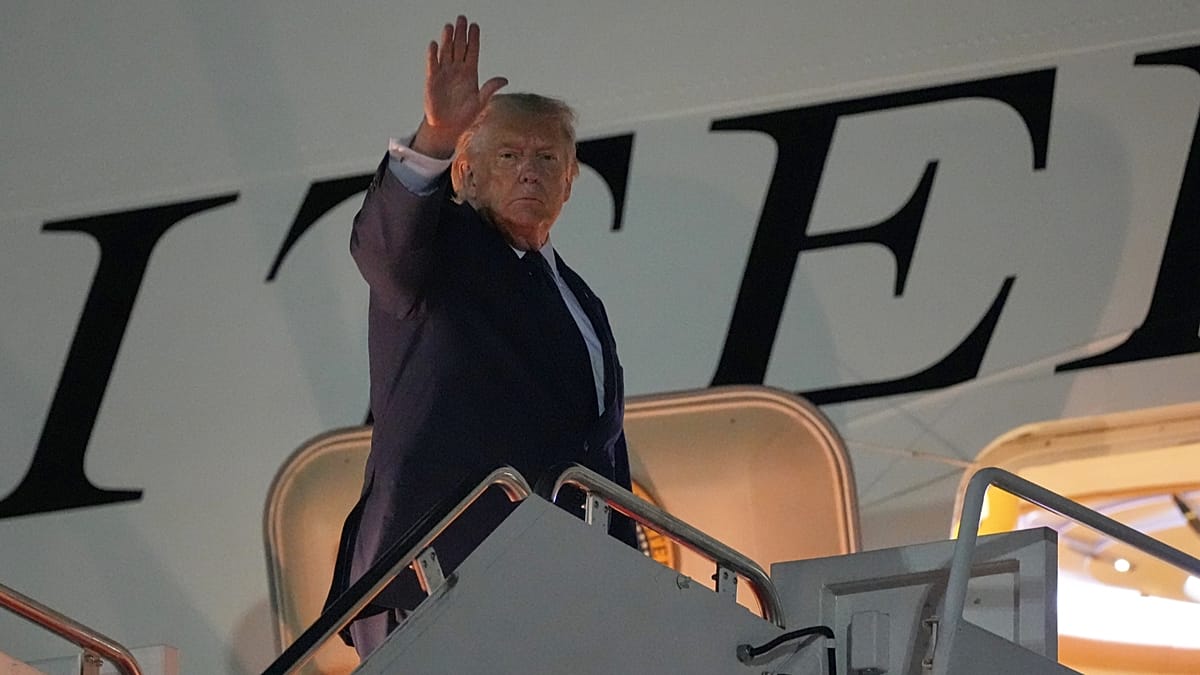
My colleague Shona Murray is on the ground in Ankara and reports that US President Donald Trump’s criticisms of NATO threaten to overshadow the meeting, though they have been par for the course during his presidency.
The fundamental disagreements are steeped in divisions over the start, prolongation and attempted mediation efforts over the US war in Iran, and the US President’s continued desire to acquire Greenland, the semi-autonomous Danish territory.
An alliance divided. Both of these episodes have splintered the alliance of 32 armies, now weakened through disunity. We are expecting something of a show today as Trump touches down at 3 pm local time in Ankara, in the immediate aftermath of a bruising US defeat at the hands of the Belgium’s Red Devils at the FIFA World Cup
European governments hope to temper Trump’s wrath due to their refusal to support his war with Iran, armed with evidence of record defence spending announcements worth billions.
NATO Secretary-General Mark Rutte is expected to point to an increase of €122 ($139) billion of extra core defence expenditure by Europe and Canada in the last year. This alone represents a 20% increase.
Rutte will deliver a keynote address this morning at the Defence Industry Forum. He’s calling on the defence sector to open new factories, create more shifts for workers, and design innovative, cost-effective capabilities suitable for today’s security needs.
“Trump’s Trillion”. He is expected to press each government to tap into this evolving market and transform their commitment to spend 5% of GDP on defence by 2035 into a beefed-up European security architecture.
“Here in Ankara, I expect nations to present clear, concrete, and credible plans to reach that 5% goal,” Rutte said at a pre-summit press conference.
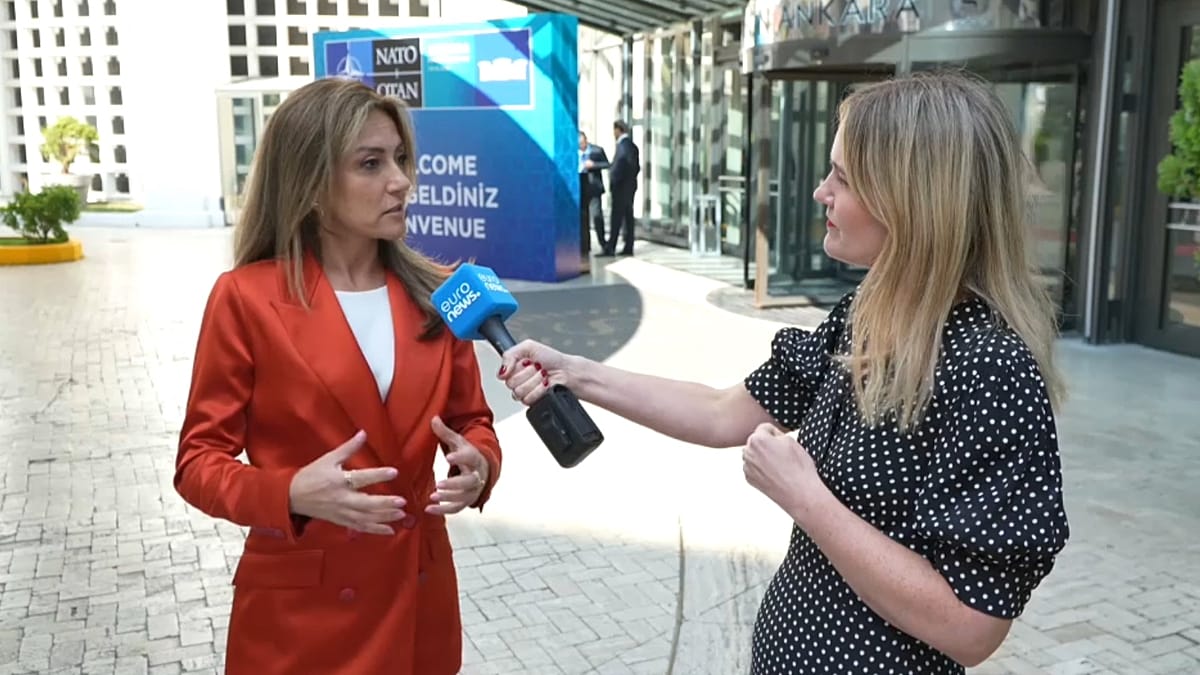
Dilan Yeşilgöz-Zegerius, Dutch Minister of Defence, just said on Euronews’ flagship morning programme Europe Today that Trump is justified asking for European partners to meet that demand.
"We have a war on our own continent. We have an enemy facing us, Putin, and it's very important that we are also able to stand up," she said. Watch.
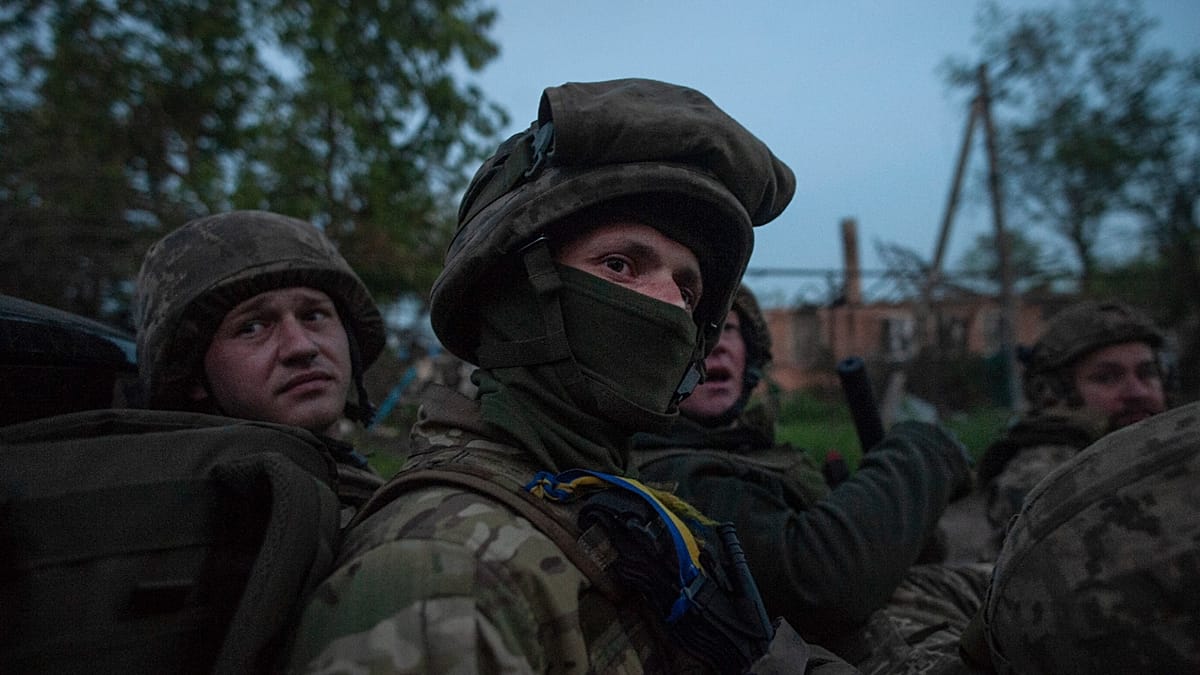
Euronews’ Ukraine correspondent Sasha Vakulina writes that Ukrainian President Volodymyr Zelenskyy will use his appearance at the NATO summit to argue once again that Ukraine should be allowed to manufacture US‑made Patriot interceptors under licence.
The argument? The country’s industrial base could produce enough advanced defensive weapons to protect its own cities and “assist partners in need” if Washington approves the necessary arrangements, he said.
It comes after Russia launched a nationwide missile barrage on Monday, killing at least 23 people. For the first time in a long period, Ukraine’s air defences failed to intercept any of the Russian ballistic missiles, with officials saying Kyiv’s systems had effectively run out of suitable interceptors.
Now, Paris.
As my colleague Maïa De la Baume explains in this early bird primer, Marine Le Pen’s political future — and potentially France’s 2027 presidential election — will be decided at 1:30 pm on Tuesday. This is when the Paris Court of Appeal rules on whether to uphold her five-year ban from holding public office over allegations of embezzling EU funds.
If the ruling is upheld, it would effectively end Le Pen’s presidential ambitions and leave 30-year-old wunderkind Jordan Bardella as the National Rally’s (RN) likely candidate for the Élysée.
A defiant Le Pen. Despite her conviction, the 57-year-old three-time presidential candidate remains the strongest individual contender, polling 32% for the first round. “Whatever happens, I will not be dead; whatever happens, I will continue to fight for my ideas,” Le Pen told LCI.
Our correspondent Mared Gwyn is reporting from the European Parliament plenary in Strasbourg this week, and wrote in her dispatch that she saw Bardella, leader of the European Parliament’s far-right Patriots for Europe group, roaming the halls Monday night.
Overheard in Strasbourg. Speaking on the condition of anonymity, a senior MEP belonging to French President Emmanuel Macron's Renaissance party suggested the more inexperienced Bardella could be an easier opponent than a Le Pen determined to make her fourth bid at the presidency a success.
Also in the plenary.
Euronews’ parliament expert Vincenzo Genovese reports that MEPs are set to approve a law maintaining free cabin luggage and financial compensation for delayed flights, agreed after more than a decade of negotiations.
The European Parliament is also expected to trigger a procedure against the Europe of Sovereign Nations (ESN) party, home of Alternative for Germany (AfD) and other far-right political forces across Europe.
And, the hemicycle is set to this week vote on controversial legislation that would allow technology companies to scan online communications for child sexual abuse material. Read the full story.
Punishing struggling EU candidates is wrong approach, Bosnia and Herzegovina ambassador says
EU hopeful members that struggle to carry out necessary reforms need support, not punishment, Obrad Kesić, Bosnia and Herzegovina's Ambassador to the EU, told Euronews.
Last week, Euronews revealed that the European Commission was set to redirect funding from Western Balkan candidate countries that failed to deliver required reforms towards better-performing ones, with Bosnia and Herzegovina set to be the biggest loser.
"If students are struggling, punishment is not the best method to get them back on track," Kesić said, adding that the move would be unfortunate for his country's citizens.
He noted that recent visits by European Council President António Costa and EU foreign policy chief Kaja Kallas clearly show that Brussels is not losing interest in his country, but warned that taking funding away might send the wrong political signal, turning the accession process into a competition and undermining the close cooperation Western Balkan countries have built up in recent years.
Earlier this year, for instance, Bosnia and Herzegovina, Montenegro, North Macedonia and Serbia coordinated closely to resolve the problem of truck drivers stuck at the EU border as the new Entry/Exit system was gradually rolled out.
"All decision-makers in Sarajevo are aware of their responsibility for the lack of progress on agreed reforms," Kesić said, pointing to domestic issues such as the collapse of the coalition government and a constitutional crisis.
"We are aware that we have not done our homework, but reallocating funding would not be the best motivator," he added.
Read the full story by Luca Bertuzzi.
More from our newsrooms
Hungary could vote to oust president as early as next week as opposition complains of 'tyranny'
Fidesz, the party of former Hungarian Prime Minister Viktor Orbán, is calling for protests after Prime Minister Péter Magyar filed a constitutional amendment to remove the country’s President Tamás Sulyok. Sandor Zsiros has the latest.
Green groups say EU-backed chemical alliance puts polluters first
A watchdog's report challenges the industry's claims that European chemical manufacturers are facing an existential crisis due to high energy costs and Chinese competition – one of the pillars of the European Commission's competitiveness pledge. Marta Pacheco has the details.
Ukraine hits vital oil refinery more than 2,500km behind Russian border
While Russia continues to pound Ukraine with missiles and drones, killing at least 19 people and injuring dozens more in Kyiv, Ukraine is striking deep inside Russian territory as part of a campaign to degrade the Kremlin’s war machine. Sasha has more.
We're also keeping an eye on
- The first day of the European Parliament kicks off in Strasbourg.
- Representatives from the 32 NATO alliance members meet in Ankara, Turkey.
- European Commissioner for Trade Maroš Šefčovič meets with Teresa Anjinho, European Ombudswoman in Brussels, Belgium.
That’s it for today. Shona Murray, Sasha Vakulina, Mared Gwyn, Luca Bertuzzi, Marta Pacheco and Vincenzo Genovese contributed to this newsletter.