Barter returns in app form: pay with your time instead of money
By David Del Valle Published on 29/07/2026 - 6:00 GMT+2 Barter, the oldest form of exchange known to humankind, is enjoying an...
By David Del Valle
Published on 29/07/2026 - 6:00 GMT+2
Barter, the oldest form of exchange known to humankind, is enjoying an unexpected second youth. In a context marked by inflation, rising living costs and economic uncertainty, more and more people are looking for ways to access services without having to use money.
Paradoxically, the answer is coming in the form of technology: a new generation of apps is reviving the spirit of traditional exchange, replacing money with time, knowledge and skills. What for centuries meant swapping goods or favours between neighbours has now moved into the digital realm.
Instead of paying for a service, users exchange what they know how to do. A tax specialist can help with a tax return in exchange for Japanese cookery classes; someone with experience in artificial intelligence can receive advice on planning a trip; and a language teacher can learn photography without spending a single euro.
Time as currency
This return to bartering comes at a time when the sharing economy continues to gain ground and many households are seeking new ways to optimise their resources. In contrast to the logic of conventional consumption, these platforms encourage people to make use of an asset that almost everyone has: knowledge.
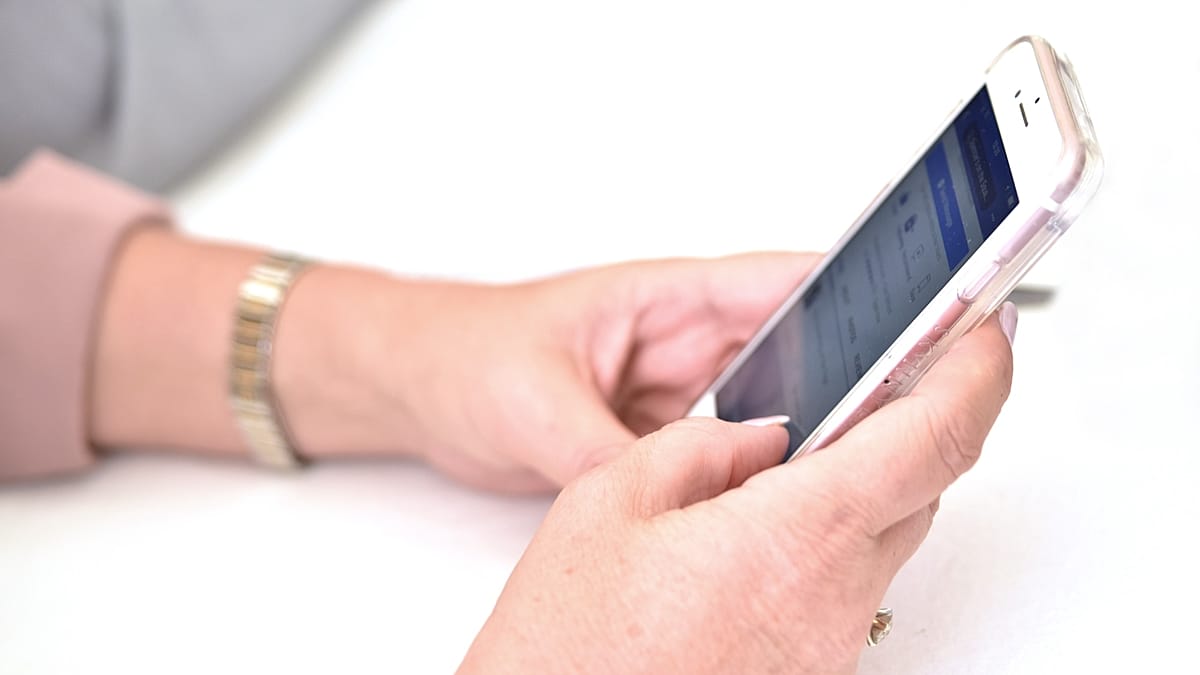
The idea is to use time as a form of currency. The SACO app has been developed by two Spanish entrepreneurs. Its operation breaks with the usual models for buying and selling services: money does not exist here. The unit of exchange is minutes. Every time a user provides a service, they accumulate time, which they can later use to request help from anyone else in the community.
The system is designed to make it easier to exchange knowledge without the need for direct financial compensation. "It is a return of barter in a modern, digital version," explains one of the co-founders, Spanish psychiatrist of Japanese descent, Kazuhiro Tajima.
The platform brings together a wide variety of profiles, from private language or music tutors to specialists in graphic design, artificial intelligence, tax advice, sport, cooking or travel. Even everyday skills that are not usually seen as a profession can become a valuable service for other users.
Talent has value
The proposal is based on a simple idea: almost everyone has some skill that could be useful to others. Yet very often that knowledge never gets monetised, either because the person who has it does not see themselves as a professional or because they had simply not found an easy way to offer it. "Everyone has some innate talent they fail to value, or that they do not monetise out of fear or embarrassment," says the app’s creator, Kazuhiro Tajima.
Rather than generating income, these platforms turn that knowledge into a currency that makes it possible to access other services without any outlay. Although bartering has never completely disappeared, its promoters believe it tends to resurface in times of economic difficulty.
"Barter is the first form of economy and it has never entirely disappeared. In times of crisis there is always a resurgence," says Tajima. Economic uncertainty, together with the search for ways to cut costs, is fuelling interest in models where access to certain services depends more on personal abilities than on purchasing power.
It is also a trend that fits with the rise of the circular and sharing economy, in which sharing resources, reusing knowledge and making use of underused skills is increasingly attractive.
The human factor
The growth of these platforms also reflects another phenomenon: the desire to preserve the human element in an era defined by artificial intelligence. Although tools such as ChatGPT or virtual assistants can resolve many queries in seconds, they cannot fully replace hands-on experience, personal context or direct, person-to-person learning.
The promoters of SACO believe that this kind of exchange not only helps save money, but also creates new social connections and highlights the value of skills that often go unnoticed. To build trust, the platform includes a rating system similar to that of other sharing-economy apps.
At a time when technology seems to be pushing aside many traditional forms of interaction, the resurgence of bartering shows that some of the oldest ideas in economics can find a new lease of life precisely thanks to digital innovation. Instead of coins, banknotes or cards, the new currency is time, experience and knowledge.