Trump announces 10-day ceasefire in Lebanon after ‘excellent conversations’
Donald Trump has announced a 10-day ceasefire in Lebanon to be followed by a meeting between Israeli and Lebanese leaders next week, in a deal that it is hoped will bring progress toward a parallel peace...
Donald Trump has announced a 10-day ceasefire in Lebanon to be followed by a meeting between Israeli and Lebanese leaders next week, in a deal that it is hoped will bring progress toward a parallel peace agreement between the US and Iran.
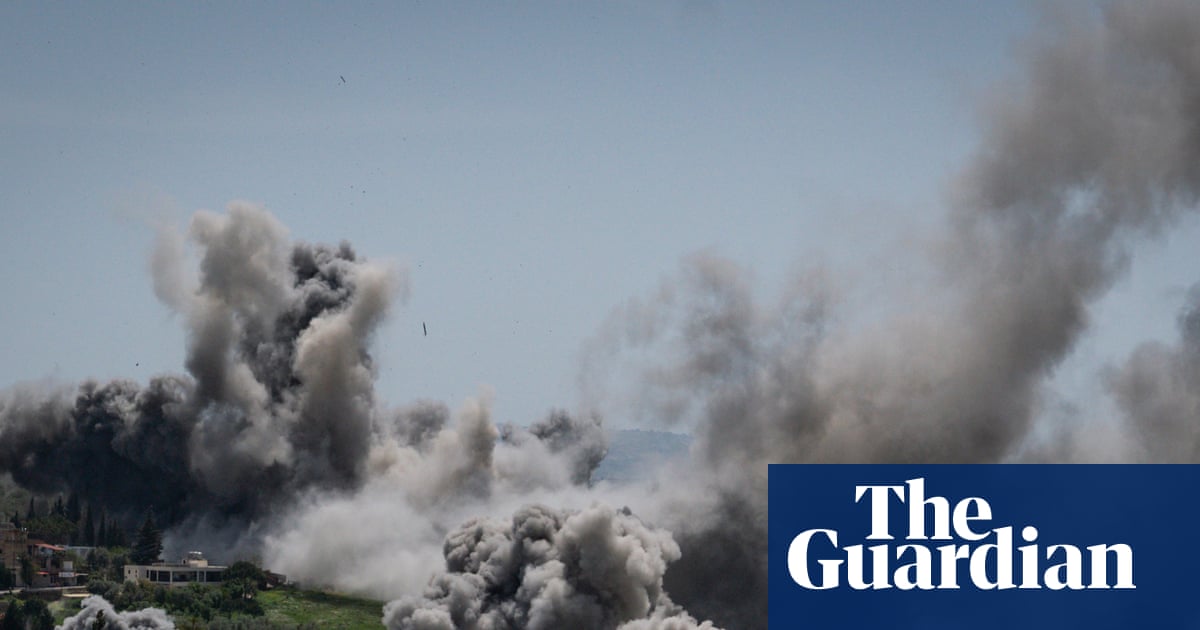
The ceasefire is due to take effect on Thursday night at midnight in Lebanon, where Israel has been conducting devastating airstrikes aimed at wiping out the Iranian-backed Hezbollah militia.
Trump said on social media that the truce was agreed after he held separate “excellent conversations” with Lebanon’s president, Joseph Aoun, and the Israeli prime minister, Benjamin Netanyahu on Thursday.
The US president provided few other details, apart from the start time and length of the agreed truce. It is not clear whether Israeli troops will begin to withdraw from southern Lebanon during the truce. The Israeli occupation is likely to be the subject of talks that Trump said would take place in Washington next Tuesday between Aoun and Netanyahu – the first Israeli-Lebanese summit in decades.
The Lebanese state has not been an active party to the conflict between Israel and Hezbollah, over which the Beirut government has very little control. In what appeared to be initial acquiescence in the agreement however, a Hezbollah member of the Lebanese parliament, Hassan Fadlallah, attributed the deal to “Iranian diplomatic efforts” and said Hezbollah would respect the truce as long as Israel remained committed to halting all forms of hostilities.
The war in Iran spilt over into Lebanon when Hezbollah launched missile attacks on 2 March against Israel in solidarity with Tehran, triggering a ferocious Israeli response including a ground invasion into southern Lebanon, just 15 months after the last major conflict between the two sides.
Israel has declared its intentionto occupy southern Lebanon up to the Litani river, about 18 miles from its border, and it has continued to fight Hezbollah there in recent days. Lebanon will probably demand the complete withdrawal of Israeli forces, which Israel has said was a non-starter in the past.
The ceasefire deal is linked directly to parallel negotiations aimed at a US-Iranian peace agreement. The conflict begun by a US-Israeli attack on Iran on 28 February is subject to a two-week Pakistani-brokered ceasefire that expires on 22 April.
A first round of peace talks last weekend broke down after 21 hours of negotiations in Islamabad and Pakistan’s army chief, Asim Munir, has been in Tehran trying to narrow gaps between the parties.
The continued Israeli campaign against Hezbollah was a sticking point for Tehran, which had insisted (with Pakistani agreement) that the original ceasefire applied to Lebanon as well as Iran.
Pakistani officials have told journalists they are hopeful of arranging a second round of US-Iranian negotiations.
US defence secretary Pete Hegseth warned Iran on Thursday that American forces were “locked and loaded” and ready to return to combat if Iran’s leaders did not “choose wisely” in negotiations. Hegseth specifically repeated a threat that Trump has made to target Iran’s energy industry, describing it as “dual-use” in an apparent effort to justify it under international law.
Oona Hathaway, a Yale law professor, said that “dual-use” was not a legal category when it came to assessing war crimes.
“For attacks on energy facilities to be lawful, the targets must meet the definition of a military objective,” Hathaway said. “That means that they must by their nature, location, purpose or use make an effective contribution to military action and their destruction must offer a definite military advantage.
“Not all parts of the energy industry will meet that test, though some parts might (if, for example, they are used to support the Iranian military). Moreover, the US military still must take precautions to limit harm to civilians and civilian objects regardless.”
The paths to an enduring peace in Lebanon and Iran remains fraught and interlinked. Success or failure on one track could derail progress on the other.
Israel has said it would seek the complete disarmament of Hezbollah – a challenge for the under-equipped Lebanese army, which has avoided confronting the armed group.
Lebanon demands the complete withdrawal of Israeli forces from Lebanese soil, which Israel has said it would not do until it felt the safety of residents in northern Israel was guaranteed.
Israeli bombing of Lebanon continued throughout Thursday’s talks, striking an ambulance in the city of Tebnine, south Lebanon, critically injuring two first responders, according to Lebanon’s ministry of health.
On the same day, Israel blew up the last remaining bridge into the city of Tyre, effectively cutting off the 30,000 or so residents of one of the largest cities in south Lebanon from the rest of the country. Its forces also blew up a school in the city of Marwahin, south Lebanon, part of a series of demolitions they were conducting across south Lebanon, razing entire villages across the region.
In less than seven weeks, at least 2,196 people have been killed and 7,185 wounded by Israeli strikes in Lebanon
For its part, Hezbollah has continued to fire volleys of rockets at northern Israel as well as target Israeli forces in south Lebanon.
A ceasefire in Lebanon is likely to help lead to a resumption of US-Iranian negotiations, but those must address three complex issues: the reopening of the strait of Hormuz (currently mined and under competing blockades from both sides); the allowed extent of Iran’s nuclear programme; and a financial settlement for Iran.
The Pentagon said that a US naval force in the Gulf of Oman had turned back 13 vessels. Hegseth said the US would maintain the blockade “for as long as it takes”.